Skip to main content
Financial Accounting
My Course
Learn
Exam Prep
AI Tutor
Study Guides
Flashcards
Explore
Try the app
My Course
Learn
Exam Prep
AI Tutor
Study Guides
Flashcards
Explore
Try the app
Back
Periodic Inventory - FIFO, LIFO, and Average Cost definitions
You can tap to flip the card.
Periodic Inventory System
You can tap to flip the card.
👆
Periodic Inventory System
Inventory and cost of goods sold are updated only at the end of the period, not after each transaction.
Track progress
Control buttons has been changed to "navigation" mode.
1/15
Related flashcards
Related practice
Recommended videos
Periodic Inventory - FIFO, LIFO, and Average Cost quiz #1
Periodic Inventory - FIFO, LIFO, and Average Cost
19 Terms
Periodic Inventory - FIFO, LIFO, and Average Cost
5. Inventory
10 problems
Topic
Perpetual Inventory - FIFO, LIFO, and Average Cost
5. Inventory
5 problems
Topic
5. Inventory - Part 1 of 2
7 topics
15 problems
Chapter
5. Inventory - Part 2 of 2
1 topic
3 problems
Chapter
Guided course
06:32
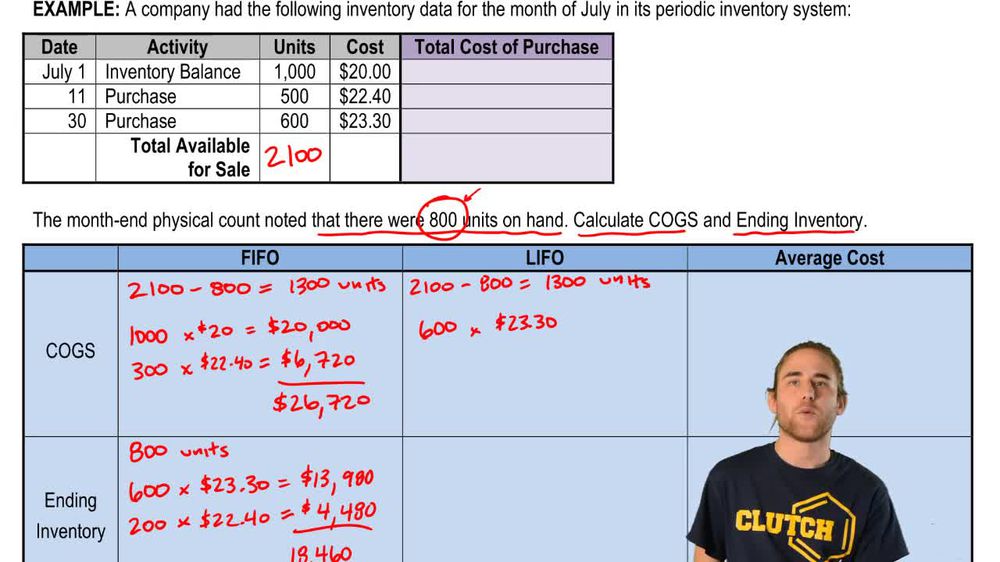
Periodic Inventory FIFO Method
5
views
Guided course
04:30
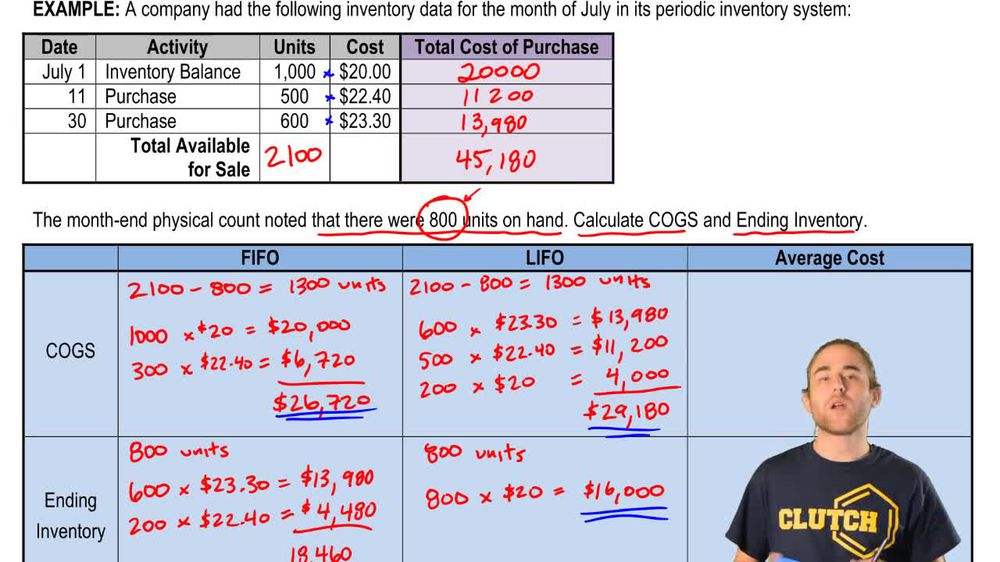
Periodic Inventory LIFO Method
5
views
Guided course
06:23
Periodic Inventory Average Cost Method
4
views
Terms in this set (15)
Hide definitions
Periodic Inventory System
Inventory and cost of goods sold are updated only at the end of the period, not after each transaction.
FIFO
Costing method where the oldest inventory costs are assigned to cost of goods sold, reflecting earlier purchase prices.
LIFO
Costing method where the most recent inventory costs are assigned to cost of goods sold, reflecting latest purchase prices.
Average Cost Method
Costing method using the weighted average of all units' costs to determine cost of goods sold and ending inventory.
Cost Flow Assumption
Accounting approach for assigning costs to inventory and cost of goods sold, independent of the actual movement of goods.
Cost of Goods Sold
Total cost assigned to inventory items that have been sold during the period, reducing inventory value.
Ending Inventory
Value of unsold goods physically counted and reported at the end of the accounting period.
Goods Available for Sale
Sum of beginning inventory and purchases, representing all inventory that could be sold during the period.
Beginning Inventory
Inventory value carried over from the previous period, forming the starting point for current period calculations.
Purchases
Inventory items acquired during the period, added to beginning inventory to determine goods available for sale.
Physical Flow of Goods
Actual movement of inventory items, which may differ from the cost flow assumption used in accounting records.
Cost per Unit
Average amount paid for each inventory item, calculated by dividing total cost by total units purchased.
Inventory Count
Physical process of tallying remaining inventory items at the end of the period to determine ending inventory.
Identical Units
Inventory items that are indistinguishable from each other, making cost assignment dependent on accounting methods.
Financial Records
Documentation and reports tracking inventory values, purchases, and cost of goods sold for accounting purposes.
 BackBack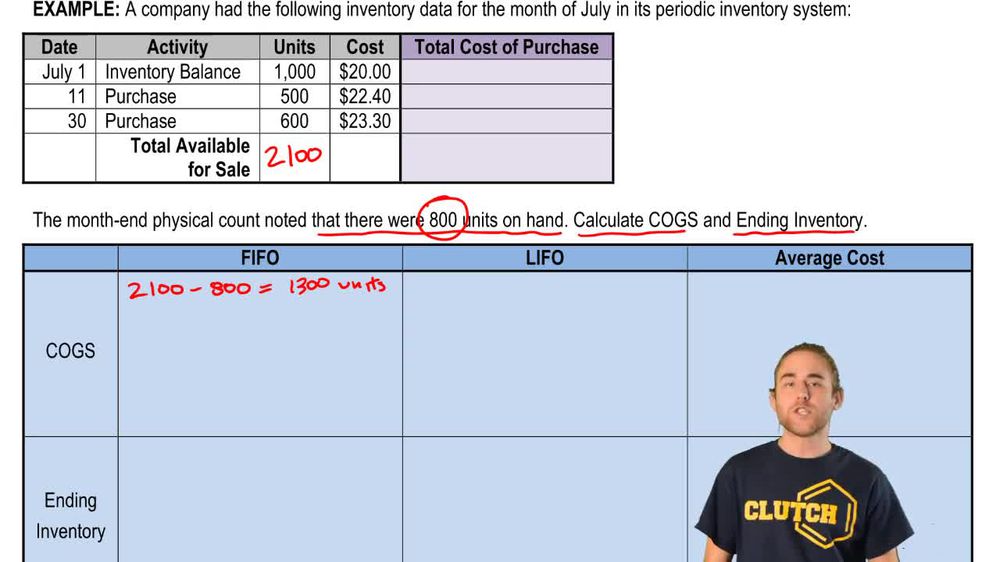
 06:32
06:32