Skip to main content
Financial Accounting
My Course
Learn
Exam Prep
AI Tutor
Study Guides
Flashcards
Explore
Try the app
My Course
Learn
Exam Prep
AI Tutor
Study Guides
Flashcards
Explore
Try the app
Back
Merchandising Company vs. Manufacturing Company definitions
You can tap to flip the card.
Merchandising Company
You can tap to flip the card.
👆
Merchandising Company
Business that purchases finished products for resale, maintaining a single inventory account for all goods held for sale.
Track progress
Control buttons has been changed to "navigation" mode.
1/14
Related flashcards
Related practice
Recommended videos
Merchandising Company vs. Manufacturing Company quiz #1
Merchandising Company vs. Manufacturing Company
21 Terms
Merchandising Company vs. Manufacturing Company
5. Inventory
8 problems
Topic
Physical Inventory Count, Ownership of Goods, and Consigned Goods
5. Inventory
10 problems
Topic
5. Inventory - Part 1 of 2
7 topics
15 problems
Chapter
5. Inventory - Part 2 of 2
1 topic
3 problems
Chapter
Guided course
02:03
Merchandising Companies
17
views
Guided course
04:01
Manufacturing Companies
9
views
Terms in this set (14)
Hide definitions
Merchandising Company
Business that purchases finished products for resale, maintaining a single inventory account for all goods held for sale.
Manufacturing Company
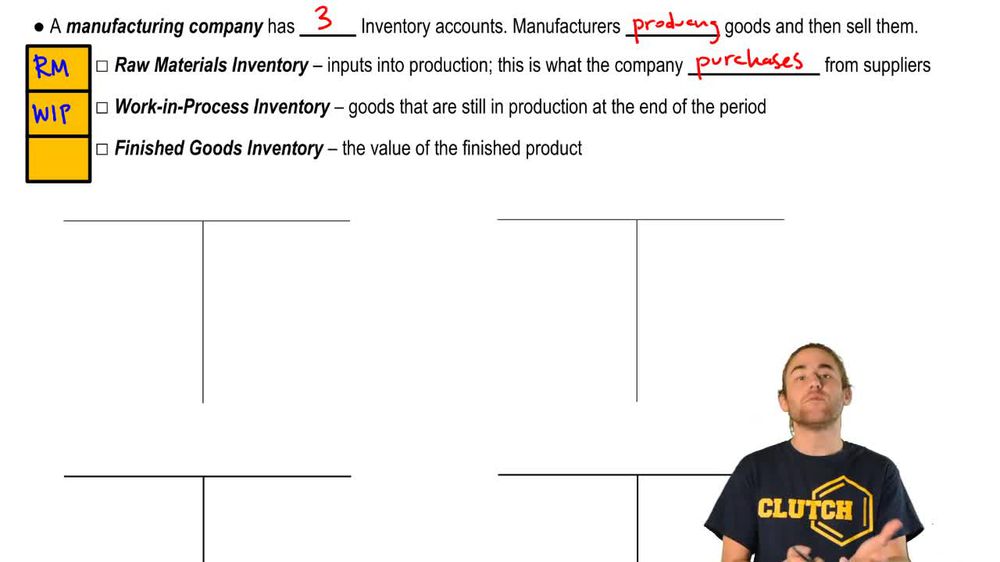
Business that produces goods from raw materials, maintaining separate inventory accounts for each production stage.
Inventory
Asset account representing goods held for sale or use in production, appearing on the balance sheet.
Merchandise Inventory
Single inventory account used by merchandisers to track all purchased goods intended for resale.
Raw Materials
Initial inputs acquired for production, such as ingredients or components, before any processing occurs.
Work in Process
Inventory account for goods currently being manufactured, including materials, labor, and overhead costs.
Finished Goods
Completed products ready for sale to customers, held in a separate inventory account by manufacturers.
Perpetual Inventory System
Method where inventory and related accounts are updated continuously with each purchase or sale transaction.
Accounts Payable
Liability account representing amounts owed to suppliers for goods or services purchased on credit.
Cost of Goods Sold
Expense on the income statement reflecting the cost of inventory sold during a period.
Balance Sheet
Financial statement displaying a company's assets, liabilities, and equity at a specific point in time.
Income Statement
Financial report summarizing revenues and expenses, including cost of goods sold, over a specific period.
Liabilities
Obligations or debts owed by a company to external parties, such as suppliers or lenders.
Overhead
Indirect production costs, such as utilities or supervision, included in the value of work in process inventory.
 BackBack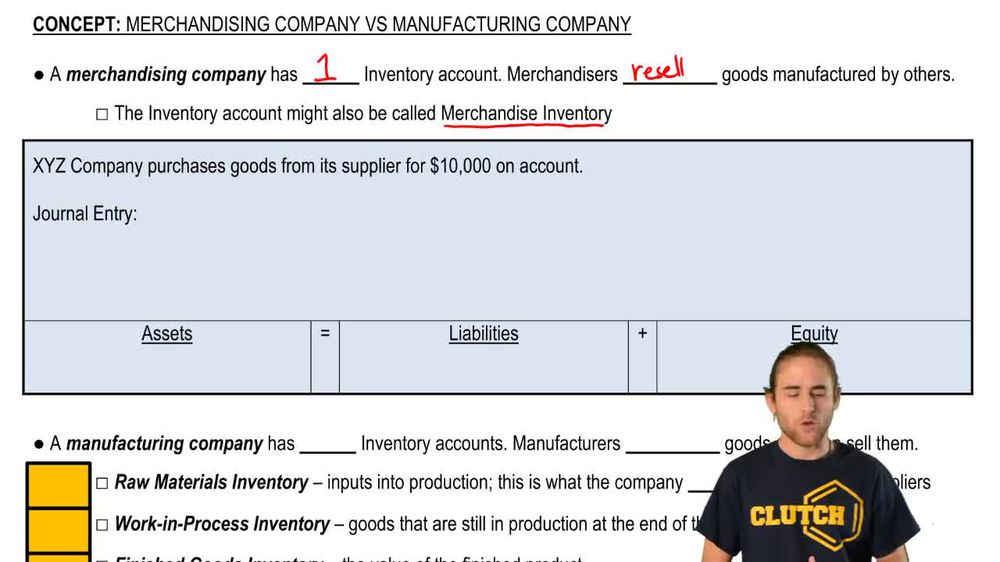
 02:03
02:03