Skip to main content
Financial Accounting
My Course
Learn
Exam Prep
AI Tutor
Study Guides
Flashcards
Explore
Try the app
My Course
Learn
Exam Prep
AI Tutor
Study Guides
Flashcards
Explore
Try the app
Back
Characteristics of a Corporation definitions
You can tap to flip the card.
Corporation
You can tap to flip the card.
👆
Corporation
A separate legal entity from its owners, capable of owning assets, incurring liabilities, and existing independently of its shareholders.
Track progress
Control buttons has been changed to "navigation" mode.
1/15
Related flashcards
Related practice
Recommended videos
Characteristics of a Corporation quiz #1
Characteristics of a Corporation
40 Terms
Characteristics of a Corporation quiz #2
Characteristics of a Corporation
29 Terms
Characteristics of a Corporation
12. Stockholders' Equity
10 problems
Topic
Shares Authorized, Issued, and Outstanding
12. Stockholders' Equity
10 problems
Topic
12. Stockholders' Equity
12 topics
15 problems
Chapter
Guided course
04:40
Corporations:Advantages and Disadvantages
4
views
Guided course
05:20
Corporations:Stockholders' Rights
1
views
Guided course
03:10
Corporations:Creation and Authority Structure
1
views
Terms in this set (15)
Hide definitions
Corporation
A separate legal entity from its owners, capable of owning assets, incurring liabilities, and existing independently of its shareholders.
Limited Liability
Protection for owners, restricting their financial loss to the amount invested and shielding personal assets from corporate debts.
Unlimited Life
Characteristic allowing continued existence regardless of changes in ownership or the death of shareholders.
Transferability of Ownership
Ability for shares to be easily bought or sold without affecting the corporation’s operations or existence.
Double Taxation
Situation where corporate earnings are taxed at both the corporate level and again when distributed as dividends to shareholders.
Government Regulation
Legal oversight and rules imposed by authorities, often resulting in increased compliance requirements for corporations.
Separation of Ownership and Management
Structure where shareholders own the company but delegate daily operations to professional managers.
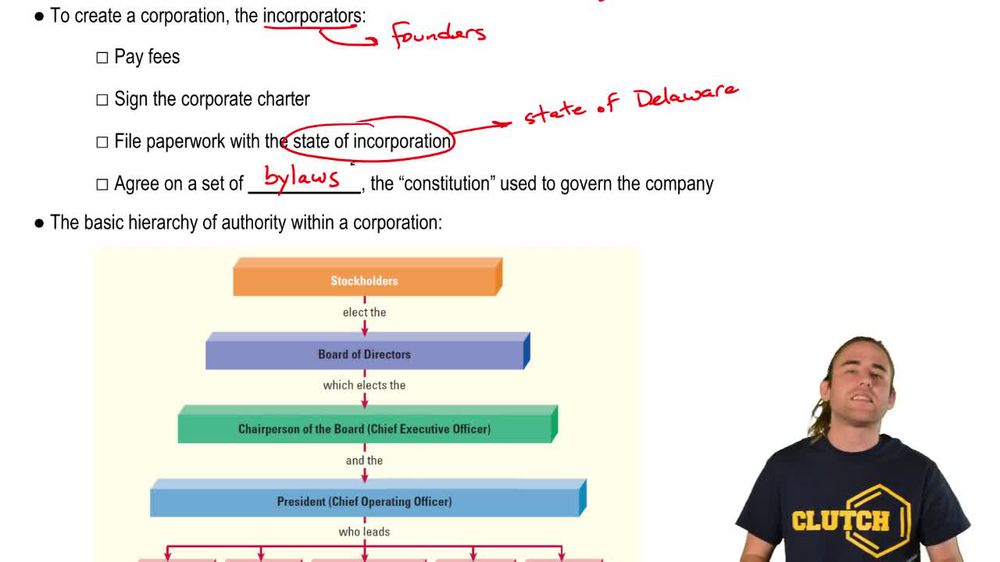
State of Incorporation
Jurisdiction whose laws govern a corporation, often chosen for favorable legal or tax environments.
Bylaws
Internal rules and procedures adopted by a corporation to guide governance and resolve disputes.
Stockholder
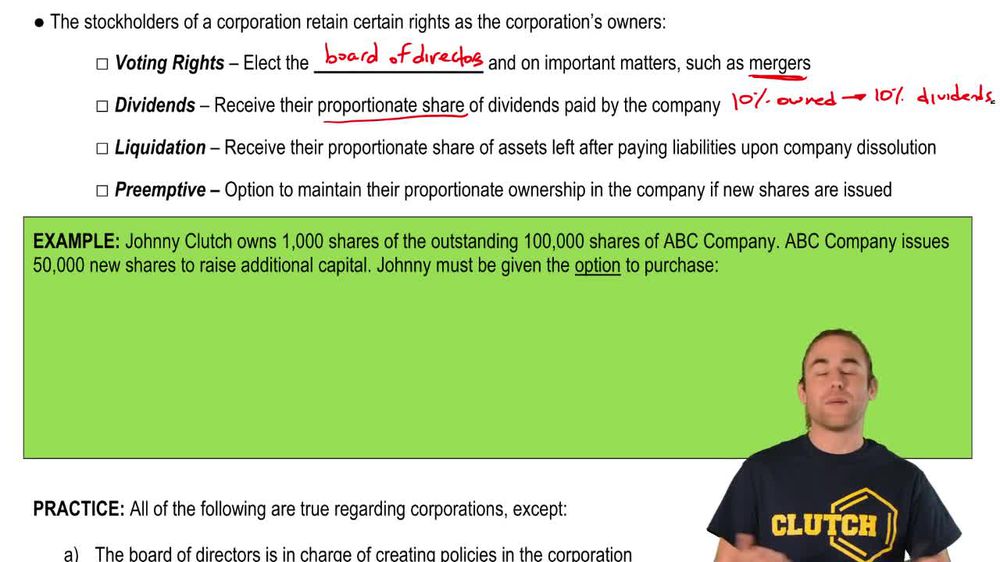
Individual or entity owning shares, granting rights such as voting, dividends, and participation in major decisions.
Board of Directors
Elected group responsible for overseeing corporate policies, major decisions, and appointing executive management.
Chief Executive Officer
Top executive responsible for implementing board policies and managing overall corporate operations.
Dividend
Distribution of a portion of corporate earnings to shareholders, typically in cash or additional shares.
Preemptive Right
Privilege allowing existing shareholders to maintain their ownership percentage by purchasing new shares before public offering.
Liquidation
Process of dissolving a corporation, settling debts, and distributing remaining assets to shareholders.
 BackBack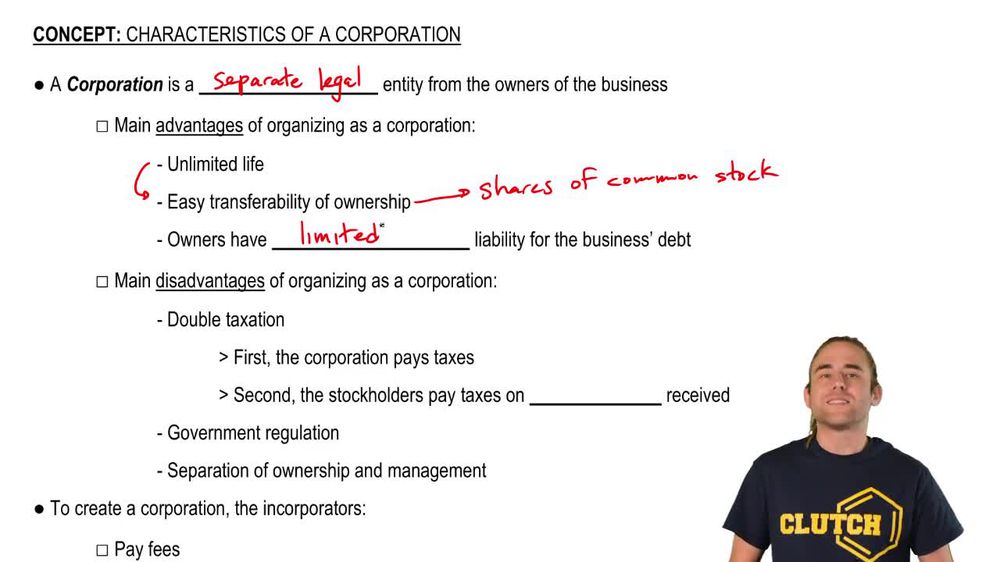
 04:40
04:40