Ch. 5 - Systems and Matrices
Lial - College Algebra 13th Edition
Lial13th EditionCollege AlgebraISBN: 9780136881063Not the one you use?Change textbook
Chapter 6, Problem 106

Solve each problem. See Examples 5 and 9. The sum of the measures of the angles of any triangle is 180°. In a certain triangle, the largest angle measures 55° less than twice the medium angle, and the smallest angle measures 25° less than the medium angle. Find the measures of all three angles.

Verified step by step guidance
1
Let the measure of the medium angle be represented by the variable \(x\) degrees.
Express the largest angle in terms of \(x\): since it measures 55° less than twice the medium angle, write it as \(2x - 55\) degrees.
Express the smallest angle in terms of \(x\): since it measures 25° less than the medium angle, write it as \(x - 25\) degrees.
Use the fact that the sum of the measures of the angles in a triangle is 180°, and set up the equation: \(x + (2x - 55) + (x - 25) = 180\).
Simplify the equation and solve for \(x\) to find the measure of the medium angle, then substitute back to find the largest and smallest angles.

Verified video answer for a similar problem:

This video solution was recommended by our tutors as helpful for the problem above.
Video duration:
7m
Was this helpful?

Key Concepts

Here are the essential concepts you must grasp in order to answer the question correctly.

Triangle Angle Sum Theorem

This theorem states that the sum of the interior angles of any triangle is always 180 degrees. It is fundamental for solving problems involving unknown angles in triangles by setting up equations based on this total.
Recommended video:
3:08
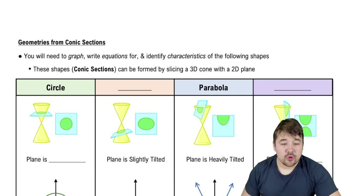
Geometries from Conic Sections

Setting Up Algebraic Equations from Word Problems

Translating verbal descriptions into algebraic expressions is essential. Here, the largest and smallest angles are expressed in terms of the medium angle, allowing the formation of equations to solve for unknown values.
Recommended video:
Guided course
05:09
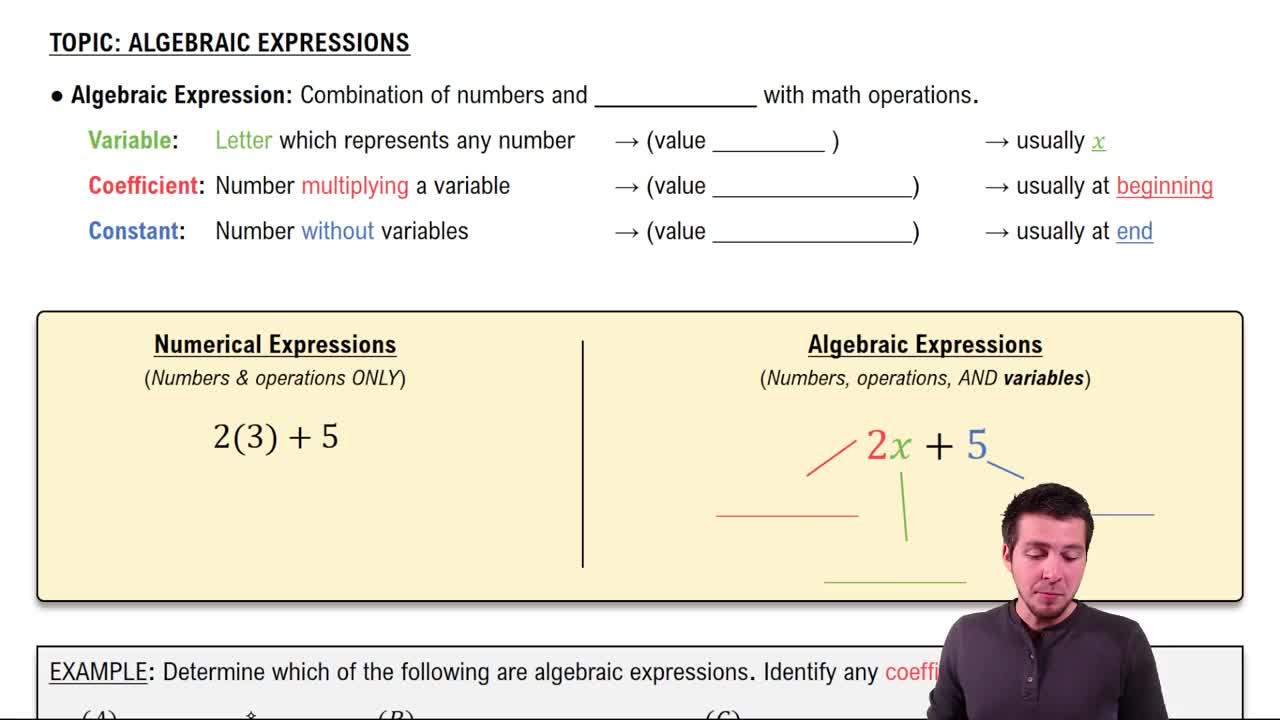
Introduction to Algebraic Expressions

Solving Linear Equations

Once the algebraic equation representing the sum of angles is formed, solving linear equations involves combining like terms and isolating variables to find the measure of the medium angle, which then helps find the other angles.
Recommended video:
04:02
Solving Linear Equations with Fractions