
Textbook Question
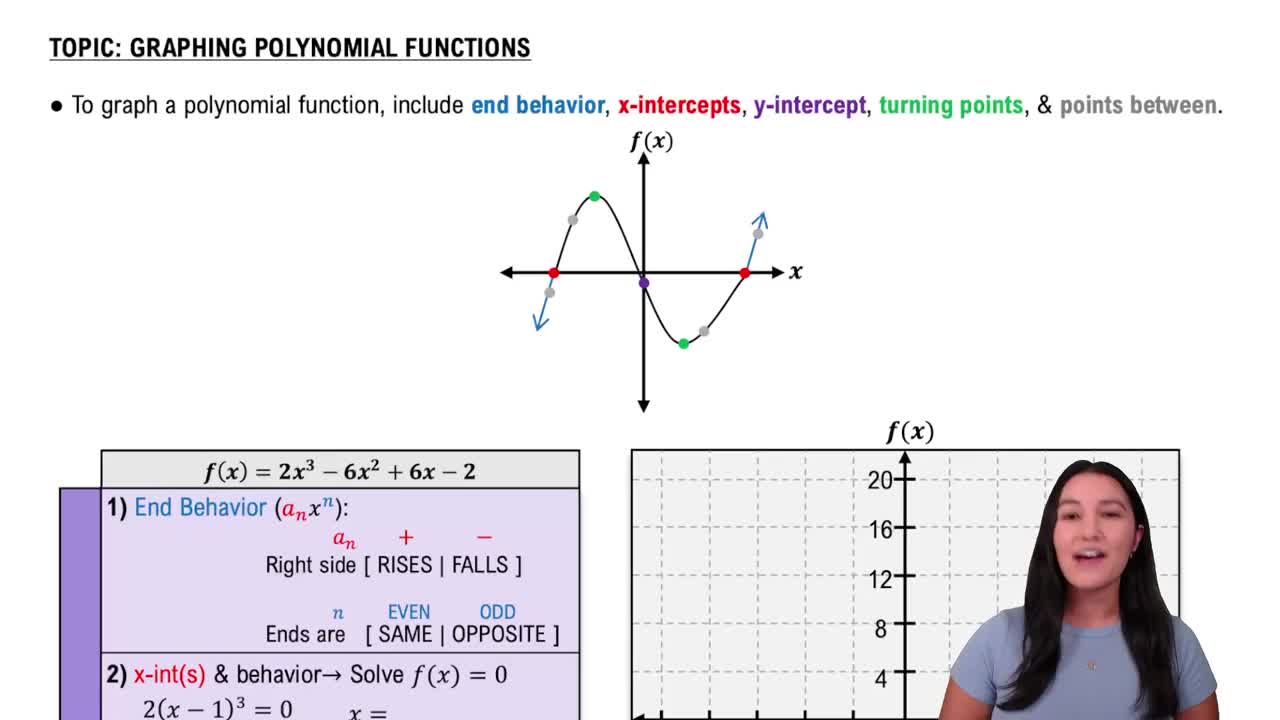
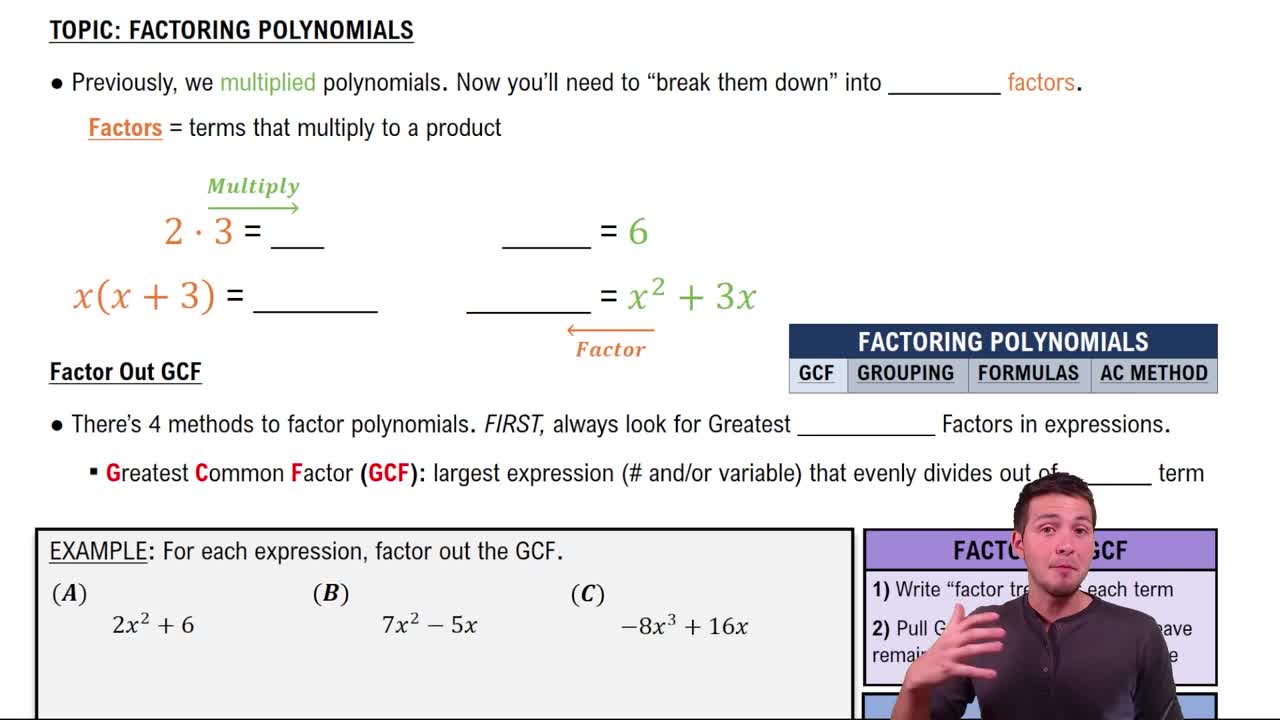
Graph each polynomial function. Factor first if the polynomial is not in factored form. ƒ(x)=3x4-7x3-6x2+12x+8

 Verified step by step guidance
 05:25
05:25
 07:30
07:30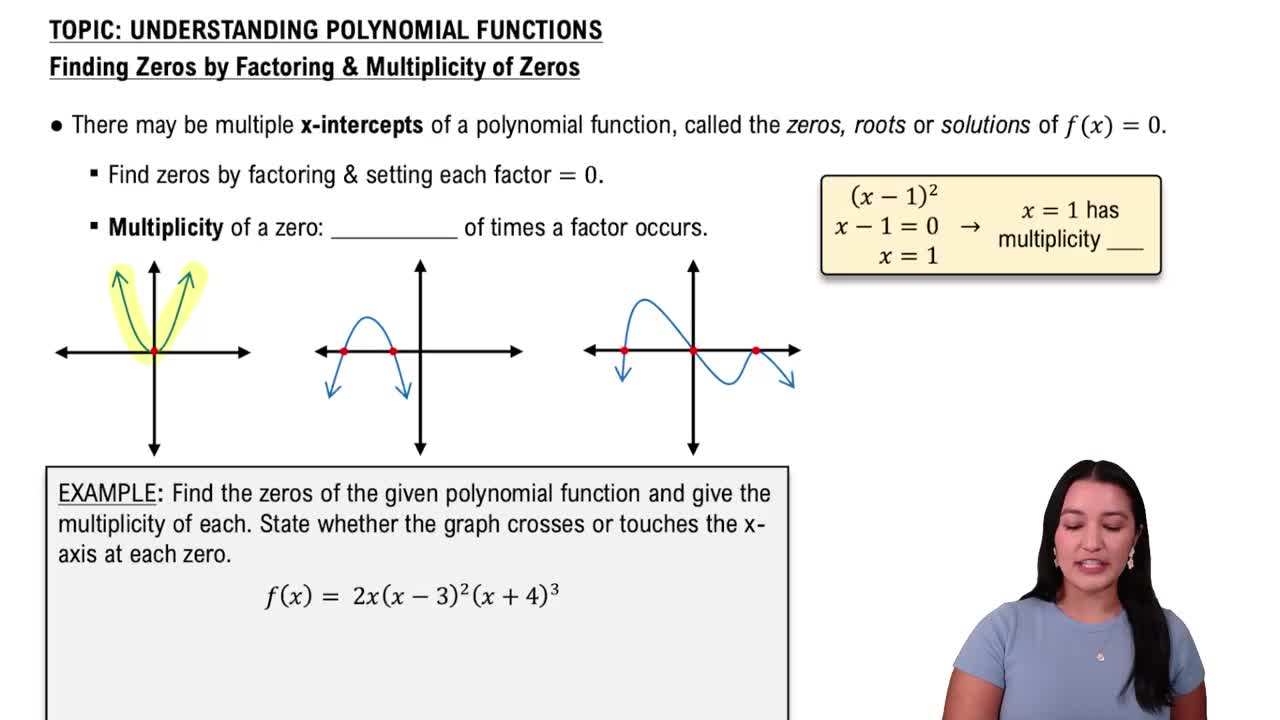 03:42
03:42Graph each polynomial function. Factor first if the polynomial is not in factored form. ƒ(x)=3x4-7x3-6x2+12x+8
Give the equations of any vertical, horizontal, or oblique asymptotes for the graph of each rational function. ƒ(x)=(x2+1)/(x2+9)
Determine the largest open interval of the domain (a) over which the function is increasing and (b) over which it is decreasing. ƒ(x) = -3x2 + 18x + 1
Graph each polynomial function. Factor first if the polynomial is not in factored form. ƒ(x)=2x3-5x2-x+6
Solve each polynomial inequality. Give the solution set in interval notation. x5 + x2 + 2 ≥ x4 + x3 + 2x
Determine the largest open interval of the domain (a) over which the function is increasing and (b) over which it is decreasing. ƒ(x) = -2x2 - 8x - 7