Skip to main content
Cell Biology
My Course
Learn
Exam Prep
AI Tutor
Study Guides
Flashcards
Explore
Try the app
My Course
Learn
Exam Prep
AI Tutor
Study Guides
Flashcards
Explore
Try the app
Back
Citric Acid Cycle definitions
You can tap to flip the card.
Citric Acid Cycle
You can tap to flip the card.
👆
Citric Acid Cycle
A series of reactions following glycolysis that generates CO2, NADH, GTP, and FADH2 from Acetyl CoA under aerobic conditions.
Track progress
Control buttons has been changed to "navigation" mode.
1/15
Related flashcards
Related practice
Recommended videos
Citric Acid Cycle quiz #1
Citric Acid Cycle
10 Terms
Citric Acid Cycle
11. Aerobic Respiration
7 problems
Topic
Electron Transport
11. Aerobic Respiration
7 problems
Topic
11. Aerobic Respiration
5 topics
15 problems
Chapter
Guided course
02:56
Overview
1
views
Guided course
04:53
Citric Acid Steps
2
views
Terms in this set (15)
Hide definitions
Citric Acid Cycle
A series of reactions following glycolysis that generates CO2, NADH, GTP, and FADH2 from Acetyl CoA under aerobic conditions.
Krebs Cycle
Another name for the pathway that oxidizes Acetyl CoA, producing energy carriers and CO2 in a circular sequence of reactions.
TCA Cycle
A synonym for the process that transforms Acetyl CoA into energy-rich molecules and CO2, essential for cellular respiration.
Acetyl CoA
A two-carbon molecule derived from pyruvate, serving as the entry substrate for the citric acid cycle.
Pyruvate
A three-carbon product of glycolysis that is converted into Acetyl CoA before entering the citric acid cycle.
Pyruvate Dehydrogenase Complex
A group of proteins responsible for transforming pyruvate into Acetyl CoA, linking glycolysis to the citric acid cycle.
NADH
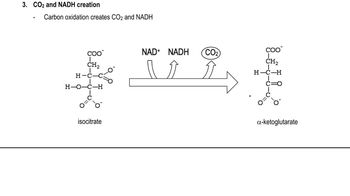
An electron carrier generated during the cycle's oxidation steps, later used in the electron transport chain for ATP production.
FADH2
A reduced electron carrier formed during the cycle, contributing electrons to the electron transport chain.
GTP
A high-energy nucleotide produced in the cycle, which can be readily converted to ATP for cellular energy.
CO2
A gaseous byproduct released during decarboxylation and oxidation steps within the citric acid cycle.
Citrate
The first six-carbon intermediate formed when Acetyl CoA combines with oxaloacetate at the start of the cycle.
Isomerization
A rearrangement process within the cycle where atoms in a molecule shift positions, altering its structure but not its formula.
Oxidation
A recurring reaction type in the cycle where electrons are removed from substrates, producing NADH or FADH2.
Aerobic Conditions
An environment where oxygen is present, indirectly required for the cycle by regenerating NAD+ for continued operation.
Enzyme
A protein catalyst that accelerates each transformation step in the cycle, ensuring efficient energy extraction.
 BackBack
 02:56
02:56