
Textbook Question
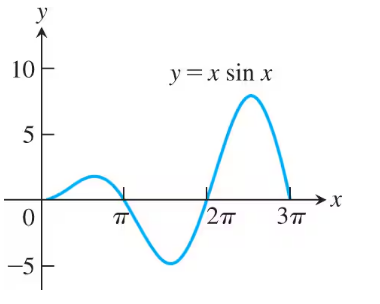
88. The region in Exercise 87 is revolved about the x-axis to generate a solid.
b. Show that the inner and outer surfaces of the solid have infinite area.
1
views

 Verified step by step guidance
 05:43
05:43
 03:39
03:39 05:11
05:1188. The region in Exercise 87 is revolved about the x-axis to generate a solid.
b. Show that the inner and outer surfaces of the solid have infinite area.
90. Consider the infinite region in the first quadrant bounded by the graphs of
y = 1 / √x, y = 0, x = 0, and x = 1.
b. Find the volume of the solid formed by revolving the region (i) about the x-axis
Consider the region bounded by the graphs of
y = arctan(x), y = 0, and x = 1.
b. Find the volume of the solid formed by revolving this region about the y-axis.
In Exercises 11–22, estimate the minimum number of subintervals needed to approximate the integrals with an error of magnitude less than 10^-4 by (b) Simpson’s Rule. (The integrals in Exercises 11–18 are the integrals from Exercises 1–8.)
∫ from 1 to 2 of x dx
In Exercises 11–22, estimate the minimum number of subintervals needed to approximate the integrals with an error of magnitude less than 10^-4 by (b) Simpson’s Rule. (The integrals in Exercises 11–18 are the integrals from Exercises 1–8.)
∫ from 0 to 3 of 1/√(x + 1) dx
In Exercises 11–22, estimate the minimum number of subintervals needed to approximate the integrals with an error of magnitude less than 10^-4 by (b) Simpson’s Rule. (The integrals in Exercises 11–18 are the integrals from Exercises 1–8.)
∫ from -1 to 1 of (x² + 1) dx