
Textbook Question
Finding Indefinite Integrals
In Exercises 17–56, find the most general antiderivative or indefinite integral. You may need to try a solution and then adjust your guess. Check your answers by differentiation.
∫(1/x² − x² − 1/3) dx

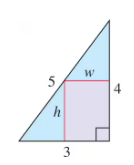
 Verified step by step guidance
 10:13
10:13
 05:43
05:43 06:02
06:02Finding Indefinite Integrals
In Exercises 17–56, find the most general antiderivative or indefinite integral. You may need to try a solution and then adjust your guess. Check your answers by differentiation.
∫(1/x² − x² − 1/3) dx
Finding Critical Points
In Exercises 41–50, determine all critical points and all domain endpoints for each function.
f(x) = x(4 − x)³
Estimate the open intervals on which the function y = ƒ(𝓍) is
a. increasing.
b. decreasing.
c. Use the given graph of ƒ' to indicate where any local extreme
values of the function occur, and whether each extreme
is a relative maximum or minimum.
<IMAGE>
Roots (Zeros)
Show that the functions in Exercises 19–26 have exactly one zero in the given interval.
r(θ) = 2θ − cos²θ + √2, (−∞, ∞)
93. The accompanying figure shows a portion of the graph of a twice-differentiable function y=f(x). At each of the five labeled points, classify y' and \(\y\)'' as positive, negative, or zero.
" style="" width="254">
32. Answer Exercise 31 if one piece is bent into a square and the other into a circle.