Echoes of the Big Bang: How the Universe Still Whispers Its Origins
Last Update: 6/15/2025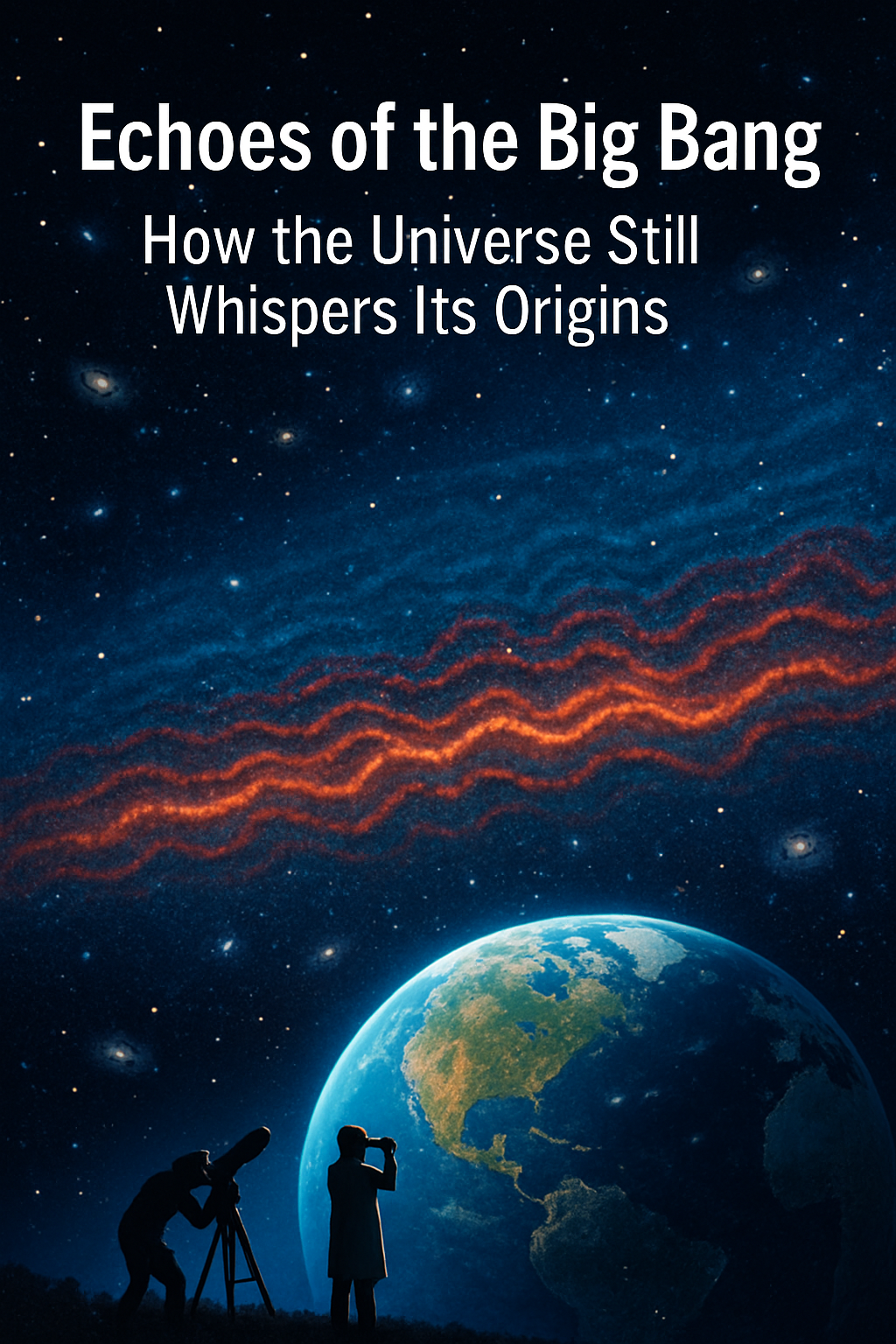
Ever since the universe burst into existence some 13.8 billion years ago, it’s been expanding, evolving, and leaving behind clues about its mysterious beginnings. One of the most fascinating remnants of that cosmic birth cry is the Cosmic Microwave Background—a faint glow that permeates the entire sky and tells the story of the early universe.
So, what exactly is this echo?
When the universe was just 380,000 years old (a mere infant on cosmic scales), it cooled enough for atoms to form. Light, which had been trapped in a dense plasma, was finally able to travel freely. That light is what we now detect as the CMB—essentially, the afterglow of the Big Bang.
This microwave radiation is incredibly uniform, but thanks to missions like NASA’s WMAP and ESA’s Planck satellite, we’ve been able to detect tiny variations—ripples in the early universe that eventually became stars, galaxies, and planets.
But why does this matter today?
These ancient signals allow physicists to peer back in time, validate theories like the Big Bang, and refine our understanding of the universe’s shape, age, and composition. The CMB even helps us explore strange concepts like dark matter and dark energy, the invisible scaffolding and force that shape cosmic destiny.
Next time you look up at the night sky, remember:
You’re not just seeing stars. You’re seeing the echoes of an event that began everything.