Biologists claim that the all-taxa survey now under way at the Great Smoky Mountains National Park in the United States will improve their ability to estimate the total number of species living today. Discuss the benefits and limitations that this data set will provide in understanding the extent of global biodiversity.
Ch. 54 - Biodiversity and Conservation Ecology
Chapter 54, Problem 3
What is a biodiversity “hotspot”?
a. an area where an all-taxon survey is under way
b. a habitat with high NPP
c. an area with high species richness and high threat to those species
Verified step by step guidance1
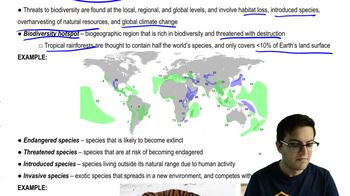
Understand the term 'biodiversity hotspot'. A biodiversity hotspot is a biogeographic region that is both a significant reservoir of biodiversity and is threatened with destruction.
Identify the key characteristics of a biodiversity hotspot. These areas typically have high levels of species richness, especially species that are endemic to the area, meaning they are not found anywhere else in the world.
Recognize the threats to biodiversity hotspots. These areas are often under threat from human activities such as deforestation, pollution, or climate change, which can lead to significant loss of biodiversity.
Relate the options given in the question to the definition of a biodiversity hotspot. Option 'a' refers to a survey method, and option 'b' refers to an ecological concept (Net Primary Productivity, NPP) that does not directly indicate a biodiversity hotspot.
Conclude that option 'c', an area with high species richness and high threat to those species, aligns with the definition of a biodiversity hotspot.

Verified video answer for a similar problem:
This video solution was recommended by our tutors as helpful for the problem above.
Video duration:
1mWas this helpful?
Key Concepts
Here are the essential concepts you must grasp in order to answer the question correctly.
Biodiversity
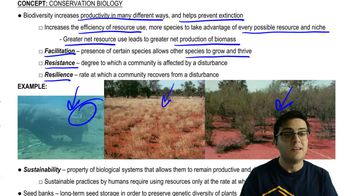
Biodiversity refers to the variety of life forms within a given ecosystem, region, or on the entire planet. It encompasses the diversity of species, genetic variations, and the ecosystems they inhabit. High biodiversity is crucial for ecosystem resilience, providing essential services such as pollination, nutrient cycling, and climate regulation.
Recommended video:
Guided course
Biodiversity and Sustainability
Biodiversity Hotspot
A biodiversity hotspot is a biogeographic region that is both rich in endemic species and significantly threatened by human activities. To qualify as a hotspot, a region must contain at least 1,500 species of vascular plants as endemics and have lost at least 70% of its original habitat. These areas are critical for conservation efforts due to their unique species and the urgent need to protect them.
Recommended video:
Guided course
Biodiversity Hotspots and Endangered Species
Species Richness and Threat
Species richness refers to the number of different species present in a particular area, while threat levels indicate the degree of danger these species face from factors like habitat destruction, climate change, and pollution. Areas with high species richness that also experience significant threats are prioritized for conservation, as they represent both a unique biological heritage and a critical need for protection.
Recommended video:
Biological Species Concept
Related Practice
Textbook Question
Textbook Question
What community property does the red arrow in the model represent? a. high resilience b. low resistance c. high resistance
Textbook Question
Why is the common phrase "humans and animals" not accurate in biology? Suggest one way that a more scientific outlook could boost conservation efforts.
2
views
Textbook Question
What does species richness refer to? Select True or False for each statement.
T/Fthe number of species in an area
T/Fthe evenness of species in an area
T/Fthe functional diversity of a species in an area
T/Fthe phylogenetic diversity of species in an area
1
views
