True or false: The corpus luteum is retained upon implantation due to the presence of the hormone human chorionic gonadotropin (hCG).

Ch. 47 - Animal Reproduction and Development
Chapter 47, Problem 2
In sperm competition, what is 'second-male advantage'?
a. The observation that when females mate with two males, each male fertilizes the same number of eggs
b. The observation that when females mate with two males, the second male fertilizes most of the eggs
c. The observation that females routinely mate with at least two males before laying eggs or becoming pregnant
d. The observation that accessory fluids prevent matings by second males—for example, by forming copulatory plugs
Verified step by step guidance1
Understand the concept of sperm competition: Sperm competition occurs when the sperm of two or more males compete to fertilize the eggs of a female. This is common in species where females mate with multiple males.
Identify the term 'second-male advantage': This refers to a phenomenon observed in sperm competition where the second male to mate with a female has a higher chance of fertilizing the majority of the eggs.
Analyze the options given: We need to find the option that best describes the 'second-male advantage'.
Evaluate option b: 'the observation that when females mate with two males, the second male fertilizes most of the eggs'. This directly describes the second-male advantage, where the second male's sperm is more successful in fertilizing eggs.
Conclude that option b is the correct description of the 'second-male advantage', as it aligns with the definition of the term in the context of sperm competition.

Verified video answer for a similar problem:
This video solution was recommended by our tutors as helpful for the problem above.
Video duration:
1mWas this helpful?
Key Concepts
Here are the essential concepts you must grasp in order to answer the question correctly.
Sperm Competition
Sperm competition refers to the biological phenomenon where the sperm of different males compete to fertilize the eggs of a female. This occurs when a female mates with multiple males, leading to a competitive environment for the sperm to achieve fertilization. It is a significant factor in sexual selection and can influence male reproductive strategies.
Recommended video:
Guided course
Community Interactions: Competition (-/-)
Second-Male Advantage
Second-male advantage is the observation that when a female mates with two males, the sperm of the second male often has a higher chance of fertilizing the eggs compared to the first male. This advantage can arise due to various factors, such as the timing of mating, sperm displacement, or physiological mechanisms that favor the second male's sperm.
Recommended video:
Guided course
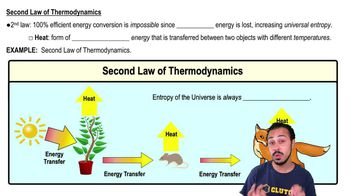
Second Law of Thermodynamics
Copulatory Plugs
Copulatory plugs are gelatinous secretions produced by males during mating that can block the female's reproductive tract, preventing subsequent matings by other males. This mechanism is a form of post-copulatory sexual selection, aimed at ensuring the first male's sperm has a better chance of fertilizing the eggs by physically obstructing other males' sperm.
Recommended video:
Guided course
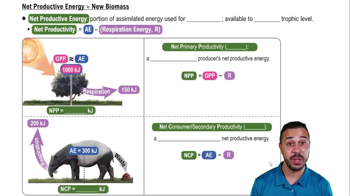
Net Productive Energy ≈ New Biomass
Related Practice
Textbook Question
Textbook Question
Many frogs and mice are similar in size, yet a frog egg is vastly larger than a mouse egg. Propose a plausible explanation for this difference in the egg size.
Textbook Question
Which of the following statements regarding animal development is/are correct? Select True or False for each statement.
T/FThe neural tube forms after organogenesis is complete
T/FThe blastocyst is formed during cleavage
T/FDuring cleavage, the zygote divides rapidly without growth, forming a mass of cells
T/FAnimals have two germ layers
Textbook Question
What term describes the mode of asexual reproduction in which offspring develop from unfertilized eggs?
a. Parthenogenesis
b. Budding
c. Regeneration
d. Fission