Back

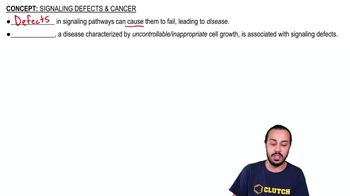
Signaling Defects & Cancer definitions

Control buttons has been changed to "navigation" mode.
1/15
  • Proto Oncogene

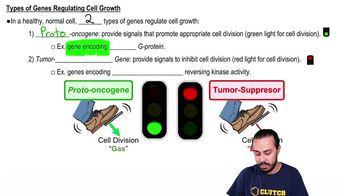
    Acts as a cellular green light, providing signals that promote normal and healthy cell division at an appropriate rate.
  • Tumor Suppressor Gene

    Functions as a cellular red light, providing signals that inhibit cell division and maintain controlled growth.
  • Oncogene

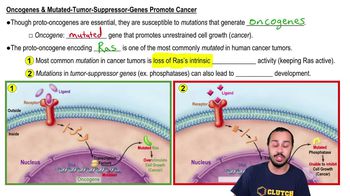
    A mutated gene that drives unrestrained cell growth, often resulting in cancer due to loss of normal regulatory control.
  • Ras

    A monomeric G protein frequently mutated in cancer, whose active form stimulates cell growth via biosignaling pathways.
  • GTPase Activity

    Intrinsic function of certain proteins that inactivates them by converting GTP to GDP, crucial for regulating cell growth signals.
  • Phosphatase

    Enzyme that removes phosphate groups, reversing kinase activity and terminating signals to inhibit cell growth.
  • Signal Transduction

    Series of molecular events triggered by ligand binding, leading to changes in gene expression and cellular responses.
  • Transcription Factor

    Protein that enters the nucleus and influences the transcription of specific genes, affecting cell growth and division.
  • Ligand

    Molecule that binds to a receptor, initiating a cascade of signaling events within the cell.
  • Receptor

    Cell surface protein that detects external signals and activates intracellular signaling pathways.
  • Kinase

    Enzyme that adds phosphate groups to proteins, often activating signaling pathways that promote cell growth.
  • DNA

    Genetic material in the nucleus, whose transcription is regulated by signaling pathways to control cell division.
  • Transcription

    Process by which genetic information from DNA is copied into RNA, regulated by signaling defects in cancer.
  • Cell Proliferation

    Increase in cell number resulting from division, tightly regulated by proto oncogenes and tumor suppressor genes.
  • Mutation

    Alteration in genetic sequence that can transform normal regulatory genes into cancer-promoting forms.