Back

Sickle Cell Anemia definitions

Control buttons has been changed to "navigation" mode.
1/15
  • Hemoglobin

    Protein in red blood cells responsible for oxygen transport; its structure is altered in sickle cell anemia due to a genetic mutation.
  • Beta Subunit

    Component of hemoglobin affected by the sickle cell mutation, specifically at the sixth amino acid position.
  • Point Mutation

    Single nucleotide change in DNA that leads to the substitution of one amino acid, causing sickle cell anemia.
  • Glutamate

    Negatively charged amino acid normally found at the sixth position of hemoglobin's beta subunit, replaced in sickle cell anemia.
  • Valine

    Nonpolar amino acid substituted for glutamate in sickle cell hemoglobin, promoting abnormal protein folding and aggregation.
  • Hydrophobic Effect

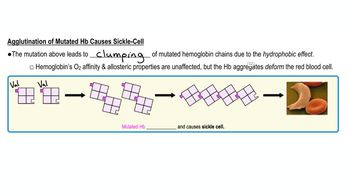
    Interaction between nonpolar molecules, causing mutated hemoglobin to clump and form chains in sickle cell anemia.
  • Agglutination

    Clumping of mutated hemoglobin molecules, leading to the formation of long chains that distort red blood cell shape.
  • Sickle Shape

    Distinct crescent form of red blood cells resulting from hemoglobin aggregation, impairing circulation and function.
  • Erythrocyte

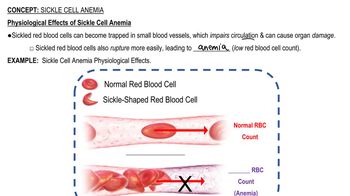
    Red blood cell; its count is reduced in sickle cell anemia due to increased rupture and impaired circulation.
  • Occlusion

    Blockage of small blood vessels by sickled cells, leading to impaired blood flow and potential organ damage.
  • Anemia

    Condition characterized by a low number of red blood cells, often resulting from increased rupture in sickle cell disease.
  • Heterozygous

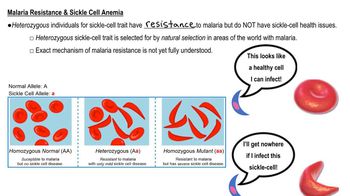
    Genetic state with one normal and one mutated hemoglobin gene, conferring resistance to malaria without severe disease.
  • Homozygous

    Genetic state with two mutated hemoglobin genes, resulting in severe sickle cell disease and malaria resistance.
  • Natural Selection

    Evolutionary process favoring the sickle cell trait in malaria-endemic regions due to its protective effect.
  • Malaria

    Parasitic disease; individuals with sickle cell trait exhibit resistance, influencing gene prevalence in certain populations.