Back

Lipid Hormone Signaling definitions

Control buttons has been changed to "navigation" mode.
1/15
  • Lipid Hormone

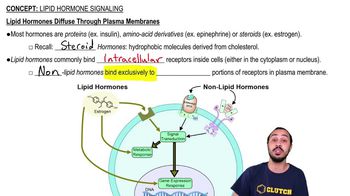
    Hydrophobic signaling molecule derived from cholesterol, capable of diffusing through plasma and nuclear membranes to affect cellular processes.
  • Steroid Hormone

    Type of lipid hormone, hydrophobic and cholesterol-derived, often binds to intracellular receptors to regulate gene expression.
  • Cholesterol

    Molecule serving as the precursor for steroid hormones, enabling their hydrophobic nature and membrane diffusion.
  • Hydrophobicity

    Property allowing molecules to pass through lipid bilayers, crucial for lipid hormones to access intracellular targets.
  • Plasma Membrane

    Cellular barrier that lipid hormones can traverse directly, unlike non-lipid hormones which require receptor-mediated entry.
  • Nuclear Membrane

    Barrier surrounding the nucleus, permeable to lipid hormones, enabling direct regulation of gene expression.
  • Intracellular Receptor

    Protein located within the cytoplasm or nucleus, activated by lipid hormones to modulate cellular responses.
  • Extracellular Receptor

    Protein embedded in the cell membrane, interacts with non-lipid hormones and some lipid hormones to initiate signaling.
  • Signal Transduction

    Process by which hormone binding to a receptor triggers a cascade of cellular events, leading to a specific response.
  • Metabolic Response

    Cellular change in metabolism resulting from hormone signaling, often influenced directly by lipid hormones.
  • Gene Expression

    Regulation of transcription and translation in cells, frequently altered by lipid hormones entering the nucleus.
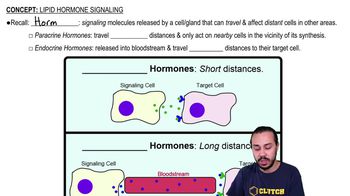
  • Paracrine Hormone

    Signaling molecule affecting nearby cells, traveling short distances from its site of synthesis.
  • Endocrine Hormone

    Signaling molecule released into the bloodstream, capable of affecting distant target cells throughout the body.
  • Amino Acid Derivative

    Non-lipid hormone type, such as epinephrine, that binds to extracellular receptors and cannot cross membranes directly.
  • Protein Hormone

    Non-lipid hormone, like insulin, requiring extracellular receptor binding to initiate cellular signaling.