Back

Chemical Bonds definitions

Control buttons has been changed to "navigation" mode.
1/15
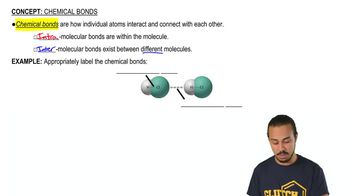
  • Intramolecular Bond

    Connection within a molecule, holding atoms together and determining the molecule’s internal structure.
  • Intermolecular Bond

    Attraction between separate molecules, influencing physical properties like boiling and melting points.
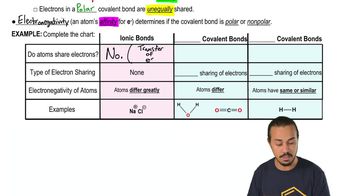
  • Ionic Bond

    Link formed by transfer of electrons between atoms with opposite charges, often seen in salts.
  • Covalent Bond

    Connection where atoms share pairs of electrons, creating stable molecular structures.
  • Polar Covalent Bond

    Type of bond with unequal sharing of electrons, resulting in partial charges due to electronegativity differences.
  • Nonpolar Covalent Bond

    Bond with equal sharing of electrons between atoms of similar electronegativity, lacking partial charges.
  • Electronegativity

    Measure of an atom’s ability to attract electrons in a bond, influencing polarity and bond type.
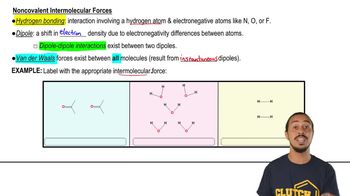
  • Hydrogen Bond

    Special interaction involving hydrogen and highly electronegative atoms like oxygen, nitrogen, or fluorine.
  • Dipole-Dipole Interaction

    Attraction between polar molecules due to shifts in electron density, creating partial positive and negative regions.
  • Van der Waals Force

    Weak, temporary attraction between all molecules, arising from instantaneous dipoles even in nonpolar substances.
  • Partial Charge

    Small positive or negative region within a molecule, resulting from unequal electron distribution.
  • Molecule Shape

    Three-dimensional arrangement of atoms, affecting overall polarity and physical properties.
  • Instantaneous Dipole

    Temporary uneven electron distribution in a molecule, leading to fleeting attractions with nearby molecules.
  • Table Salt

    Compound formed by ionic bonding between sodium and chlorine, serving as a classic example of ionic interaction.
  • Water

    Polar molecule with oxygen and hydrogen, capable of forming multiple hydrogen bonds due to its structure.