Back

Central Dogma definitions

Control buttons has been changed to "navigation" mode.
1/15
  • Central Dogma

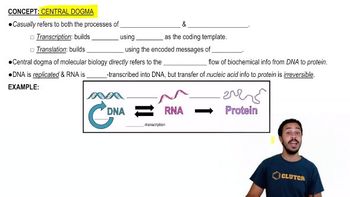
    Describes the one-way transfer of genetic information from DNA to RNA to protein, emphasizing irreversibility once information reaches protein.
  • Transcription

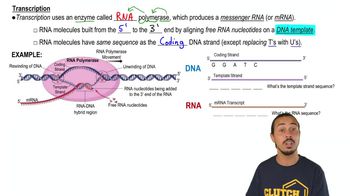
    Process where RNA is synthesized from a DNA template, replacing thymine with uracil and proceeding in a 5' to 3' direction.
  • Translation

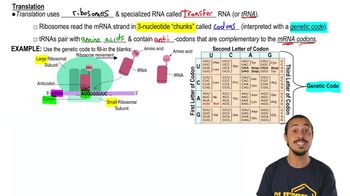
    Process where ribosomes read mRNA codons and tRNAs deliver amino acids to assemble proteins from N-terminal to C-terminal.
  • RNA Polymerase

    Enzyme responsible for synthesizing RNA molecules using a DNA template, aligning free RNA nucleotides in a specific direction.
  • Ribosome

    Cellular structure composed of large and small subunits that facilitates protein synthesis by decoding mRNA.
  • mRNA

    RNA molecule carrying genetic instructions from DNA, read in codons during protein synthesis.
  • tRNA

    Specialized RNA molecule with an anticodon that pairs with mRNA codons and delivers corresponding amino acids.
  • Codon

    Three-nucleotide sequence in mRNA specifying a particular amino acid during translation.
  • Anticodon

    Three-nucleotide sequence in tRNA complementary to mRNA codons, ensuring correct amino acid placement.
  • Genetic Code

    Universal set of rules interpreting mRNA codons to determine which amino acids are incorporated into proteins.
  • Nucleus

    Cellular compartment in eukaryotes where transcription occurs, housing DNA templates.
  • Cytoplasm

    Cellular region where translation takes place, allowing ribosomes to assemble proteins.
  • Amino Acid

    Building block of proteins, delivered by tRNAs during translation and linked by ribosomes.
  • N-terminal

    Starting end of a protein, where translation begins and the first amino acid is positioned.
  • C-terminal

    Ending end of a protein, where the final amino acid is added during translation.