Ch. 8 The Appendicular Skeleton
Martini - Fundamentals of Anatomy and Physiology 12th Edition
Martini, Nath, Bartholomew12th EditionFundamentals of Anatomy and PhysiologyISBN: 9780137854011Not the one you use?Change textbook
Chapter 8, Problem 1

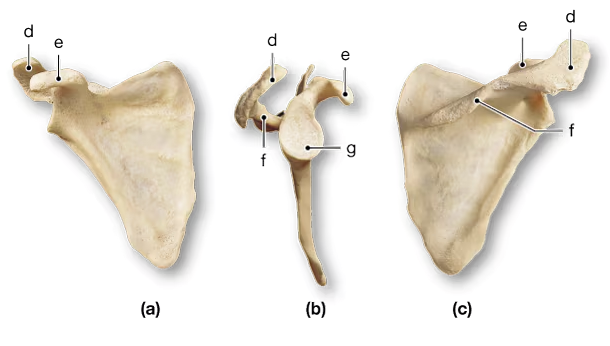
In the following photographs of the scapula, identify the three views (a–c) and the indicated bone markings (d–g).
Three labeled views of a scapula bone showing specific anatomical landmarks marked d through g.-+
a. ___
b. ___
c. ___
d. ___
e. ___
f. ___
g.___

Verified step by step guidance
1
Step 1: Understand the three standard views of the scapula commonly used in anatomy: the anterior (costal) view, the posterior (dorsal) view, and the lateral (axillary) view. Each view highlights different bone markings.
Step 2: For each photograph labeled a, b, and c, analyze the visible features such as the spine of the scapula, the glenoid cavity, the acromion, and the coracoid process to determine which view it represents.
Step 3: Identify the bone markings labeled d through g by locating prominent landmarks on the scapula such as the acromion, coracoid process, spine, glenoid cavity, and the borders (medial, lateral, superior). Match each label to the corresponding anatomical feature based on its position in the image.
Step 4: Use anatomical knowledge to confirm your identifications. For example, the spine of the scapula is only visible on the posterior view, while the costal (anterior) surface is smooth and concave.
Step 5: Write down the names of the views for a, b, and c, and the names of the bone markings for d, e, f, and g, ensuring each corresponds correctly to the visual cues and anatomical landmarks observed.

Verified video answer for a similar problem:

This video solution was recommended by our tutors as helpful for the problem above.
Video duration:
3m
Was this helpful?

Key Concepts

Here are the essential concepts you must grasp in order to answer the question correctly.

Anatomical Views of the Scapula

Understanding the different views of the scapula—such as anterior (costal), posterior (dorsal), and lateral (axillary)—is essential for identifying the orientation of the bone in images. Each view highlights distinct features and landmarks important for anatomical identification.
Recommended video:
Guided course
02:40
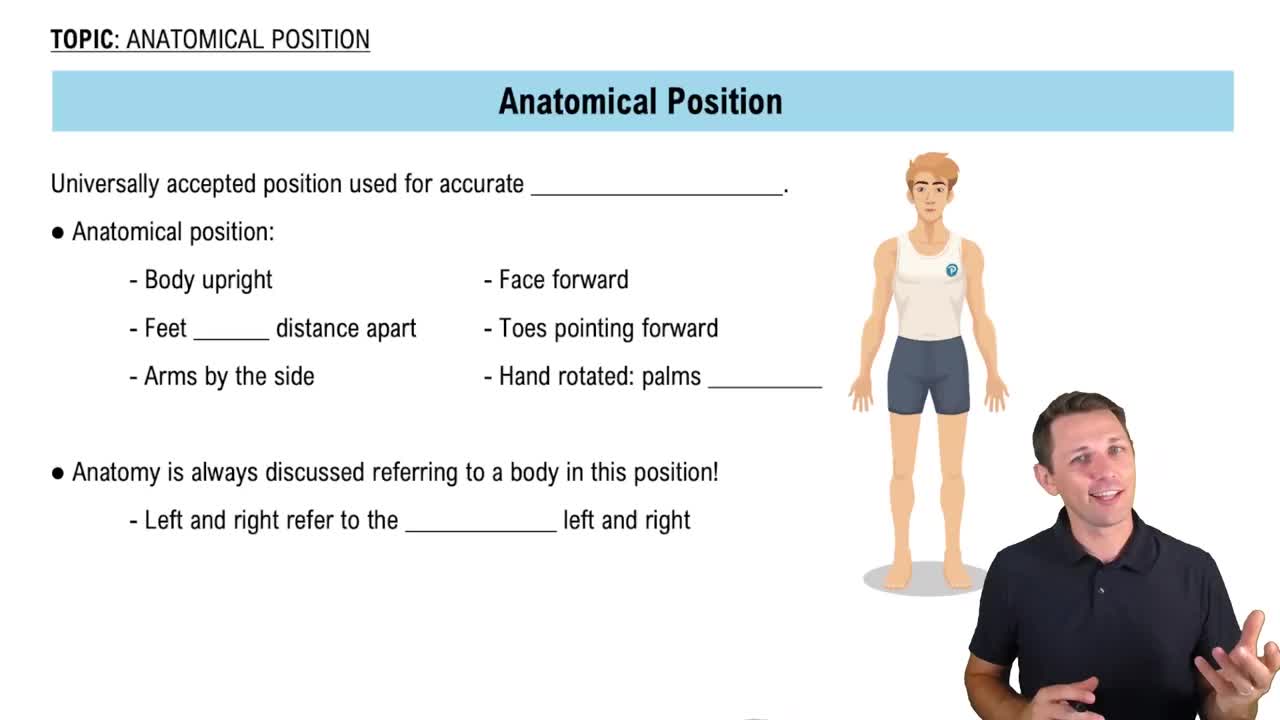
Anatomical Position

Bone Markings of the Scapula

Bone markings are specific features on the scapula like processes, fossae, borders, and angles that serve as attachment points for muscles and ligaments. Recognizing these markings (e.g., spine, acromion, coracoid process) helps in accurately naming the indicated parts in images.
Recommended video:
Guided course
3:00
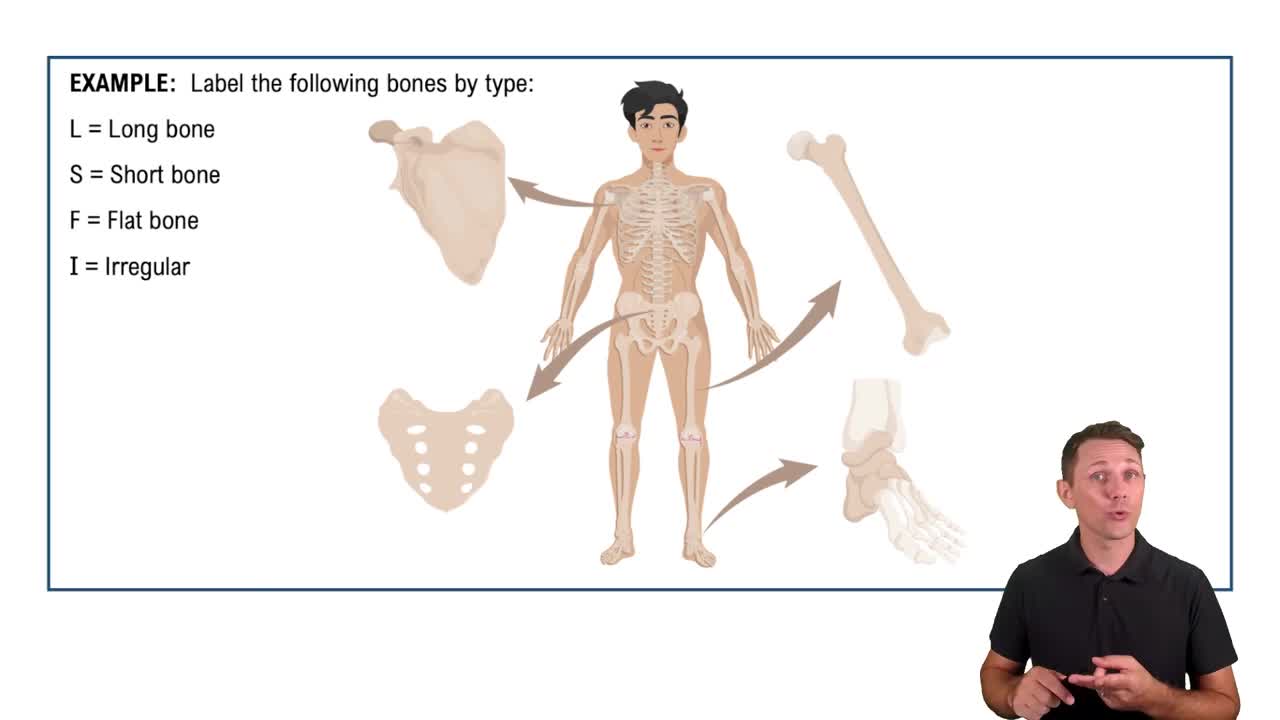
An Introduction to Bone and Skeletal Tissue Example 2

Functional Anatomy of the Scapula

Knowing the functional role of the scapula in shoulder movement and muscle attachment aids in understanding why certain bone markings are prominent. This context helps relate the anatomical features to their physiological importance, improving identification accuracy.
Recommended video:
06:04
Functional Groups