Ch. 7 The Axial Skeleton
Martini - Fundamentals of Anatomy and Physiology 12th Edition
Martini, Nath, Bartholomew12th EditionFundamentals of Anatomy and PhysiologyISBN: 9780137854011Not the one you use?Change textbook
Chapter 7, Problem 15

What is the relationship between the temporal bone and the ear?

Verified step by step guidance
1
Step 1: Understand the anatomy of the temporal bone. The temporal bone is a complex bone located at the sides and base of the skull, housing structures essential for hearing and balance.
Step 2: Identify the parts of the ear associated with the temporal bone. The ear is divided into three parts: the external ear, middle ear, and inner ear. The temporal bone contains the middle and inner ear structures.
Step 3: Explore the middle ear components within the temporal bone. The middle ear cavity, located inside the temporal bone, contains the ossicles (malleus, incus, and stapes) which transmit sound vibrations.
Step 4: Examine the inner ear structures housed in the temporal bone. The inner ear includes the cochlea (for hearing) and the vestibular apparatus (for balance), both embedded within the temporal bone.
Step 5: Summarize the relationship. The temporal bone provides the bony framework and protection for the delicate structures of the middle and inner ear, playing a crucial role in hearing and balance.

Verified video answer for a similar problem:

This video solution was recommended by our tutors as helpful for the problem above.
Was this helpful?

Key Concepts

Here are the essential concepts you must grasp in order to answer the question correctly.

Temporal Bone Anatomy

The temporal bone is a complex bone located at the sides and base of the skull. It houses structures essential for hearing and balance, including the external auditory canal, middle ear cavity, and inner ear components. Understanding its anatomy is crucial to grasp how it supports and protects the ear.
Recommended video:
Guided course
2:21
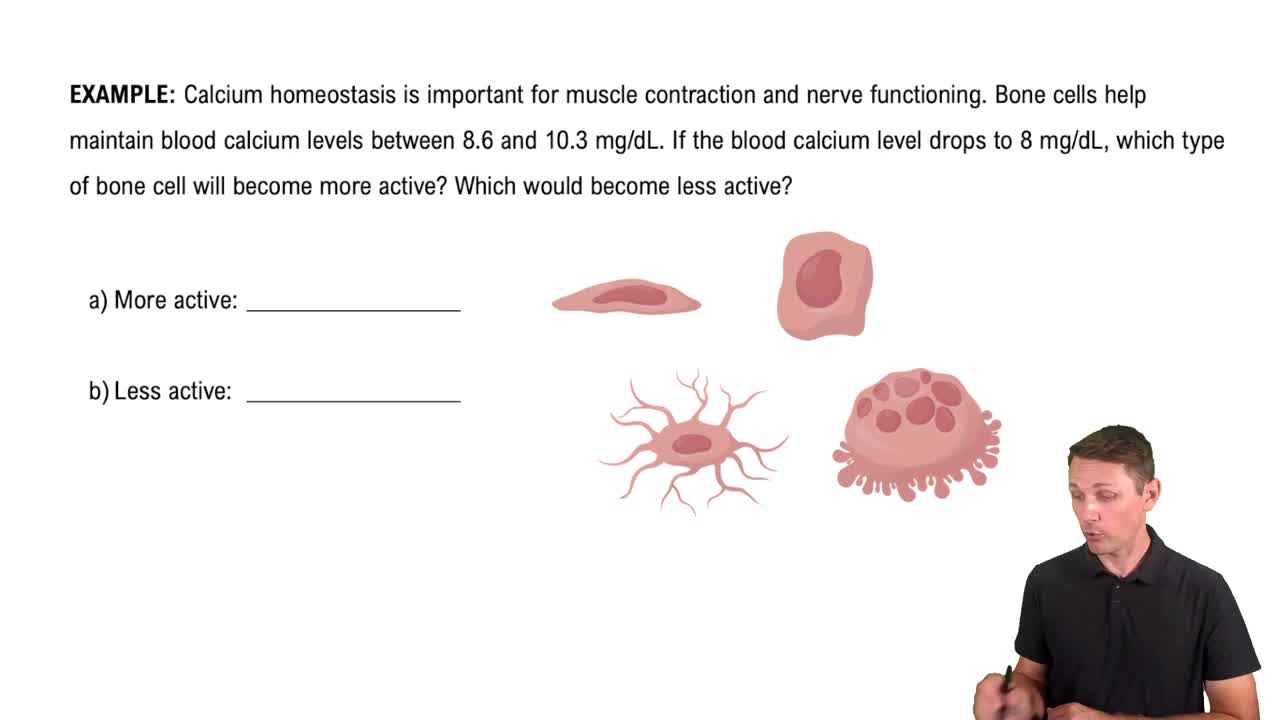
Microscopic Anatomy of Bones - Bone Cells Example 1

Ear Structure and Function

The ear consists of three parts: the outer ear, middle ear, and inner ear. Each part plays a role in capturing sound waves, transmitting vibrations, and converting them into neural signals. The temporal bone encloses and safeguards these delicate ear structures.
Recommended video:
06:04
Functional Groups

Relationship Between Bone and Ear Function

The temporal bone provides a rigid framework that protects the ear's sensory organs while allowing sound transmission through openings like the external auditory canal. It also contains the auditory ossicles in the middle ear, which amplify sound vibrations, linking bone structure directly to ear function.
Recommended video:
6:40
Relationship Between Blood Flow, Pressure, & Resistance