Ch. 6 Bones and Bone Structure
Martini - Fundamentals of Anatomy and Physiology 12th Edition
Martini, Nath, Bartholomew12th EditionFundamentals of Anatomy and PhysiologyISBN: 9780137854011Not the one you use?Change textbook
Chapter 6, Problem 8

The presence of an epiphyseal line indicates:
(a) Epiphyseal growth has ended
(b) Epiphyseal growth is just beginning
(c) Growth of bone diameter is just beginning
(d) The bone is fractured at the location
(e) No particular event

Verified step by step guidance
1
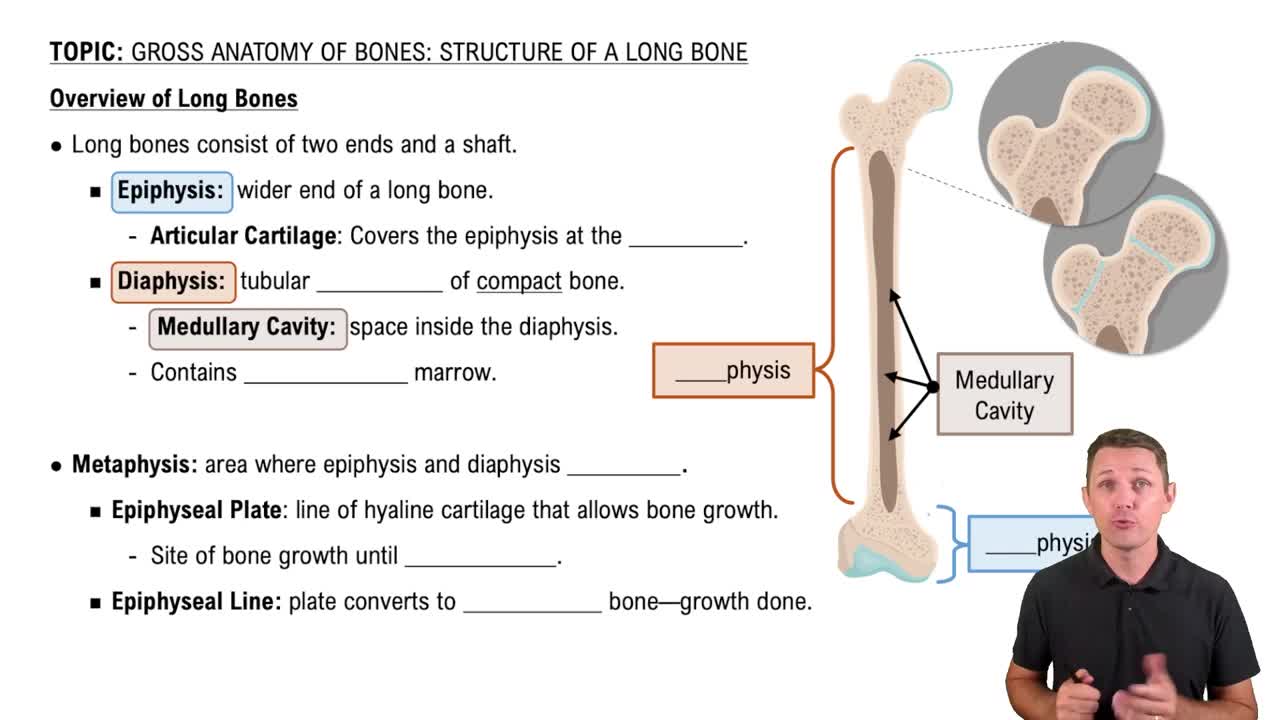
Understand that the epiphyseal line is a remnant of the epiphyseal plate, which is a region of cartilage found in growing bones.
Recall that the epiphyseal plate is responsible for longitudinal bone growth during childhood and adolescence.
Recognize that when the epiphyseal plate ossifies and becomes the epiphyseal line, it indicates that the bone has stopped growing in length.
Eliminate options that suggest growth is beginning or that the line indicates a fracture, as these do not align with the biological role of the epiphyseal line.
Conclude that the presence of an epiphyseal line means that epiphyseal growth has ended.

Verified video answer for a similar problem:

This video solution was recommended by our tutors as helpful for the problem above.
Video duration:
3m
Was this helpful?

Key Concepts

Here are the essential concepts you must grasp in order to answer the question correctly.

Epiphyseal Plate and Line

The epiphyseal plate, or growth plate, is a layer of cartilage found in growing bones where new bone tissue forms, allowing lengthwise growth. When growth ceases, this cartilage is replaced by bone, forming the epiphyseal line, which indicates that the bone has reached its adult length.
Recommended video:
1:56
First-Line Defenses

Bone Growth in Length vs. Diameter

Bone growth in length occurs at the epiphyseal plates through endochondral ossification, while growth in diameter (appositional growth) happens at the bone's surface. The epiphyseal line specifically relates to lengthwise growth cessation, not diameter growth.
Recommended video:
Guided course
6:19
Overview of Long Bones

Bone Fractures and Anatomical Markers

A bone fracture is a break or crack in the bone, which is a pathological condition, not a normal anatomical feature. The epiphyseal line is a normal anatomical marker indicating growth completion, not a sign of fracture.
Recommended video:
Guided course
02:40
Anatomical Position