Ch. 28 The Reproductive System
Martini - Fundamentals of Anatomy and Physiology 12th Edition
Martini, Nath, Bartholomew12th EditionFundamentals of Anatomy and PhysiologyISBN: 9780137854011Not the one you use?Change textbook
Chapter 27, Problem 20

Describe the hormonal events associated with the ovarian cycle.

Verified step by step guidance
1
Begin by understanding that the ovarian cycle is divided into three main phases: the follicular phase, ovulation, and the luteal phase, each regulated by specific hormonal changes.
During the follicular phase, the hypothalamus releases gonadotropin-releasing hormone (GnRH), which stimulates the anterior pituitary to secrete follicle-stimulating hormone (FSH) and luteinizing hormone (LH). FSH promotes the growth of ovarian follicles.
As follicles develop, they secrete increasing amounts of estrogen, which initially exerts negative feedback on FSH and LH secretion but later switches to positive feedback, leading to a surge in LH levels.
The LH surge triggers ovulation, the release of the mature egg from the dominant follicle, and initiates the transformation of the ruptured follicle into the corpus luteum.
In the luteal phase, the corpus luteum secretes progesterone and some estrogen, which maintain the uterine lining and exert negative feedback on GnRH, FSH, and LH to prevent further follicle development until the cycle restarts.

Verified video answer for a similar problem:

This video solution was recommended by our tutors as helpful for the problem above.
Was this helpful?

Key Concepts

Here are the essential concepts you must grasp in order to answer the question correctly.

Phases of the Ovarian Cycle

The ovarian cycle consists of three main phases: the follicular phase, ovulation, and the luteal phase. Each phase involves specific hormonal changes that regulate the development and release of an egg from the ovary.
Recommended video:
09:54
Phases of The Krebs Cycle

Role of Gonadotropins (FSH and LH)

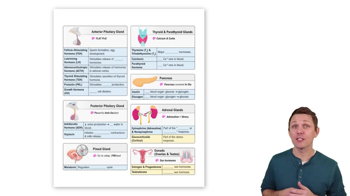
Follicle-stimulating hormone (FSH) stimulates follicle growth in the ovary, while luteinizing hormone (LH) triggers ovulation and formation of the corpus luteum. These hormones are secreted by the anterior pituitary and are key regulators of the ovarian cycle.
Recommended video:
Guided course
13:06
Review of Major Hormones

Estrogen and Progesterone Secretion

Estrogen is primarily produced by developing follicles and promotes the thickening of the uterine lining. After ovulation, the corpus luteum secretes progesterone, which maintains the uterine lining for potential pregnancy and inhibits further ovulation.
Recommended video:
01:33
Protein Secretion