Ch. 26 The Urinary System
Martini - Fundamentals of Anatomy and Physiology 12th Edition
Martini, Nath, Bartholomew12th EditionFundamentals of Anatomy and PhysiologyISBN: 9780137854011Not the one you use?Change textbook
Chapter 25, Problem 6

Changing the luminal diameters of the afferent and efferent arterioles to alter the GFR can be an example of 
(a) Hormonal regulation
(b) Autonomic regulation
(c) Autoregulation
(d) All of these

Verified step by step guidance
1
Step 1: Understand the key terms in the question. The afferent and efferent arterioles are small blood vessels that regulate blood flow into and out of the glomerulus in the kidney, which directly affects the Glomerular Filtration Rate (GFR).
Step 2: Define the types of regulation mentioned: (a) Hormonal regulation involves hormones like angiotensin II or atrial natriuretic peptide affecting arteriole diameter; (b) Autonomic regulation involves nervous system control, such as sympathetic nervous system input; (c) Autoregulation refers to the kidney's intrinsic ability to maintain a stable GFR by adjusting arteriole diameter without external signals.
Step 3: Recognize that changing the luminal diameter of afferent and efferent arterioles to alter GFR can occur through intrinsic mechanisms (autoregulation), hormonal signals, and autonomic nervous system input.
Step 4: Since all three mechanisms can influence arteriole diameter and thus GFR, consider that the correct answer might encompass all these regulatory methods.
Step 5: Conclude that the process described is an example of (d) All of these, because hormonal, autonomic, and autoregulatory mechanisms all contribute to changing arteriole diameter and regulating GFR.

Verified video answer for a similar problem:

This video solution was recommended by our tutors as helpful for the problem above.
Was this helpful?

Key Concepts

Here are the essential concepts you must grasp in order to answer the question correctly.

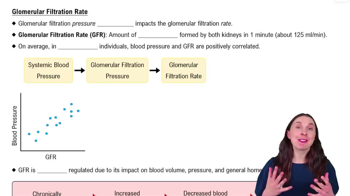
Glomerular Filtration Rate (GFR)

GFR is the rate at which blood is filtered through the glomeruli of the kidneys. It depends on the pressure within the glomerular capillaries, which is influenced by the diameter of afferent and efferent arterioles. Changes in these diameters directly affect filtration efficiency.
Recommended video:
3:15
Glomerular Filtration Rate

Autoregulation of Kidney Function

Autoregulation refers to the kidney's intrinsic ability to maintain a stable GFR despite fluctuations in blood pressure. It involves adjusting the luminal diameter of afferent and efferent arterioles to control blood flow and filtration pressure without external signals.
Recommended video:
1:00
The Kidneys Example 1

Hormonal and Autonomic Regulation

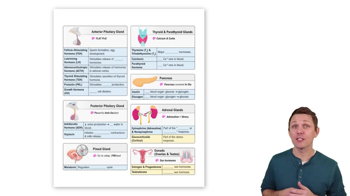
Hormonal regulation involves substances like angiotensin II and atrial natriuretic peptide that alter arteriole diameter to influence GFR. Autonomic regulation uses sympathetic nervous system signals to constrict or dilate arterioles, affecting kidney blood flow and filtration.
Recommended video:
Guided course
13:06
Review of Major Hormones