Ch. 24 The Digestive System
Martini - Fundamentals of Anatomy and Physiology 12th Edition
Martini, Nath, Bartholomew12th EditionFundamentals of Anatomy and PhysiologyISBN: 9780137854011Not the one you use?Change textbook
Chapter 24, Problem 24

A drop in pH below 4.5 in the duodenum stimulates the secretion of
(a) Secretin
(b) Cholecystokinin
(c) Gastrin
(d) All of these

Verified step by step guidance
1
Understand the physiological context: The duodenum is the first part of the small intestine where acidic chyme from the stomach enters, and its pH can influence hormone secretion.
Recall that secretin is a hormone released by the S cells of the duodenum in response to acidic pH (typically below 4.5) to help neutralize the acid by stimulating bicarbonate secretion from the pancreas.
Recognize that cholecystokinin (CCK) is primarily released in response to fats and proteins in the duodenum, not directly by low pH.
Know that gastrin is secreted by the stomach in response to food and stimulates acid secretion, but it is not primarily triggered by low pH in the duodenum.
Conclude that a drop in pH below 4.5 in the duodenum specifically stimulates the secretion of secretin to protect the intestinal lining and regulate pH.

Verified video answer for a similar problem:

This video solution was recommended by our tutors as helpful for the problem above.
Was this helpful?

Key Concepts

Here are the essential concepts you must grasp in order to answer the question correctly.

pH and its Role in the Digestive System

pH measures the acidity or alkalinity of a solution. In the digestive system, different sections have specific pH ranges that regulate enzyme activity and hormone secretion. A drop in pH below 4.5 in the duodenum indicates increased acidity, triggering hormonal responses to protect the intestine and aid digestion.
Recommended video:
Guided course
6:28
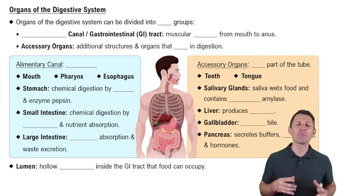
Organs of the Digestive System

Secretin and its Function

Secretin is a hormone released by the S cells of the duodenum in response to acidic chyme entering from the stomach. It stimulates the pancreas to secrete bicarbonate-rich fluid, which neutralizes the acid, protecting the intestinal lining and creating an optimal pH for digestive enzymes.
Recommended video:
06:04
Functional Groups

Cholecystokinin and Gastrin

Cholecystokinin (CCK) is released in response to fats and proteins, stimulating bile and pancreatic enzyme secretion. Gastrin primarily stimulates gastric acid secretion in the stomach. Unlike secretin, neither CCK nor gastrin is directly triggered by low pH in the duodenum.
Recommended video:
Guided course
7:18
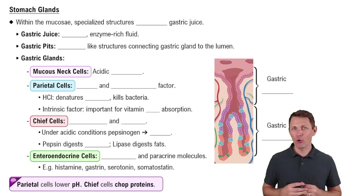
Stomach Glands