Ch. 19 Blood
Martini - Fundamentals of Anatomy and Physiology 12th Edition
Martini, Nath, Bartholomew12th EditionFundamentals of Anatomy and PhysiologyISBN: 9780137854011Not the one you use?Change textbook
Chapter 19, Problem 3

Blood temperature is approximately ___, and blood pH averages ___.
(a) 36 °C, 7.0
(b) 39 °C, 7.8
(c) 38 °C, 7.4
(d) 37 °C, 7.0

Verified step by step guidance
1
Step 1: Understand the normal physiological values for blood temperature and pH. Blood temperature is typically close to the body's core temperature, which is around 37 °C in a healthy adult.
Step 2: Recall that blood pH is tightly regulated to maintain homeostasis, usually slightly alkaline, with a normal average value around 7.4.
Step 3: Compare the given options with these known physiological norms: temperature near 37 °C and pH near 7.4.
Step 4: Eliminate options that have blood temperature or pH values significantly different from these normal ranges (e.g., 39 °C or pH 7.8 are outside normal limits).
Step 5: Select the option that best matches the typical blood temperature and pH values, which are approximately 37 °C and 7.4 respectively.

Verified video answer for a similar problem:

This video solution was recommended by our tutors as helpful for the problem above.
Was this helpful?

Key Concepts

Here are the essential concepts you must grasp in order to answer the question correctly.

Normal Blood Temperature

Blood temperature closely reflects the body's core temperature, which is typically around 37 °C in healthy humans. This temperature is crucial for maintaining enzymatic and metabolic processes essential for life.
Recommended video:
3:43
Normal Microbiota

Blood pH and Its Regulation

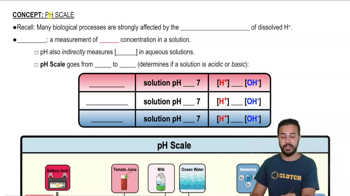
Blood pH measures the acidity or alkalinity of blood, normally averaging about 7.4, which is slightly alkaline. Maintaining this pH is vital for proper cellular function and is regulated by buffer systems, respiration, and renal function.
Recommended video:
07:58
pH Scale

Physiological Importance of Homeostasis

Homeostasis refers to the body's ability to maintain stable internal conditions, such as temperature and pH. Proper regulation of blood temperature and pH ensures optimal enzyme activity and overall metabolic balance.
Recommended video:
Guided course
01:59
Introduction to Homeostasis