Ch. 14 The Brain and Cranial Nerves
Martini - Fundamentals of Anatomy and Physiology 12th Edition
Martini, Nath, Bartholomew12th EditionFundamentals of Anatomy and PhysiologyISBN: 9780137854011Not the one you use?Change textbook
Chapter 14, Problem 21

What varied roles does the hypothalamus play in the body?

Verified step by step guidance
1
Step 1: Understand that the hypothalamus is a small but crucial part of the brain located below the thalamus and above the brainstem, playing a central role in maintaining homeostasis.
Step 2: Recognize that one major role of the hypothalamus is regulating the autonomic nervous system, which controls involuntary bodily functions such as heart rate, blood pressure, and digestion.
Step 3: Identify that the hypothalamus controls the endocrine system by producing releasing and inhibiting hormones that regulate the pituitary gland, which in turn controls other endocrine glands.
Step 4: Note that the hypothalamus is involved in regulating body temperature, hunger and thirst, sleep-wake cycles, and emotional responses, integrating signals from the body and environment to maintain balance.
Step 5: Summarize that the hypothalamus acts as a command center linking the nervous system to the endocrine system and coordinating vital physiological processes essential for survival and well-being.

Verified video answer for a similar problem:

This video solution was recommended by our tutors as helpful for the problem above.
Video duration:
2m
Was this helpful?

Key Concepts

Here are the essential concepts you must grasp in order to answer the question correctly.

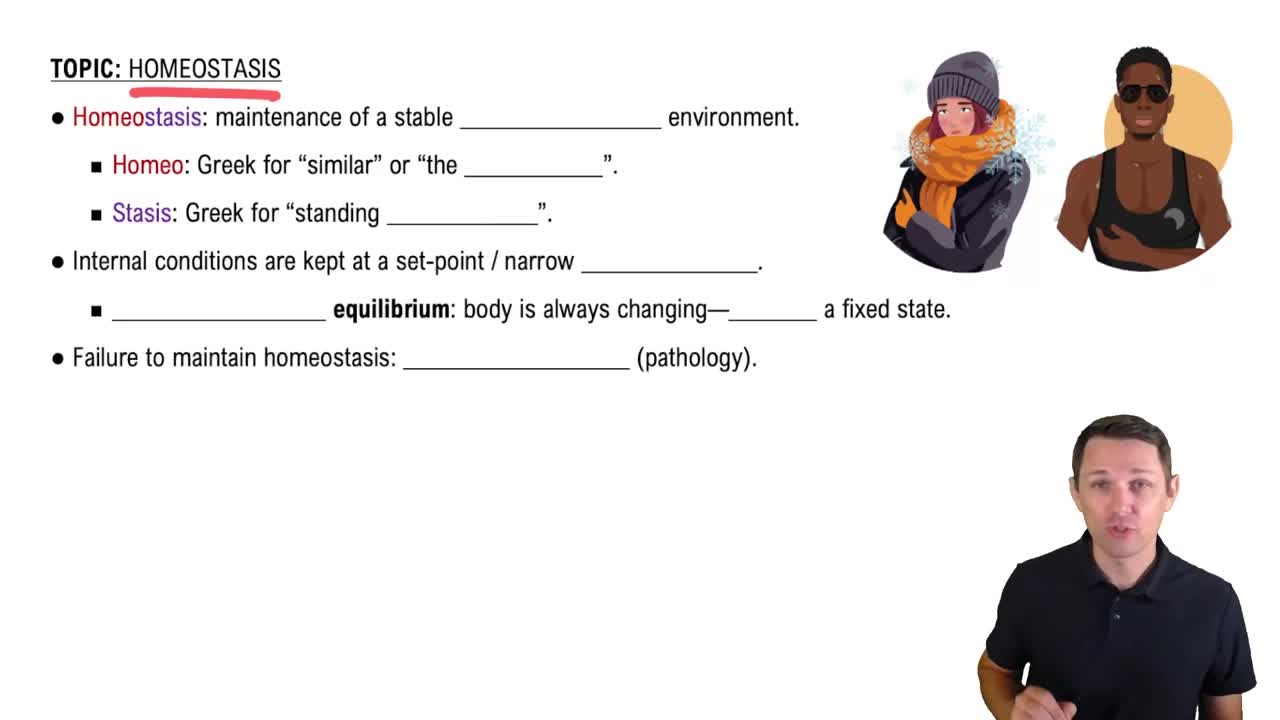
Hypothalamus and Homeostasis

The hypothalamus is a brain region that maintains the body's internal balance, or homeostasis, by regulating temperature, hunger, thirst, and sleep cycles. It acts as a control center, ensuring stable conditions necessary for survival.
Recommended video:
Guided course
01:59
Introduction to Homeostasis

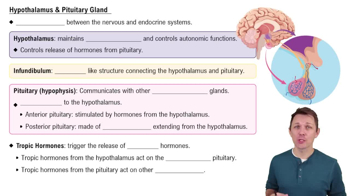
Endocrine Regulation via the Pituitary Gland

The hypothalamus controls the pituitary gland, often called the 'master gland,' by releasing hormones that regulate growth, metabolism, and reproductive functions. This connection links the nervous system to the endocrine system.
Recommended video:
Guided course
7:10
Hypothalamus & Pituitary Gland

Autonomic Nervous System Control

The hypothalamus influences the autonomic nervous system, which manages involuntary bodily functions like heart rate, blood pressure, and digestion. It helps coordinate physiological responses to stress and environmental changes.
Recommended video:
1:10
Introduction to the Autonomic Nervous System Example 1