Ch. 11 The Muscular System
Martini - Fundamentals of Anatomy and Physiology 12th Edition
Martini, Nath, Bartholomew12th EditionFundamentals of Anatomy and PhysiologyISBN: 9780137854011Not the one you use?Change textbook
Chapter 11, Problem 2

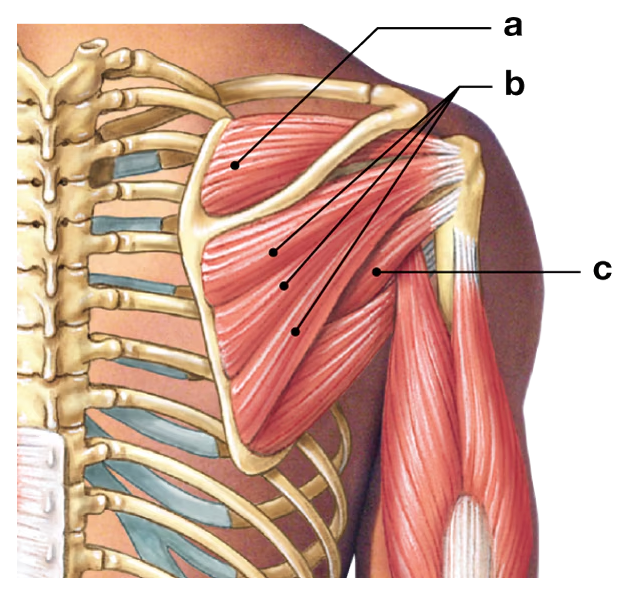
Label the three visible muscles of the rotator cuff in the following posterior view of the deep muscles that move the arm.
a. ___
b. ___
c. ___
Posterior view of the shoulder showing three labeled rotator cuff muscles with attachment points on the scapula and humerus.

Verified step by step guidance
1
Step 1: Understand the anatomy of the rotator cuff muscles. The rotator cuff is composed of four muscles that stabilize the shoulder joint: supraspinatus, infraspinatus, teres minor, and subscapularis. In a posterior view, the visible muscles are typically supraspinatus, infraspinatus, and teres minor.
Step 2: Identify the location of each muscle in the posterior view. The supraspinatus is located at the top of the scapula, above the spine of the scapula. The infraspinatus is found below the spine of the scapula, covering most of the posterior surface. The teres minor is located just below the infraspinatus, near the lateral border of the scapula.
Step 3: Match each label (a, b, c) to the corresponding muscle based on their anatomical position. For example, the topmost label likely corresponds to supraspinatus, the middle label to infraspinatus, and the lowest label to teres minor.
Step 4: Confirm your identification by recalling the function and attachment points of each muscle. Supraspinatus abducts the arm, infraspinatus and teres minor laterally rotate the arm, and all attach to the greater tubercle of the humerus.
Step 5: Write down the names of the muscles next to each label accordingly: a. Supraspinatus, b. Infraspinatus, c. Teres minor.

Verified video answer for a similar problem:

This video solution was recommended by our tutors as helpful for the problem above.
Was this helpful?

Key Concepts

Here are the essential concepts you must grasp in order to answer the question correctly.

Rotator Cuff Muscles

The rotator cuff is a group of four muscles that stabilize the shoulder joint and enable arm movement. These muscles include the supraspinatus, infraspinatus, teres minor, and subscapularis. In a posterior view, three of these muscles—supraspinatus, infraspinatus, and teres minor—are visible.
Recommended video:
Guided course
5:41
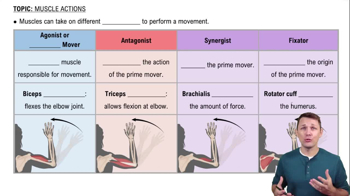
Muscle Actions

Posterior View Anatomy of the Shoulder

A posterior view of the shoulder shows the back side of the scapula and surrounding muscles. Understanding this perspective helps identify which rotator cuff muscles are visible, as the subscapularis lies anteriorly and is not seen from the back.
Recommended video:
Guided course
02:31
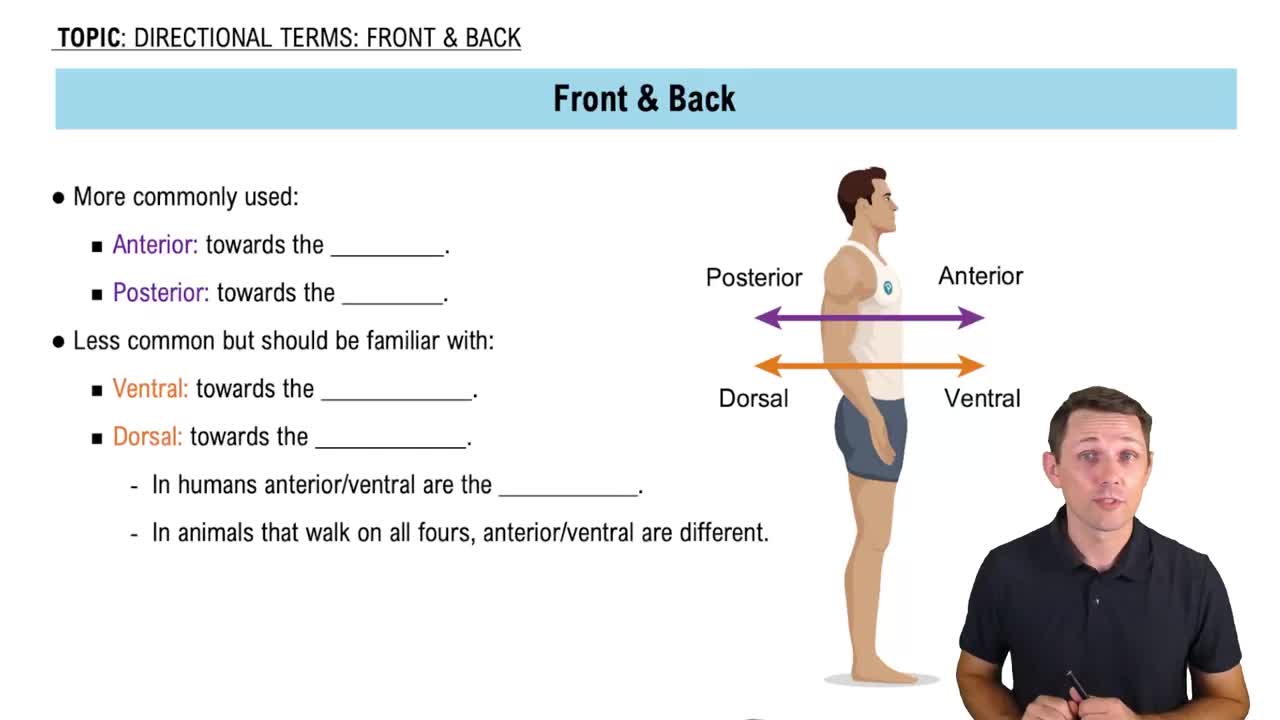
Anterior and Posterior

Muscle Identification Techniques

Identifying muscles involves recognizing their location, origin, insertion, and function. For the rotator cuff, knowing the position of each muscle relative to the scapula and humerus aids in labeling them correctly in anatomical images.
Recommended video:
Guided course
16:19
Epithelium Identification Flow Chart