Ch. 1 An Introduction to Anatomy and Physiology
Martini - Fundamentals of Anatomy and Physiology 12th Edition
Martini, Nath, Bartholomew12th EditionFundamentals of Anatomy and PhysiologyISBN: 9780137854011Not the one you use?Change textbook
Chapter 1, Problem 7

Match each numbered item with the most closely related lettered item. Use letters for answers in the spaces provided.
____Muscle
a. Study of tissues 
b. Constant internal environment 
c. Face-up position 
d. Study of functions 
e. Positive feedback 
f. Organ system 
g. Study of cells 
h. Negative feedback 
i. Serous membrane 
j. Study of internal and external body structures 
k. Diaphragm 
l. Tissue 
m. Peritoneal cavity 
n. Organ 
o. Face-down position

Verified step by step guidance
1
Step 1: Understand the key terms related to anatomy and physiology. For example, 'Muscle' is a type of tissue composed of cells specialized for contraction and movement.
Step 2: Identify the category that best fits 'Muscle' from the given lettered options. Since muscle is a group of similar cells working together, it corresponds to the term related to 'Tissue'.
Step 3: Review the lettered options and find the one that defines 'Tissue'. In this case, option 'a' is 'Study of tissues' which is about the study, but the direct term for muscle as a group of cells is 'l. Tissue'.
Step 4: Match 'Muscle' with the letter 'l' because muscle is a type of tissue, and 'l' represents 'Tissue'.
Step 5: Confirm that the match makes sense by recalling that muscle is not an organ system, organ, or study field, but a tissue type.

Verified video answer for a similar problem:

This video solution was recommended by our tutors as helpful for the problem above.
Video duration:
3m
Was this helpful?

Key Concepts

Here are the essential concepts you must grasp in order to answer the question correctly.

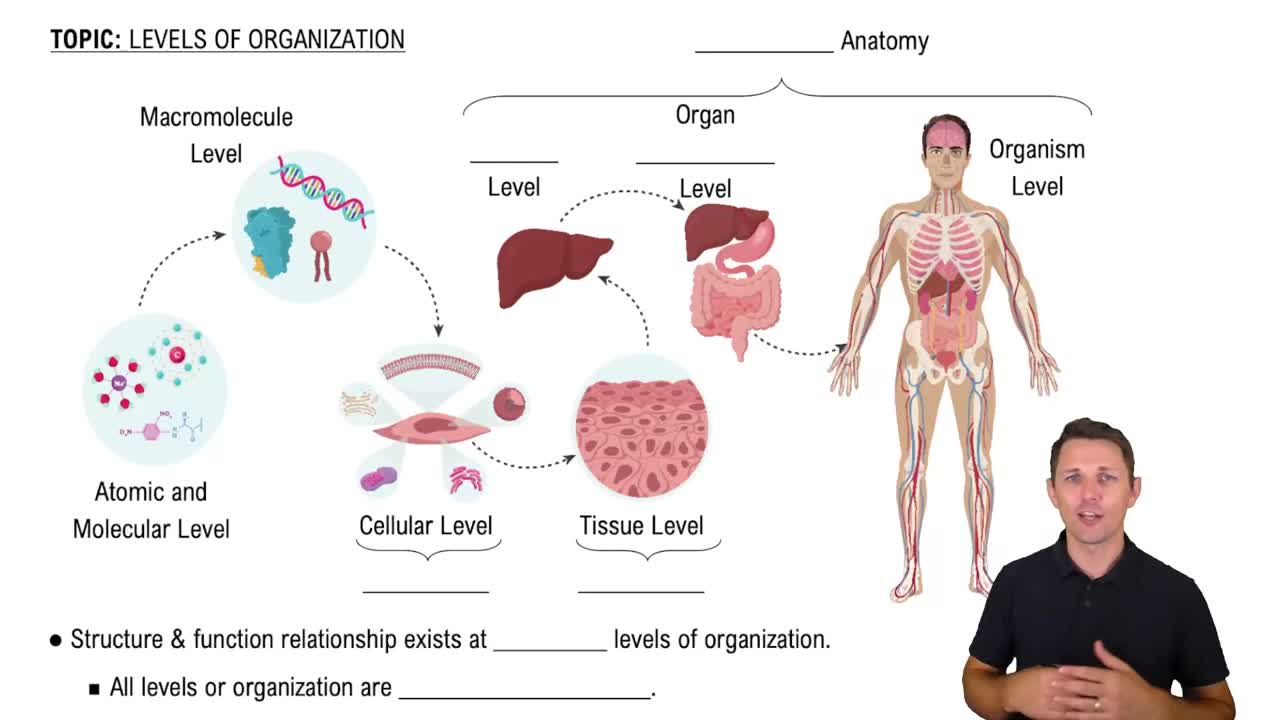
Levels of Structural Organization

The human body is organized into hierarchical levels: cells form tissues, tissues form organs, organs form organ systems, and organ systems make up the whole organism. Understanding these levels helps in matching terms like muscle (a tissue) with the correct category.
Recommended video:
Guided course
05:04
The Levels of Organization

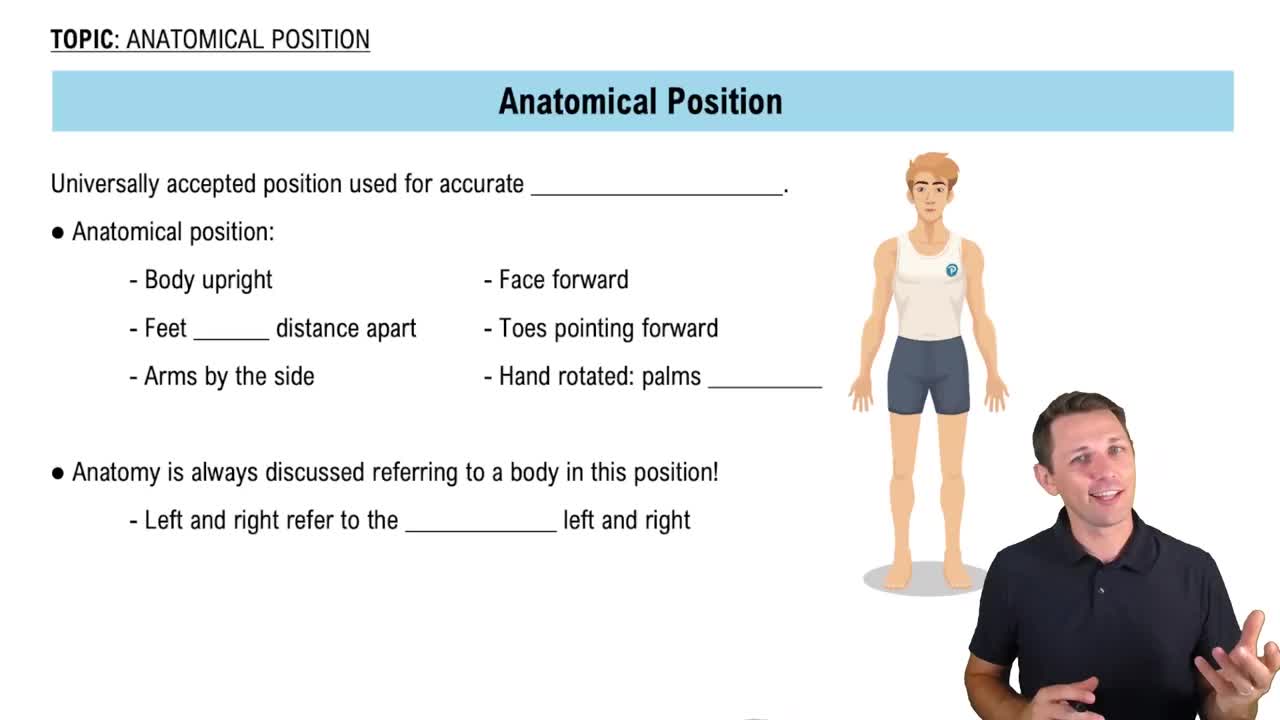
Anatomical Terminology and Positions

Anatomical terms describe body positions and orientations, such as 'face-up' (supine) and 'face-down' (prone). Recognizing these terms is essential for correctly associating descriptions like 'face-up position' with their lettered counterparts.
Recommended video:
Guided course
02:40
Anatomical Position

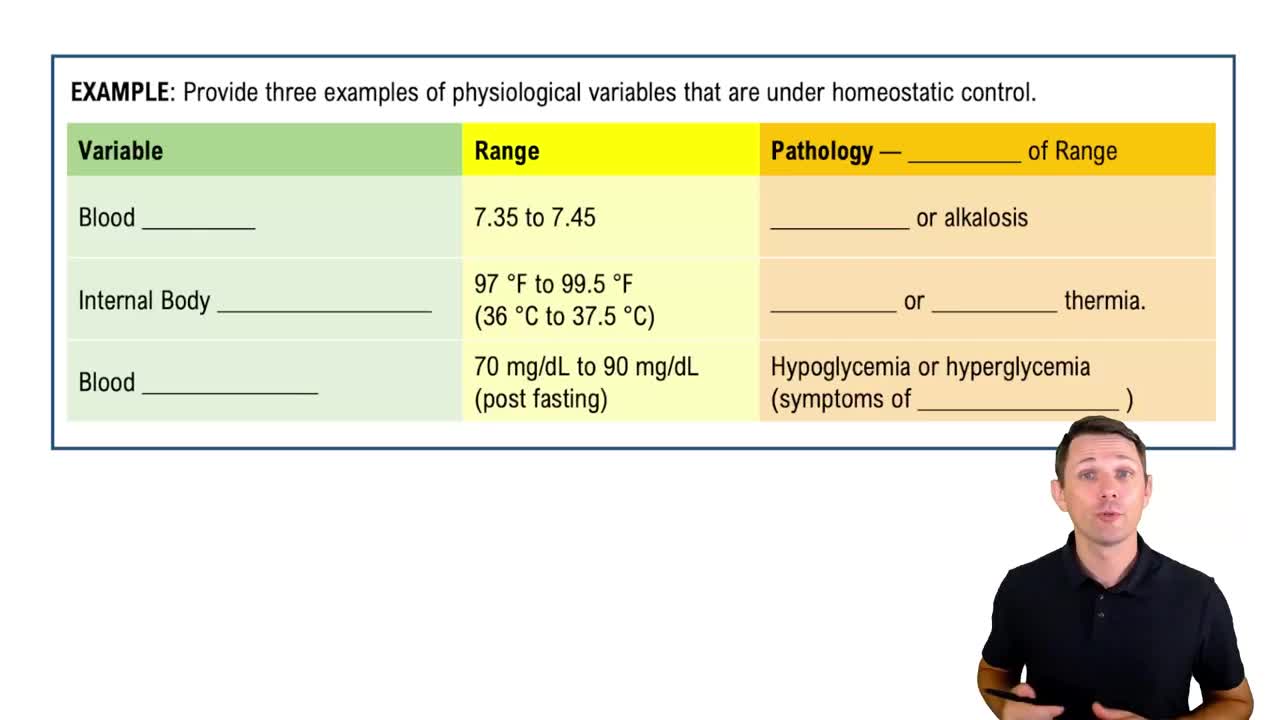
Homeostasis and Feedback Mechanisms

Homeostasis refers to maintaining a stable internal environment, often regulated by feedback systems. Negative feedback reverses changes to maintain balance, while positive feedback amplifies responses. These concepts clarify terms like 'constant internal environment' and 'positive feedback.'
Recommended video:
Guided course
03:46
Homeostasis Example 1
Related Practice
Textbook Question

Match each numbered item with the most closely related lettered item. Use letters for answers in the spaces provided.

_____Temperature regulation

a. Study of tissues 

b. Constant internal environment 

c. Face-up position 

d. Study of functions 

e. Positive feedback 

f. Organ system 

g. Study of cells 

h. Negative feedback 

i. Serous membrane 

j. Study of internal and external body structures 

k. Diaphragm 

l. Tissue 

m. Peritoneal cavity 

n. Organ 

o. Face-down position

Textbook Question

Match each numbered item with the most closely related lettered item. Use letters for answers in the spaces provided.

_____Endocrine

a. Study of tissues 

b. Constant internal environment 

c. Face-up position 

d. Study of functions 

e. Positive feedback 

f. Organ system 

g. Study of cells 

h. Negative feedback 

i. Serous membrane 

j. Study of internal and external body structures 

k. Diaphragm 

l. Tissue 

m. Peritoneal cavity 

n. Organ 

o. Face-down position

Textbook Question

Match each numbered item with the most closely related lettered item. Use letters for answers in the spaces provided.

___ Homeostasis

a. Study of tissues 

b. Constant internal environment 

c. Face-up position 

d. Study of functions 

e. Positive feedback 

f. Organ system 

g. Study of cells 

h. Negative feedback 

i. Serous membrane 

j. Study of internal and external body structures 

k. Diaphragm 

l. Tissue 

m. Peritoneal cavity 

n. Organ 

o. Face-down position

Textbook Question

Match each numbered item with the most closely related lettered item. Use letters for answers in the spaces provided.

____Histology

a. Study of tissues 

b. Constant internal environment 

c. Face-up position 

d. Study of functions 

e. Positive feedback 

f. Organ system 

g. Study of cells 

h. Negative feedback 

i. Serous membrane 

j. Study of internal and external body structures 

k. Diaphragm 

l. Tissue 

m. Peritoneal cavity 

n. Organ 

o. Face-down position

Textbook Question

Match each numbered item with the most closely related lettered item. Use letters for answers in the spaces provided.

_____ Anatomy

a. Study of tissues 

b. Constant internal environment 

c. Face-up position 

d. Study of functions 

e. Positive feedback 

f. Organ system 

g. Study of cells 

h. Negative feedback 

i. Serous membrane 

j. Study of internal and external body structures 

k. Diaphragm 

l. Tissue 

m. Peritoneal cavity 

n. Organ 

o. Face-down position

Textbook Question

Match each numbered item with the most closely related lettered item. Use letters for answers in the spaces provided.

_____Labor and delivery

a. Study of tissues 

b. Constant internal environment 

c. Face-up position 

d. Study of functions 

e. Positive feedback 

f. Organ system 

g. Study of cells 

h. Negative feedback 

i. Serous membrane 

j. Study of internal and external body structures 

k. Diaphragm 

l. Tissue 

m. Peritoneal cavity 

n. Organ 

o. Face-down position

1
views