Ch. 6 Bones and Bone Structure
Martini - Fundamentals of Anatomy & Physiology 11th Edition
Martini, Nath, Bartholomew11th EditionFundamentals of Anatomy & PhysiologyISBN: 9780136874089Not the one you use?Change textbook
Chapter 6, Problem 17

Which three organs or tissues interact to assist in the regulation of calcium ion concentration in body fluids?

Verified step by step guidance
1
Identify the primary organs and tissues involved in calcium ion regulation in the body. These typically include the bones, kidneys, and intestines.
Understand the role of bones as a reservoir for calcium ions, where calcium can be deposited or released to maintain balance in body fluids.
Recognize the kidneys' function in filtering blood and either reabsorbing calcium back into the bloodstream or excreting it in urine, thus controlling calcium levels.
Consider the intestines' role in absorbing calcium from dietary sources, which directly affects the amount of calcium entering the bloodstream.
Note that these three organs/tissues work together under hormonal control (such as parathyroid hormone and calcitriol) to maintain calcium homeostasis in body fluids.

Verified video answer for a similar problem:

This video solution was recommended by our tutors as helpful for the problem above.
Video duration:
2m
Was this helpful?

Key Concepts

Here are the essential concepts you must grasp in order to answer the question correctly.

Parathyroid Glands

The parathyroid glands secrete parathyroid hormone (PTH), which increases blood calcium levels by stimulating calcium release from bones, enhancing calcium absorption in the intestines, and reducing calcium excretion by the kidneys.
Recommended video:
Guided course
7:10
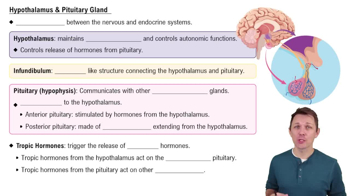
Hypothalamus & Pituitary Gland

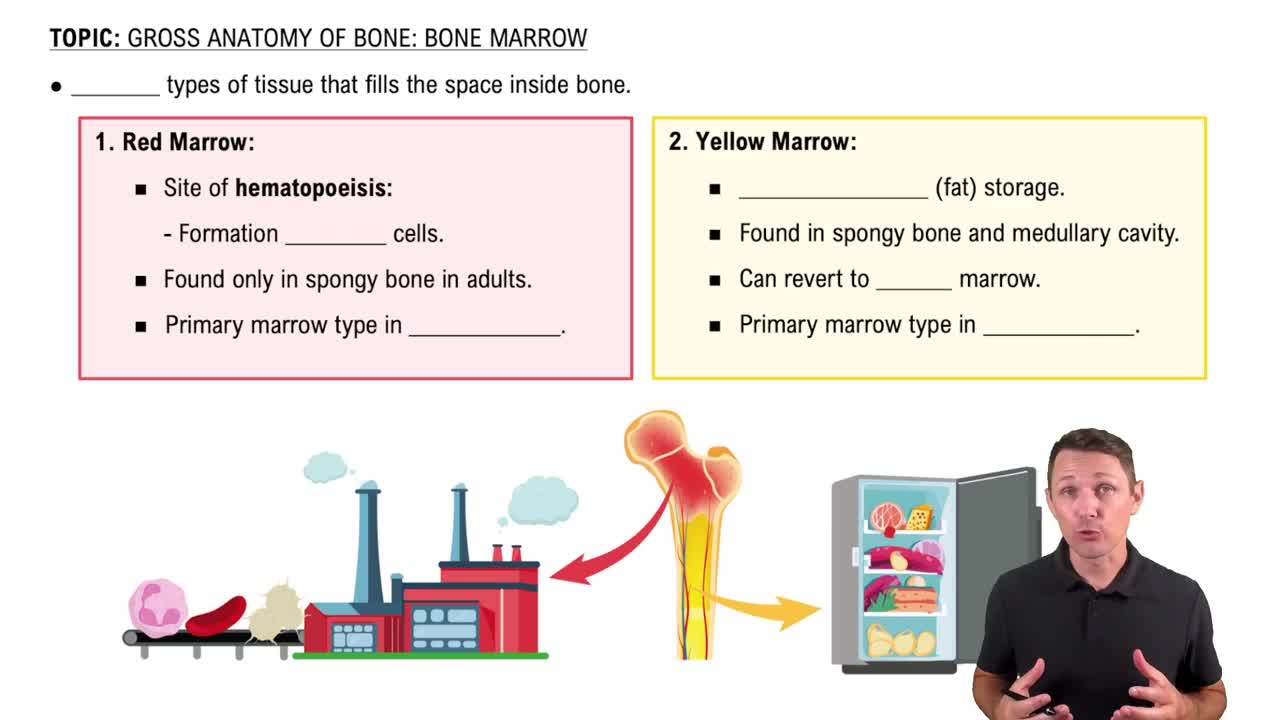
Bones

Bones act as a major reservoir for calcium, releasing calcium into the bloodstream when needed under the influence of hormones like PTH, and storing calcium when levels are high, thus playing a critical role in maintaining calcium balance.
Recommended video:

Kidneys

The kidneys regulate calcium levels by filtering blood and controlling calcium reabsorption or excretion in urine, influenced by hormones such as PTH and calcitriol, thereby helping to maintain stable calcium concentrations in body fluids.
Recommended video:
1:00
The Kidneys Example 1