
Ch. 6 Bones and Bone Structure
Martini - Fundamentals of Anatomy & Physiology 11th Edition
Martini, Nath, Bartholomew11th EditionFundamentals of Anatomy & PhysiologyISBN: 9780136874089Not the one you use?Change textbook
Chapter 6, Problem 25

The process of bone growth at the epiphyseal cartilage is similar to:
(a) Intramembranous ossification
(b) Endochondral ossification
(c) The process of osteopenia
(d) The process of healing a fracture
(e) The process of calcification

Verified step by step guidance
1
Step 1: Understand the key terms in the question. The epiphyseal cartilage, also known as the growth plate, is the area of growing tissue near the ends of long bones in children and adolescents.
Step 2: Recall the two main types of bone formation: intramembranous ossification and endochondral ossification. Intramembranous ossification involves direct bone formation from mesenchymal tissue, mainly in flat bones like the skull.
Step 3: Recognize that endochondral ossification involves the replacement of cartilage by bone, which is the process that occurs in long bones during growth, especially at the epiphyseal cartilage.
Step 4: Compare the options: osteopenia is a condition of reduced bone density, fracture healing is a repair process, and calcification is the deposition of calcium salts, which is part of ossification but not the entire process.
Step 5: Conclude that the process of bone growth at the epiphyseal cartilage is most similar to endochondral ossification, where cartilage is gradually replaced by bone tissue during growth.

Verified video answer for a similar problem:

This video solution was recommended by our tutors as helpful for the problem above.
Video duration:
2m
Was this helpful?

Key Concepts

Here are the essential concepts you must grasp in order to answer the question correctly.

Epiphyseal Cartilage and Bone Growth

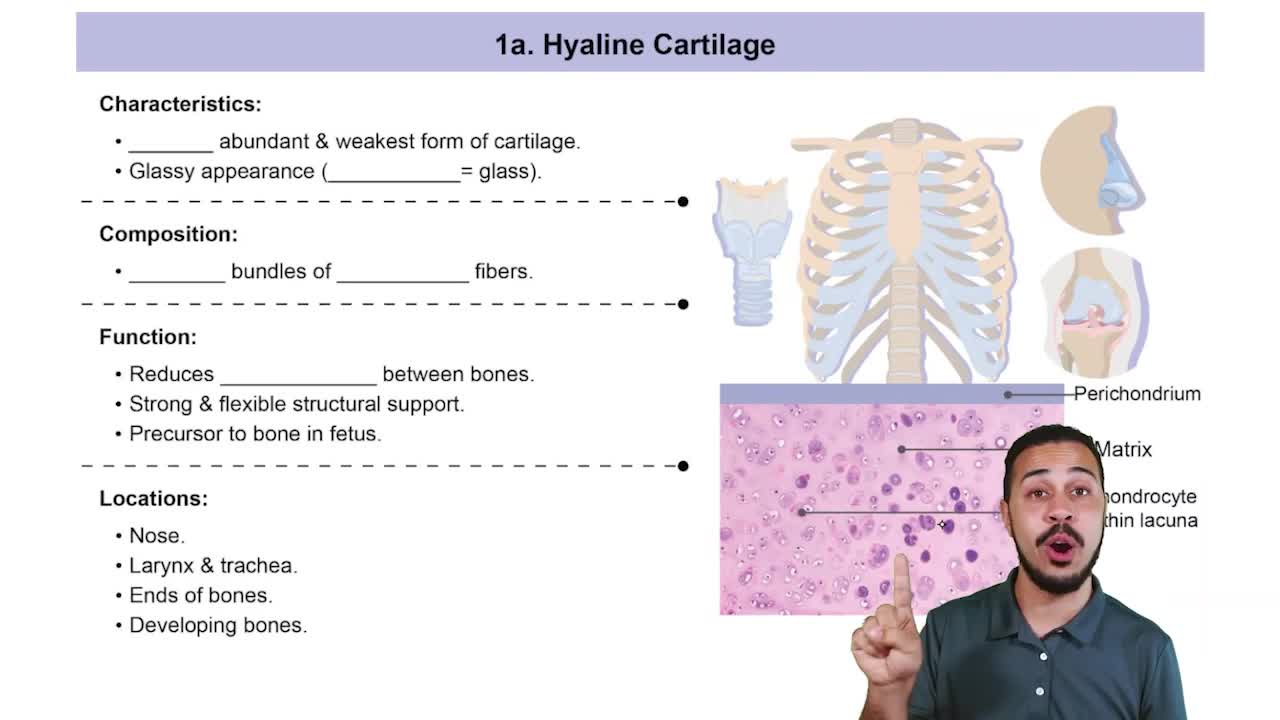
Epiphyseal cartilage, also known as the growth plate, is a layer of hyaline cartilage where new bone is produced during childhood and adolescence, allowing bones to lengthen. This cartilage gradually ossifies as the individual matures, contributing to longitudinal bone growth.
Recommended video:
Guided course
05:36
Hyaline Cartilage

Endochondral Ossification

Endochondral ossification is the process where bone develops by replacing hyaline cartilage. It is the primary method for forming long bones and involves cartilage growth, calcification, and subsequent replacement by bone tissue, closely mirroring the activity at the epiphyseal plate.
Recommended video:
02:23
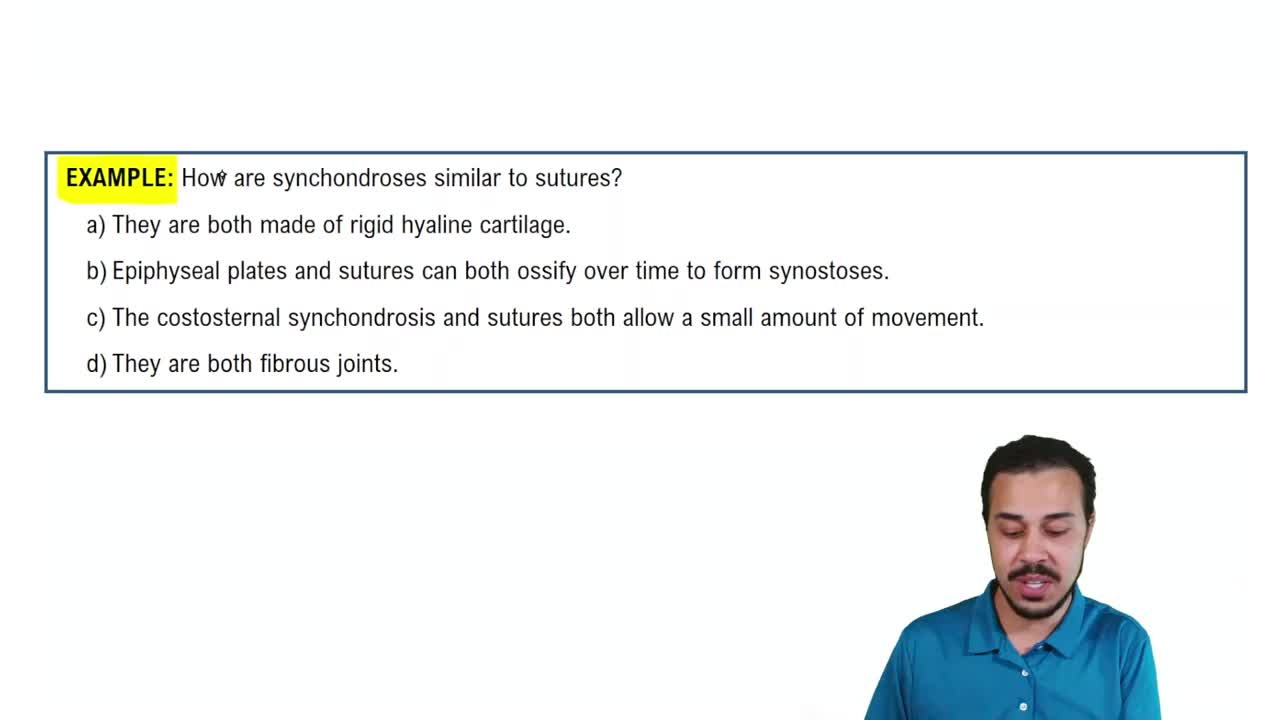
Structural Class: Cartilaginous Joints Example 1

Intramembranous Ossification

Intramembranous ossification is a bone formation process where bone develops directly from mesenchymal tissue without a cartilage precursor. This process mainly forms flat bones like those of the skull and differs from the cartilage-based growth seen at the epiphyseal plate.
Recommended video:
02:23
Structural Class: Cartilaginous Joints Example 1
Related Practice
Textbook Question

Frank does not enter puberty until he is 16. What effect would you predict this will have on his stature?

(a) Frank will probably be taller than if he had started puberty earlier.

(b) Frank will probably be shorter than if he had started puberty earlier.

(c) Frank will probably be a dwarf.

(d) Frank will have bones that are heavier than normal.

e) The late onset of puberty will have no effect on Frank's stature.

1
views
Textbook Question

What are the functional relationships between the skeleton, on the one hand, and the digestive and urinary systems, on the other?

1
views
Textbook Question

While playing on her swing set, 10-year-old Sally falls and breaks her right leg. At the emergency room, the doctor tells her parents that the proximal end of the tibia where the epiphysis meets the diaphysis is fractured. The fracture is properly set and eventually heals. During a routine physical when she is 18, Sally learns that her right leg is 2 cm shorter than her left, probably because of her accident. What might account for this difference?

1
views
Textbook Question

Why does a second fracture in the same bone tend to occur at a site different from that of the first fracture?

4
views
Textbook Question

Why would a physician be concerned about the growth patterns of a young child request an x-ray of the hand?

1
views
Textbook Question

Which of the following conditions would you possibly observe in a child who is suffering from rickets?

(a) Abnormally short limbs

(b) Abnormally long limbs

(c) Oversized facial bones

(d) Bowed legs

(e) Weak, brittle bones

1
views