
Ch. 5 The Integumentary System
Martini - Fundamentals of Anatomy & Physiology 11th Edition
Martini, Nath, Bartholomew11th EditionFundamentals of Anatomy & PhysiologyISBN: 9780136874089Not the one you use?Change textbook
Chapter 5, Problem 1d

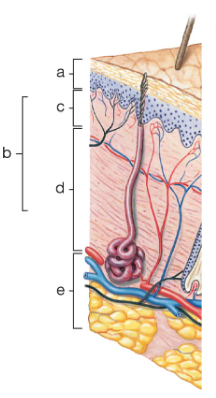
Identify the different portions (a–d) of the cutaneous membrane and the underlying layer of loose connective tissue (e) in the diagram to the right.
d. ____
Cross-section diagram of skin layers labeled a to e, showing epidermis, dermis, and underlying connective tissue.

Verified step by step guidance
1
Step 1: Understand the structure of the cutaneous membrane, which consists of the epidermis (outer layer) and dermis (inner layer). The epidermis is primarily composed of stratified squamous epithelium, while the dermis contains connective tissue.
Step 2: Identify the different portions labeled a–d in the diagram. Typically, these include layers such as the stratum corneum, stratum basale (both part of the epidermis), and the papillary and reticular layers of the dermis.
Step 3: Recognize that the underlying layer of loose connective tissue (e) beneath the dermis is the hypodermis or subcutaneous layer, which contains adipose tissue and provides insulation and cushioning.
Step 4: Match each label (a–d) to the corresponding layer or portion of the cutaneous membrane based on their position and characteristics in the diagram, such as thickness, cell type, and texture.
Step 5: Confirm that portion (d) corresponds to the specific layer indicated in the diagram, often the reticular layer of the dermis, which is dense irregular connective tissue providing strength and elasticity.

Verified video answer for a similar problem:

This video solution was recommended by our tutors as helpful for the problem above.
Video duration:
2m
Was this helpful?

Key Concepts

Here are the essential concepts you must grasp in order to answer the question correctly.

Cutaneous Membrane Structure

The cutaneous membrane, commonly known as the skin, consists of multiple layers including the epidermis and dermis. Understanding its structure helps identify different portions such as the outer protective layer and underlying supportive tissues.
Recommended video:
06:49
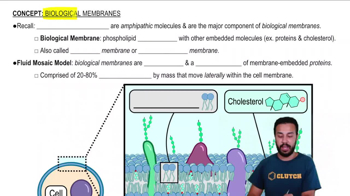
Biological Membranes

Epidermis and Dermis Layers

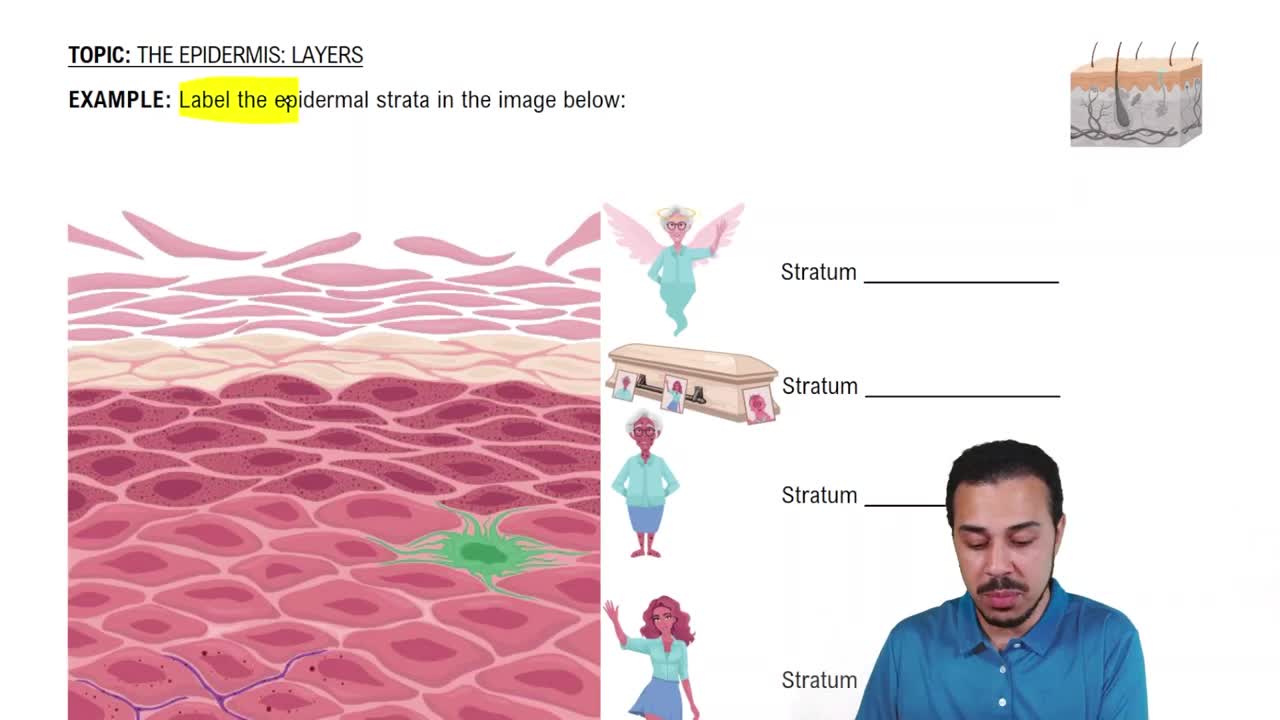
The epidermis is the outermost layer of the skin, providing a barrier against the environment, while the dermis lies beneath it, containing connective tissue, blood vessels, and nerves. Differentiating these layers is essential for labeling parts of the cutaneous membrane.
Recommended video:
04:09
The Epidermis: Layers Example 2

Loose Connective Tissue (Hypodermis)

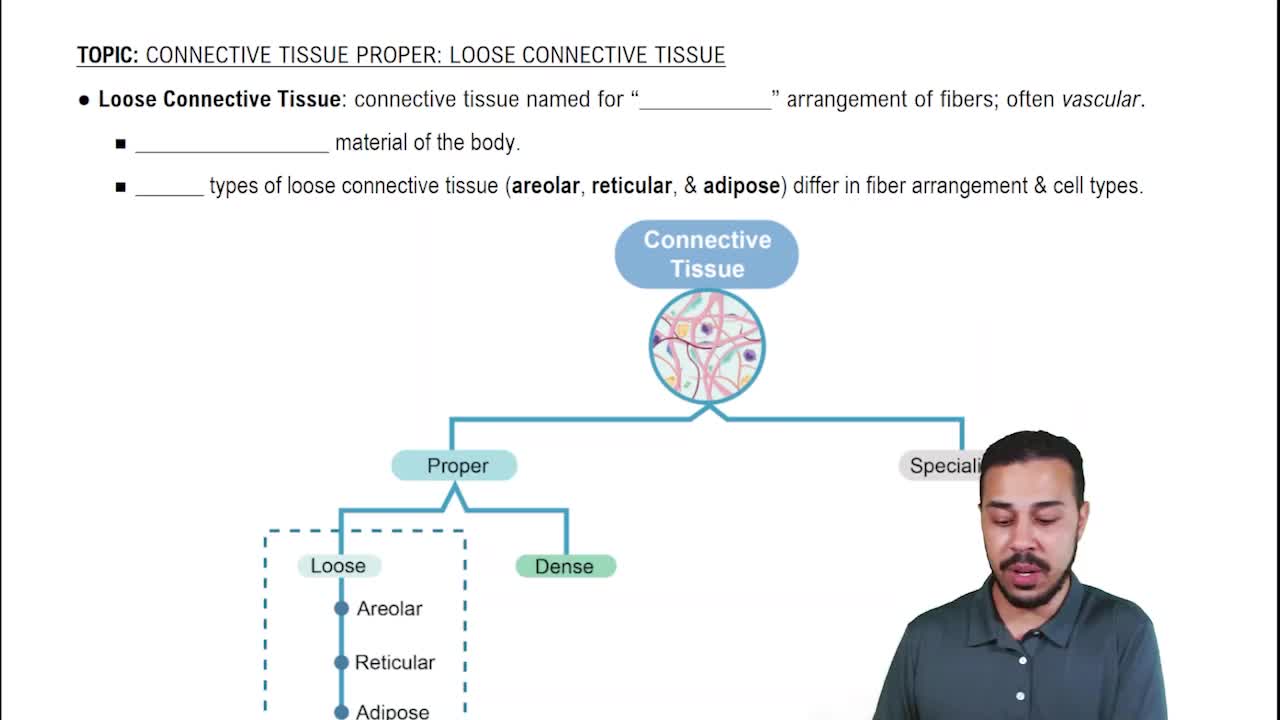
Beneath the dermis lies the hypodermis, composed mainly of loose connective tissue and fat. This layer cushions the body, insulates, and anchors the skin to underlying structures, making it important to distinguish from the cutaneous membrane layers.
Recommended video:
Guided course
02:46
Loose Connective Tissue