Ch. 27 Fluids & Electrolytes
Martini - Fundamentals of Anatomy & Physiology 11th Edition
Martini, Nath, Bartholomew11th EditionFundamentals of Anatomy & PhysiologyISBN: 9780136874089Not the one you use?Change textbook
Chapter 26, Problem 23

What is the difference between metabolic acidosis and respiratory acidosis? What can cause these conditions?

Verified step by step guidance
1
Step 1: Understand the definitions of metabolic acidosis and respiratory acidosis. Metabolic acidosis is a condition where there is an excess of acid or a loss of bicarbonate in the body, leading to a decrease in blood pH. Respiratory acidosis occurs when there is an accumulation of carbon dioxide (CO\_2) in the blood due to impaired lung function, causing a decrease in blood pH.
Step 2: Recognize the primary cause of each condition. Metabolic acidosis results from metabolic processes affecting acid-base balance, such as increased acid production or bicarbonate loss. Respiratory acidosis results from respiratory system dysfunction that impairs CO\_2 elimination.
Step 3: Identify common causes of metabolic acidosis. These include conditions like diabetic ketoacidosis (increased acid production), renal failure (reduced acid excretion), and severe diarrhea (loss of bicarbonate).
Step 4: Identify common causes of respiratory acidosis. These include hypoventilation due to chronic obstructive pulmonary disease (COPD), drug overdose affecting respiratory centers, or neuromuscular disorders impairing breathing.
Step 5: Summarize the key difference: metabolic acidosis is due to metabolic disturbances affecting acid-base balance, while respiratory acidosis is due to respiratory system failure to remove CO\_2, both leading to decreased blood pH but through different mechanisms.

Verified video answer for a similar problem:

This video solution was recommended by our tutors as helpful for the problem above.
Was this helpful?

Key Concepts

Here are the essential concepts you must grasp in order to answer the question correctly.

Metabolic Acidosis

Metabolic acidosis is a condition where the body produces excessive acid or loses too much bicarbonate, leading to a decrease in blood pH. It results from issues like kidney failure, diabetic ketoacidosis, or severe diarrhea. The primary disturbance is a reduction in bicarbonate concentration, causing acid-base imbalance.
Recommended video:
02:17
Introduction to Metabolism

Respiratory Acidosis

Respiratory acidosis occurs when the lungs cannot remove enough carbon dioxide (CO2), causing CO2 to accumulate and lower blood pH. It is often caused by respiratory diseases such as chronic obstructive pulmonary disease (COPD), asthma, or conditions that impair breathing. The main problem is elevated CO2 due to hypoventilation.
Recommended video:
Guided course
03:46
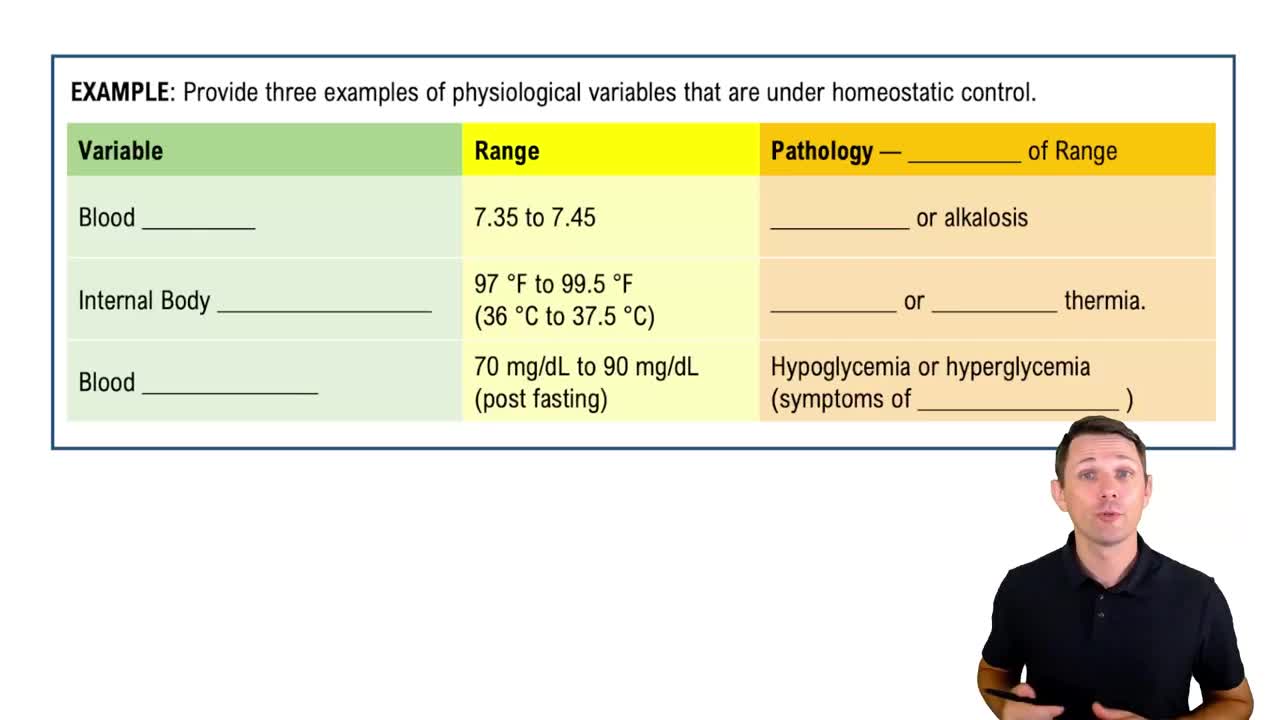
Homeostasis Example 1

Causes and Differences Between Metabolic and Respiratory Acidosis

The key difference lies in the origin: metabolic acidosis stems from metabolic processes affecting bicarbonate levels, while respiratory acidosis is due to impaired CO2 elimination by the lungs. Causes vary accordingly, with metabolic acidosis linked to kidney or metabolic disorders, and respiratory acidosis linked to lung diseases or respiratory depression.
Recommended video:
Guided course
03:04
The Difference Between Anatomy and Physiology