Ch. 24 The Digestive System
Martini - Fundamentals of Anatomy & Physiology 11th Edition
Martini, Nath, Bartholomew11th EditionFundamentals of Anatomy & PhysiologyISBN: 9780136874089Not the one you use?Change textbook
Chapter 24, Problem 32

Recently, more people have turned to surgery to help them lose weight. One form of weight control surgery involves stapling a portion of the stomach shut, creating a smaller volume. How would such a surgery result in weight loss?

Verified step by step guidance
1
Understand the role of the stomach in digestion: The stomach serves as a reservoir that holds food and begins the process of digestion by mixing food with gastric juices.
Recognize that stapling a portion of the stomach reduces its volume, meaning the stomach can hold less food at one time.
With a smaller stomach volume, a person feels full sooner during a meal, which leads to a reduction in overall food intake.
Reduced food intake means fewer calories are consumed, which can create a calorie deficit necessary for weight loss.
Therefore, the surgery helps with weight loss by physically limiting the amount of food eaten, promoting earlier satiety and reducing calorie consumption.

Verified video answer for a similar problem:

This video solution was recommended by our tutors as helpful for the problem above.
Was this helpful?

Key Concepts

Here are the essential concepts you must grasp in order to answer the question correctly.

Stomach Volume and Food Intake

The stomach's size determines how much food it can hold at one time. Reducing stomach volume limits the amount of food consumed before feeling full, leading to lower calorie intake and promoting weight loss.
Recommended video:
Guided course
4:39
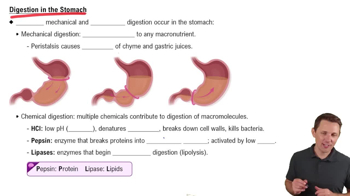
Digestion in the Stomach

Satiety and Hunger Signals

Satiety is the feeling of fullness that signals the brain to stop eating. A smaller stomach can trigger earlier satiety signals, reducing hunger and preventing overeating, which supports weight loss.
Recommended video:
Guided course
4:01
Types of Chemical Messengers

Caloric Deficit and Weight Loss

Weight loss occurs when the body uses more calories than it consumes. By decreasing food intake through stomach reduction, the body enters a caloric deficit, causing it to burn stored fat and lose weight.
Recommended video:
03:17
The Epidermis: Cells Example 1