Ch. 24 The Digestive System
Martini - Fundamentals of Anatomy & Physiology 11th Edition
Martini, Nath, Bartholomew11th EditionFundamentals of Anatomy & PhysiologyISBN: 9780136874089Not the one you use?Change textbook
Chapter 24, Problem 3

Double sheets of peritoneum that provide support and stability for the organs of the peritoneal cavity are the
(a) Mediastina
(b) Mucous membranes
(c) Omenta
(d) Mesenteries

Verified step by step guidance
1
Step 1: Understand the anatomical context. The peritoneal cavity is a potential space within the abdomen that houses many organs, and it is lined by a serous membrane called the peritoneum.
Step 2: Recognize that the question asks about double sheets of peritoneum that support and stabilize organs within this cavity. These structures are folds of the peritoneum that connect organs to the abdominal wall or to each other.
Step 3: Review the options: (a) Mediastina refers to the central compartment of the thoracic cavity, not related to the peritoneal cavity; (b) Mucous membranes line body cavities that open to the exterior, not the peritoneal cavity; (c) Omenta are specific types of peritoneal folds that connect the stomach to other organs; (d) Mesenteries are double layers of peritoneum that suspend and support the intestines.
Step 4: Identify that both omenta and mesenteries are double sheets of peritoneum, but mesenteries specifically provide broad support and stability to the intestines and other organs by anchoring them to the posterior abdominal wall.
Step 5: Conclude that the correct term for double sheets of peritoneum providing support and stability to organs in the peritoneal cavity is 'mesenteries'.

Verified video answer for a similar problem:

This video solution was recommended by our tutors as helpful for the problem above.
Was this helpful?

Key Concepts

Here are the essential concepts you must grasp in order to answer the question correctly.

Peritoneum

The peritoneum is a continuous, thin membrane that lines the abdominal cavity and covers the abdominal organs. It consists of two layers: the parietal peritoneum lining the cavity walls and the visceral peritoneum covering the organs, creating a potential space called the peritoneal cavity.
Recommended video:
Guided course
2:45
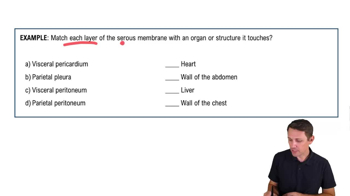
Organization of the Body: Serous Membrane Locations Example 1

Mesenteries

Mesenteries are double layers of peritoneum that connect the intestines to the posterior abdominal wall, providing support and stability. They contain blood vessels, nerves, and lymphatics that supply the intestines, and help maintain the position of the organs within the peritoneal cavity.
Recommended video:
6:52
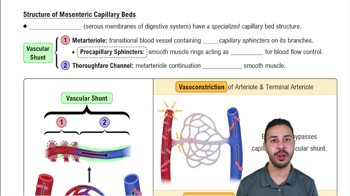
Structure of Mesenteric Capillary Beds

Omenta

Omenta are specialized folds of peritoneum that extend from the stomach and proximal duodenum to adjacent organs. They serve as fat storage sites, immune defense areas, and help limit the spread of infections within the abdominal cavity.