

Ch. 20 The Heart
Martini - Fundamentals of Anatomy & Physiology 11th Edition
Martini, Nath, Bartholomew11th EditionFundamentals of Anatomy & PhysiologyISBN: 9780136874089Not the one you use?Change textbook
Chapter 20, Problem 31

Karen is taking the medication verapamil, a drug that blocks the calcium channels in cardiac muscle cells. What effect should this medication have on Karen's stroke volume?

Verified step by step guidance
1
Step 1: Understand the role of calcium in cardiac muscle contraction. Calcium ions enter cardiac muscle cells through calcium channels during the plateau phase of the action potential, which triggers further calcium release from the sarcoplasmic reticulum, leading to muscle contraction.
Step 2: Recognize that verapamil blocks these calcium channels, reducing the influx of calcium into cardiac muscle cells during each heartbeat.
Step 3: Connect the reduction in calcium influx to a decrease in the strength of cardiac muscle contraction, since less calcium means less activation of the contractile proteins (actin and myosin).
Step 4: Recall that stroke volume is the amount of blood ejected by the left ventricle with each contraction, and it depends on the force of contraction (contractility) among other factors.
Step 5: Conclude that by blocking calcium channels and reducing contractility, verapamil should decrease stroke volume because the heart pumps less forcefully.

Verified video answer for a similar problem:

This video solution was recommended by our tutors as helpful for the problem above.
Was this helpful?

Key Concepts

Here are the essential concepts you must grasp in order to answer the question correctly.

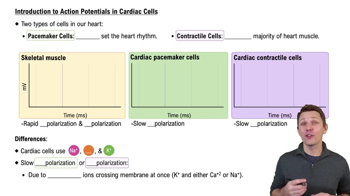
Calcium Channels in Cardiac Muscle Cells

Calcium channels in cardiac muscle cells allow calcium ions to enter during an action potential, triggering muscle contraction. Blocking these channels reduces calcium influx, which weakens the contraction strength of the heart muscle.
Recommended video:
Guided course
7:18
Introduction to Action Potential in Cardiac Cells

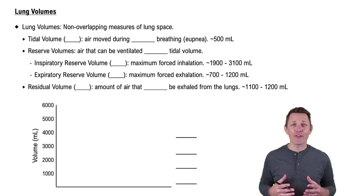
Stroke Volume

Stroke volume is the amount of blood ejected by the left ventricle with each heartbeat. It depends on the force of cardiac muscle contraction, preload, and afterload. Stronger contractions generally increase stroke volume.
Recommended video:
Guided course
6:28
Lung Volumes

Effect of Calcium Channel Blockers on Cardiac Function

Calcium channel blockers like verapamil decrease the force of cardiac contractions by limiting calcium entry. This leads to reduced contractility, which typically lowers stroke volume and can affect overall cardiac output.
Recommended video:
2:58
Comic Strip for Effects of T Cell Functions