Ch. 3 Cells: The Living Units
Marieb - Human Anatomy & Physiology 7th Edition
Marieb, Hoehn7th EditionHuman Anatomy & PhysiologyISBN: 9780805359091Not the one you use?Change textbook
Chapter 3, Problem 25

Fresh water is a precious natural resource in Florida and it is said that supplies are dwindling. Desalinizing (removing salt from) ocean water has been recommended as a solution to the problem. Why shouldn't we drink salt water?

Verified step by step guidance
1
Understand that drinking salt water is harmful primarily because of the high concentration of salt (sodium chloride) it contains compared to the body's cells and fluids.
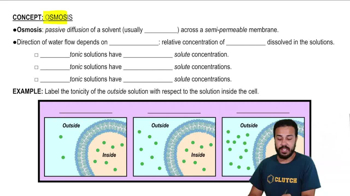
Recall the concept of osmosis, which is the movement of water across a semipermeable membrane from an area of lower solute concentration to an area of higher solute concentration to balance solute levels.
Recognize that when you drink salt water, the high salt concentration in the water causes water to move out of your body's cells into the saltier fluid in your digestive system, leading to cellular dehydration.
Consider the physiological effects: dehydration of cells can impair normal cellular functions and can lead to serious health issues such as kidney damage and increased thirst, worsening dehydration.
Conclude that because of these osmotic effects and the body's inability to process the excess salt efficiently, drinking salt water is harmful and not a viable source of hydration.

Verified video answer for a similar problem:

This video solution was recommended by our tutors as helpful for the problem above.
Video duration:
2m
Was this helpful?

Key Concepts

Here are the essential concepts you must grasp in order to answer the question correctly.

Osmosis and Dehydration

Drinking salt water causes water to move out of body cells into the salty bloodstream by osmosis, leading to dehydration. The high salt concentration draws water from cells, worsening thirst and potentially causing serious health issues.
Recommended video:
05:59
Osmosis

Salt Toxicity and Kidney Function

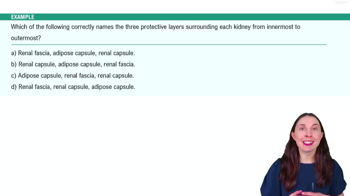
The kidneys regulate salt levels by filtering excess salt into urine. Consuming salt water overwhelms the kidneys, which cannot excrete salt faster than it is ingested, leading to salt buildup and kidney strain or failure.
Recommended video:
1:00
The Kidneys Example 1

Desalination Process

Desalination removes salt and impurities from seawater to make it safe for drinking. Techniques like reverse osmosis or distillation are used to produce fresh water, addressing freshwater scarcity without the harmful effects of drinking untreated salt water.
Recommended video:
04:19
1) RNA Processing