
Ch. 27 The Reproductive System
Marieb - Human Anatomy & Physiology 7th Edition
Marieb, Hoehn7th EditionHuman Anatomy & PhysiologyISBN: 9780805359091Not the one you use?Change textbook
Chapter 26, Problem 3

The structures that draw an ovulated oocyte into the female duct system are:
a. Cilia
b. Fimbriae
c. Microvilli
d. Stereocilia

Verified step by step guidance
1
Understand the anatomy of the female reproductive system, specifically the role of the uterine (fallopian) tubes in transporting the ovulated oocyte.
Learn about the fimbriae, which are finger-like projections located at the end of the uterine tube near the ovary. These structures play a key role in capturing the ovulated oocyte.
Recognize that the fimbriae create a sweeping motion to guide the oocyte into the uterine tube. This motion is assisted by cilia lining the inner surface of the uterine tube, which help propel the oocyte further along the duct system.
Differentiate between the listed options: Cilia are hair-like structures that move fluid and particles, fimbriae are specialized projections for capturing the oocyte, microvilli are involved in absorption and secretion, and stereocilia are non-motile structures found in the male reproductive system.
Conclude that the correct answer is 'b. Fimbriae,' as they are the specific structures responsible for drawing the ovulated oocyte into the female duct system.

Verified video answer for a similar problem:

This video solution was recommended by our tutors as helpful for the problem above.
Video duration:
2m
Was this helpful?

Key Concepts

Here are the essential concepts you must grasp in order to answer the question correctly.

Fimbriae

Fimbriae are finger-like projections at the end of the fallopian tubes that play a crucial role in the reproductive process. They help to capture the ovulated oocyte from the ovary and guide it into the tube for potential fertilization. Their movement is coordinated with the menstrual cycle, making them essential for successful conception.

Cilia

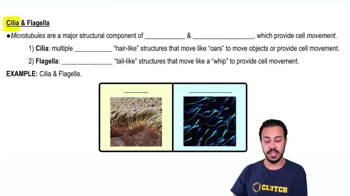
Cilia are microscopic, hair-like structures that line the fallopian tubes and other parts of the female reproductive tract. They beat in a coordinated manner to help move the oocyte and sperm through the reproductive system. Their function is vital for ensuring that the oocyte reaches the site of fertilization efficiently.
Recommended video:
03:14
Cilia & Flagella

Oocyte

An oocyte is the female gamete or egg cell involved in reproduction. It is produced in the ovaries and undergoes maturation during the menstrual cycle. Understanding the role of the oocyte is essential for comprehending the processes of ovulation, fertilization, and early embryonic development.
Recommended video:
0:42
Anatomy of the Female Reproductive System Example 1