Ch. 24 Nutrition, Metabolism, and Energy Balance
Marieb - Human Anatomy & Physiology 7th Edition
Marieb, Hoehn7th EditionHuman Anatomy & PhysiologyISBN: 9780805359091Not the one you use?Change textbook
Chapter 23, Problem 11

Body temperature regulation is:
a. Influenced by temperature receptors in the skin
b. Influenced by the temperature of the blood perfusing the heat regulation centers of the brain
c. Subject to both neural and hormonal control
d. All of the above.

Verified step by step guidance
1
Understand the concept of body temperature regulation: The human body maintains a stable internal temperature through homeostasis, which involves neural, hormonal, and physiological mechanisms.
Analyze option (a): Temperature receptors in the skin (thermoreceptors) detect external temperature changes and send signals to the brain, specifically the hypothalamus, which is the body's temperature regulation center.
Analyze option (b): The hypothalamus also monitors the temperature of the blood perfusing it. This allows the brain to detect internal temperature changes and initiate appropriate responses to maintain homeostasis.
Analyze option (c): Body temperature regulation is subject to both neural control (via the nervous system, including the hypothalamus) and hormonal control (e.g., thyroid hormones influencing metabolic rate and heat production).
Combine the analyses: Since all the options (a, b, and c) are correct and contribute to body temperature regulation, the correct answer is 'all of the above.'

Verified video answer for a similar problem:

This video solution was recommended by our tutors as helpful for the problem above.
Video duration:
2m
Was this helpful?

Key Concepts

Here are the essential concepts you must grasp in order to answer the question correctly.

Temperature Receptors

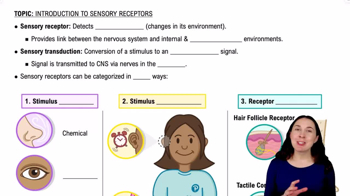
Temperature receptors, located in the skin and other tissues, detect changes in external and internal temperatures. These receptors send signals to the brain, particularly to the hypothalamus, which plays a crucial role in maintaining homeostasis by regulating body temperature.
Recommended video:
2:47
Sensory Receptors

Hypothalamus and Blood Temperature

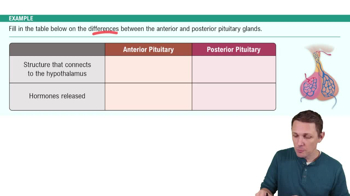
The hypothalamus is a key brain region that regulates body temperature by responding to the temperature of the blood. It integrates information from temperature receptors and adjusts physiological responses, such as sweating or shivering, to maintain a stable internal environment.
Recommended video:
Guided course
6:11
The Hypothalamus and Pituitary Gland Example 3

Neural and Hormonal Control

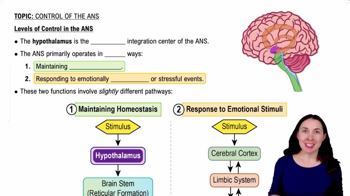
Body temperature regulation involves both neural and hormonal mechanisms. Neural control includes rapid responses through the nervous system, while hormonal control involves slower, longer-lasting effects mediated by hormones like adrenaline and thyroid hormones, which can influence metabolic rate and heat production.
Recommended video:
3:33
Levels of Control in the ANS