Ch. 23 The Digestive System
Marieb - Human Anatomy & Physiology 7th Edition
Marieb, Hoehn7th EditionHuman Anatomy & PhysiologyISBN: 9780805359091Not the one you use?Change textbook
Chapter 22, Problem 3

The lamina propria forms part of the:
a. Muscularis externa
b. Submucosa
c. Serosa
d. Mucosa

Verified step by step guidance
1
Step 1: Understand the layers of the gastrointestinal (GI) tract wall. The main layers from inside to outside are: mucosa, submucosa, muscularis externa, and serosa (or adventitia).
Step 2: Recall that the mucosa itself is composed of three sublayers: the epithelium (innermost lining), the lamina propria (a layer of connective tissue), and the muscularis mucosae (a thin layer of smooth muscle).
Step 3: Identify the lamina propria as the connective tissue layer that supports the epithelium and contains blood vessels, lymphatics, and immune cells.
Step 4: Recognize that the lamina propria is part of the mucosa layer, not the submucosa, muscularis externa, or serosa.
Step 5: Conclude that the correct answer is the mucosa, since the lamina propria forms part of this innermost layer of the GI tract.

Verified video answer for a similar problem:

This video solution was recommended by our tutors as helpful for the problem above.
Video duration:
1m
Was this helpful?

Key Concepts

Here are the essential concepts you must grasp in order to answer the question correctly.

Lamina Propria

The lamina propria is a thin layer of loose connective tissue found beneath the epithelium of mucous membranes. It contains blood vessels, nerves, and immune cells, providing support and nourishment to the epithelium. It plays a key role in immune defense and tissue repair.
Recommended video:
Guided course
06:01
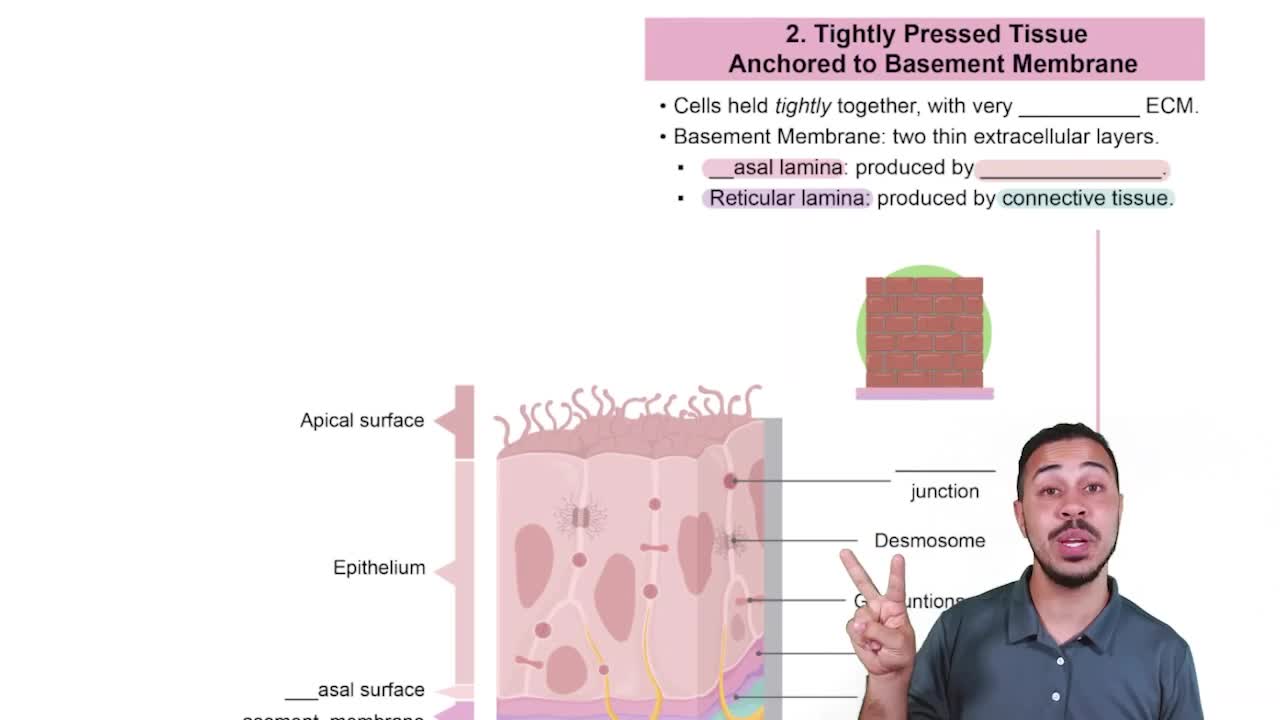
Characteristic 2: Tightly Pressed Tissue Anchored to Basement Membrane

Mucosa Layer

The mucosa is the innermost layer of the gastrointestinal tract, consisting of the epithelium, lamina propria, and muscularis mucosae. It functions in absorption, secretion, and protection, forming the interface between the lumen and underlying tissues.
Recommended video:
02:31
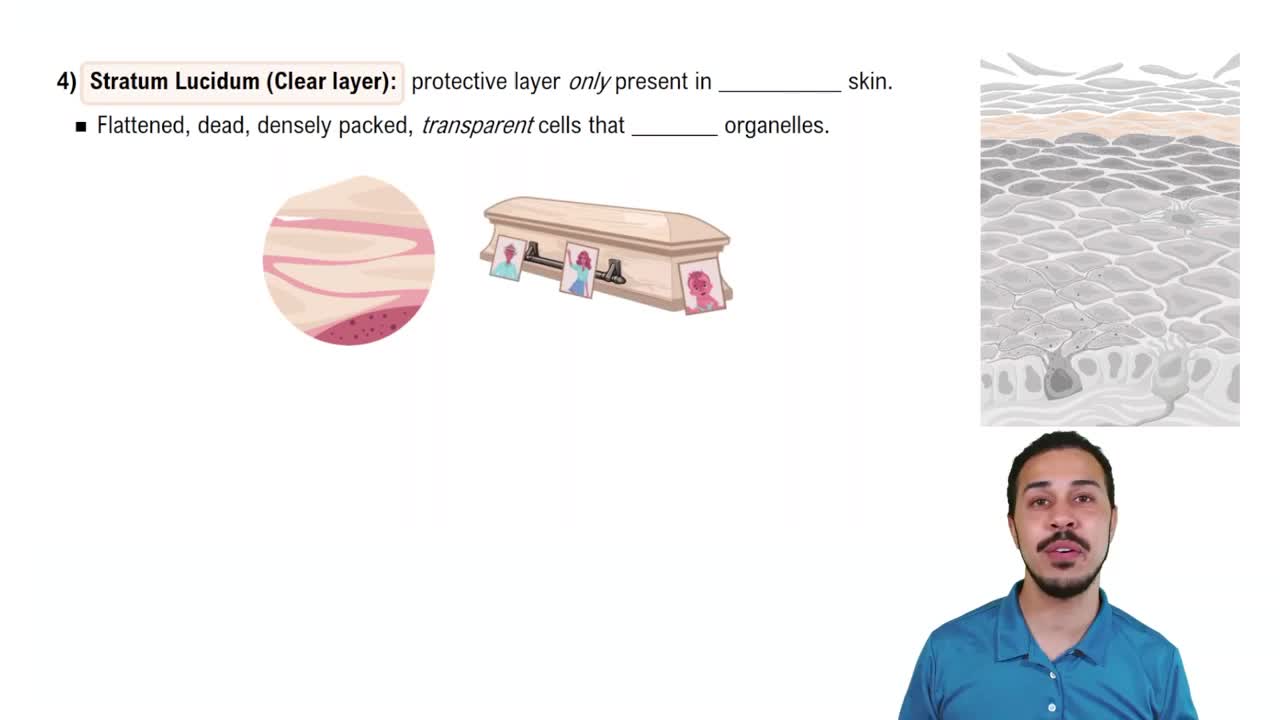
Epidermal Layers: Stratum Lucidum (Clear Layer)

Layers of the Gastrointestinal Tract

The GI tract wall is organized into four main layers: mucosa, submucosa, muscularis externa, and serosa. Each layer has distinct structures and functions, with the lamina propria specifically located within the mucosa layer.
Recommended video:
02:31
Epidermal Layers: Stratum Lucidum (Clear Layer)