

Ch. 22 The Respiratory System
Marieb - Human Anatomy & Physiology 7th Edition
Marieb, Hoehn7th EditionHuman Anatomy & PhysiologyISBN: 9780805359091Not the one you use?Change textbook
Chapter 21, Problem 22

Daniel, the swimmer with the fastest time on the Springfield College swim team, routinely hyperventilates before a meet, as he says, 'to sock some more oxygen into my lungs so I can swim longer without having to breathe.' First of all, what basic fact about oxygen loading has Daniel forgotten (a lapse leading to false thinking)? Second, how is Daniel jeopardizing not only his time but his life?

Verified step by step guidance
1
Understand the basic physiology of oxygen loading: Oxygen is carried in the blood primarily by hemoglobin in red blood cells. Hemoglobin becomes saturated with oxygen at normal breathing rates and under normal atmospheric conditions. Hyperventilating does not significantly increase oxygen loading because hemoglobin is already near maximum saturation under normal conditions.
Explain the effect of hyperventilation on carbon dioxide levels: Hyperventilation causes excessive exhalation of carbon dioxide (CO2), leading to a condition called hypocapnia (low CO2 levels in the blood). CO2 plays a critical role in regulating blood pH and stimulating the respiratory centers in the brain.
Discuss the consequences of hypocapnia: Low CO2 levels can lead to respiratory alkalosis, which disrupts the acid-base balance in the body. This can cause symptoms such as dizziness, confusion, muscle cramps, and even fainting, jeopardizing Daniel's ability to perform during the swim meet.
Highlight the risk to Daniel's life: Severe hypocapnia can reduce blood flow to the brain due to vasoconstriction (narrowing of blood vessels), increasing the risk of loss of consciousness. If Daniel faints while swimming, he could drown, posing a serious threat to his life.
Summarize the misconception and provide advice: Daniel's belief that hyperventilation increases oxygen loading is incorrect because hemoglobin is already saturated under normal conditions. Instead, he should focus on proper breathing techniques and avoid hyperventilation to ensure optimal performance and safety during the swim meet.

Verified video answer for a similar problem:

This video solution was recommended by our tutors as helpful for the problem above.
Video duration:
3m
Was this helpful?

Key Concepts

Here are the essential concepts you must grasp in order to answer the question correctly.

Oxygen Loading and Hyperventilation

Oxygen loading refers to the process by which hemoglobin in red blood cells binds to oxygen in the lungs. Hyperventilation, which involves rapid or deep breathing, can lead to a decrease in carbon dioxide levels in the blood, causing a condition called respiratory alkalosis. This can impair the body's ability to effectively utilize oxygen, contradicting Daniel's belief that it enhances his performance.
Recommended video:
07:50
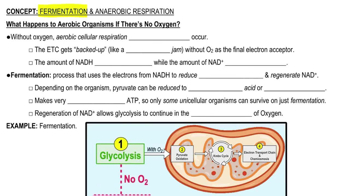
What Happens to Aerobic Organisms if There's No Oxygen?

The Role of Carbon Dioxide

Carbon dioxide (CO2) plays a crucial role in regulating blood pH and the body's respiratory drive. When CO2 levels drop due to hyperventilation, it can lead to dizziness, confusion, and even fainting. This physiological response can jeopardize Daniel's performance in swimming and poses serious risks to his health, as it disrupts the balance necessary for optimal oxygen delivery to tissues.
Recommended video:
04:19
Carbon

Physiological Effects of Hyperventilation

Hyperventilation can trigger a range of physiological effects, including lightheadedness, tingling in the extremities, and muscle spasms. These symptoms can impair physical performance and increase the risk of accidents, particularly in high-stakes environments like competitive swimming. Daniel's practice of hyperventilating not only undermines his swimming efficiency but also poses a significant risk to his safety during races.
Recommended video:
1:32
Effects of the Complement System