Ch. 9 The Endocrine System
Marieb - Essentials of Human Anatomy & Physiology 13th Edition
Marieb13th EditionEssentials of Human Anatomy & PhysiologyISBN: 9780135624340Not the one you use?Change textbook
Chapter 9, Problem 8

More than one choice may apply.
Which of the following is given as a drug to reduce inflammation?
a. Epinephrine
b. Cortisol
c. Aldosterone
d. ADH

Verified step by step guidance
1
Step 1: Understand the role of each hormone listed in the options. Epinephrine is a hormone that primarily functions in the 'fight or flight' response, increasing heart rate and energy availability, but it is not typically used to reduce inflammation.
Step 2: Recognize that cortisol is a glucocorticoid hormone produced by the adrenal cortex. It has anti-inflammatory properties and is often used as a drug (e.g., corticosteroids) to reduce inflammation in conditions like asthma, arthritis, or autoimmune diseases.
Step 3: Note that aldosterone is a mineralocorticoid hormone that regulates sodium and potassium balance in the kidneys. It does not have anti-inflammatory effects and is not used for reducing inflammation.
Step 4: Understand that ADH (antidiuretic hormone) regulates water balance in the body by acting on the kidneys. It does not have anti-inflammatory properties and is not used for this purpose.
Step 5: Based on the above analysis, identify that cortisol is the correct answer for reducing inflammation, while the other options do not serve this purpose.

Verified video answer for a similar problem:

This video solution was recommended by our tutors as helpful for the problem above.
Video duration:
1m
Was this helpful?

Key Concepts

Here are the essential concepts you must grasp in order to answer the question correctly.

Anti-inflammatory Drugs

Anti-inflammatory drugs are medications used to reduce inflammation in the body. They work by inhibiting the production of substances that trigger inflammatory responses, such as prostaglandins. Common examples include corticosteroids and non-steroidal anti-inflammatory drugs (NSAIDs), which are often prescribed for conditions like arthritis and allergies.
Recommended video:
2:10
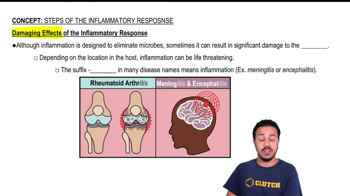
Damaging Effects of the Inflammatory Response

Cortisol

Cortisol is a steroid hormone produced by the adrenal glands, playing a crucial role in the body's response to stress. It has potent anti-inflammatory properties, making it effective in treating various inflammatory conditions. Cortisol is often administered in synthetic forms, such as hydrocortisone, to manage inflammation and immune responses.
Recommended video:
Guided course
2:38
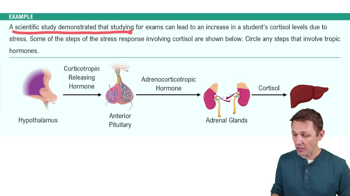
The Hypothalamus and Pituitary Gland Example 1

Hormonal Regulation

Hormonal regulation refers to the complex processes by which hormones control various physiological functions in the body, including metabolism, immune response, and inflammation. Hormones like cortisol and aldosterone are involved in these processes, but not all hormones have anti-inflammatory effects. Understanding the specific roles of these hormones is essential for identifying their therapeutic uses.
Recommended video:
Guided course
13:06
Review of Major Hormones