Ch. 7 The Nervous System
Marieb - Essentials of Human Anatomy & Physiology 13th Edition
Marieb13th EditionEssentials of Human Anatomy & PhysiologyISBN: 9780135624340Not the one you use?Change textbook
Chapter 7, Problem 21

Joseph, a man in his early 70s, was having problems chewing his food. He was asked to stick out his tongue. It deviated to the right, and its right side was quite wasted. What cranial nerve was impaired?

Verified step by step guidance
1
Step 1: Understand the function of cranial nerves related to tongue movement. The cranial nerve responsible for motor control of the tongue is the hypoglossal nerve (Cranial Nerve XII). It controls the movements and strength of the tongue muscles.
Step 2: Recognize the clinical signs of hypoglossal nerve impairment. When the hypoglossal nerve is damaged, the tongue may deviate toward the side of the lesion due to muscle weakness or atrophy on that side.
Step 3: Analyze the symptoms described in the problem. Joseph's tongue deviates to the right, and the right side of his tongue is wasted. This indicates muscle atrophy and weakness on the right side of the tongue.
Step 4: Correlate the findings with the anatomy of the hypoglossal nerve. The hypoglossal nerve on the right side is likely impaired, as the tongue deviates toward the affected side due to unopposed action of the muscles on the opposite side.
Step 5: Conclude that the cranial nerve impaired in Joseph's case is the right hypoglossal nerve (Cranial Nerve XII), based on the clinical presentation of tongue deviation and muscle wasting.

Verified video answer for a similar problem:

This video solution was recommended by our tutors as helpful for the problem above.
Video duration:
6m
Was this helpful?

Key Concepts

Here are the essential concepts you must grasp in order to answer the question correctly.

Cranial Nerves

Cranial nerves are a set of twelve paired nerves that originate in the brain and primarily control sensory and motor functions of the head and neck. Each cranial nerve has specific functions, such as controlling muscles, transmitting sensory information, or regulating autonomic functions. Understanding these nerves is crucial for diagnosing neurological conditions.
Recommended video:
Guided course
8:20
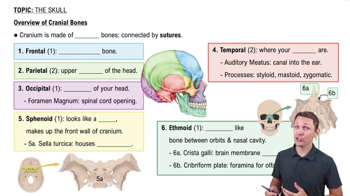
Overview of Cranial Bones

Hypoglossal Nerve (Cranial Nerve XII)

The hypoglossal nerve is the twelfth cranial nerve responsible for controlling the movements of the tongue. It innervates the muscles that allow for tongue movement, which is essential for speech and swallowing. Damage to this nerve can lead to weakness or atrophy of the tongue on the affected side, causing it to deviate towards the side of the impairment.
Recommended video:
Guided course
2:25
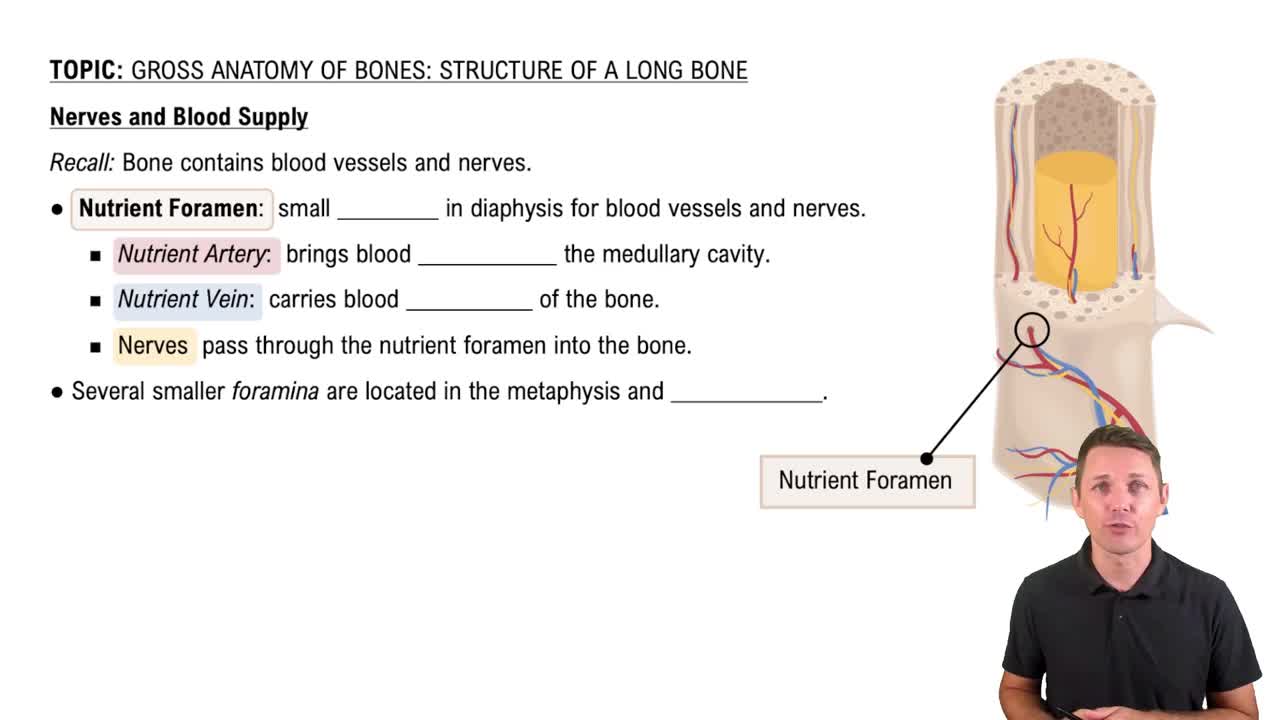
Nerves and Blood Supply

Neurological Assessment

Neurological assessment involves evaluating the nervous system's function through various tests, including observing motor skills, sensory responses, and reflexes. In this context, assessing tongue movement and deviation helps identify specific cranial nerve impairments. Such assessments are vital for diagnosing conditions affecting motor control and coordination.