Ch. 6 The Muscular System
Marieb - Essentials of Human Anatomy & Physiology 13th Edition
Marieb13th EditionEssentials of Human Anatomy & PhysiologyISBN: 9780135624340Not the one you use?Change textbook
Chapter 6, Problem 10a

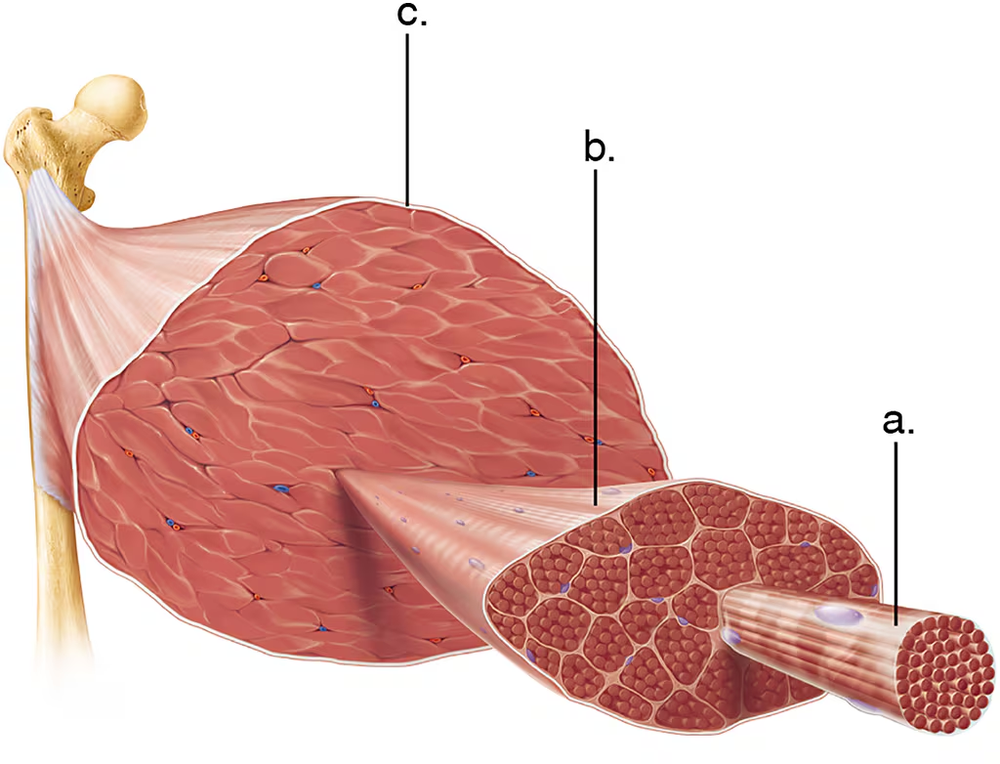
Why are the connective tissue wrappings of skeletal muscles important? Name these connective tissue coverings, beginning with the finest and ending with the coarsest.
a.

Verified step by step guidance
1
Understand the role of connective tissue wrappings in skeletal muscles: Connective tissue wrappings provide structural support, protection, and elasticity to skeletal muscles. They also help transmit the force generated by muscle fibers to bones and contain blood vessels and nerves that supply the muscle.
Identify the finest connective tissue covering: The **endomysium** is the innermost layer of connective tissue. It surrounds individual muscle fibers and contains capillaries and nerves that supply each fiber.
Identify the intermediate connective tissue covering: The **perimysium** is the middle layer of connective tissue. It surrounds bundles of muscle fibers called fascicles, providing structural support and pathways for larger blood vessels and nerves.
Identify the coarsest connective tissue covering: The **epimysium** is the outermost layer of connective tissue. It surrounds the entire muscle, protecting it and helping to maintain its shape while connecting it to tendons or other structures.
Summarize the order of connective tissue coverings: From finest to coarsest, the connective tissue wrappings are **endomysium**, **perimysium**, and **epimysium**. Each layer plays a critical role in muscle function and organization.

Verified video answer for a similar problem:

This video solution was recommended by our tutors as helpful for the problem above.
Video duration:
2m
Was this helpful?

Key Concepts

Here are the essential concepts you must grasp in order to answer the question correctly.

Connective Tissue Wrappings

Connective tissue wrappings are layers of tissue that surround and protect skeletal muscles. They play a crucial role in providing structural support, maintaining muscle integrity, and facilitating the transmission of force generated by muscle contractions. These layers also contain blood vessels and nerves, which are essential for muscle function and health.
Recommended video:
Guided course
08:25
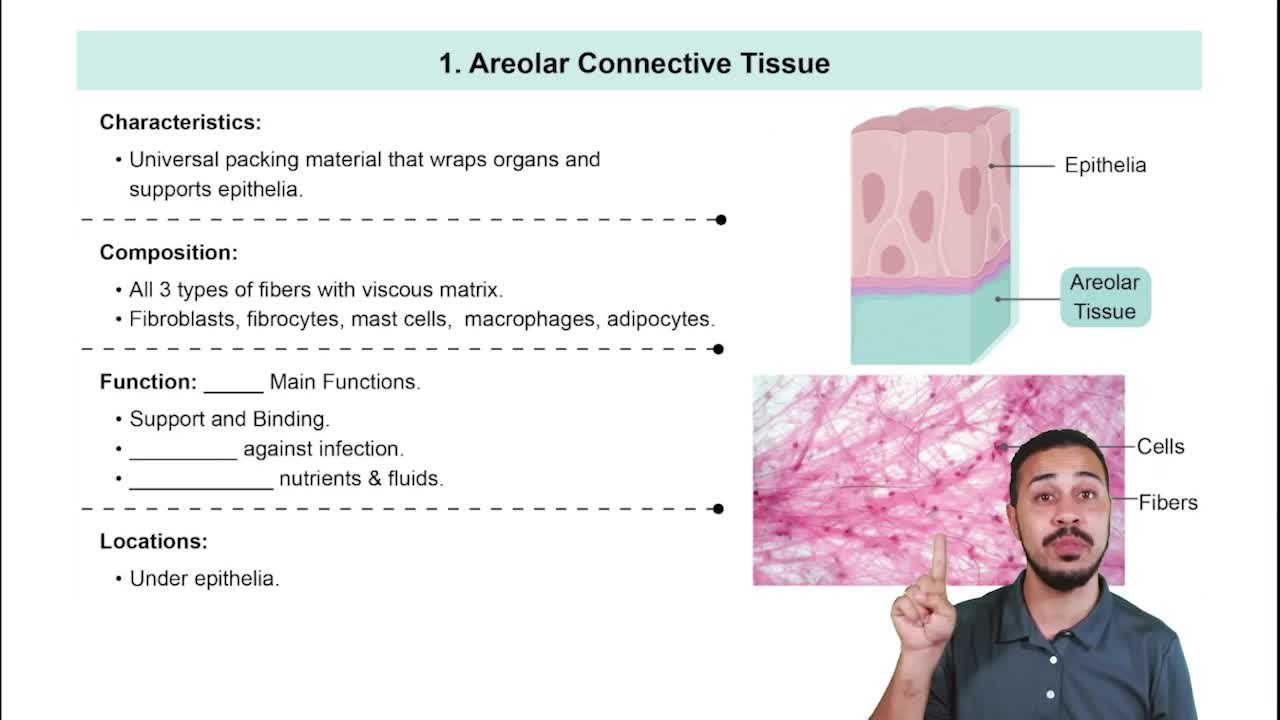
Areolar Connective Tissue

Types of Connective Tissue Coverings

The connective tissue coverings of skeletal muscles include three main layers: endomysium, perimysium, and epimysium. The endomysium is the finest layer that surrounds individual muscle fibers, the perimysium encases bundles of muscle fibers (fascicles), and the epimysium is the outermost layer that surrounds the entire muscle. Understanding these layers is essential for comprehending how muscles are organized and function.
Recommended video:
Guided course
01:49
Connective Tissue Proper: Dense Connective Tissue Example 1

Function of Connective Tissue in Muscles

The connective tissue in muscles serves several vital functions, including providing a framework for muscle fibers, facilitating the transfer of force to tendons, and protecting muscles from injury. Additionally, these tissues help in the repair and regeneration of muscle fibers after injury, ensuring that muscles can recover and maintain their functionality over time.
Recommended video:
Guided course
06:37
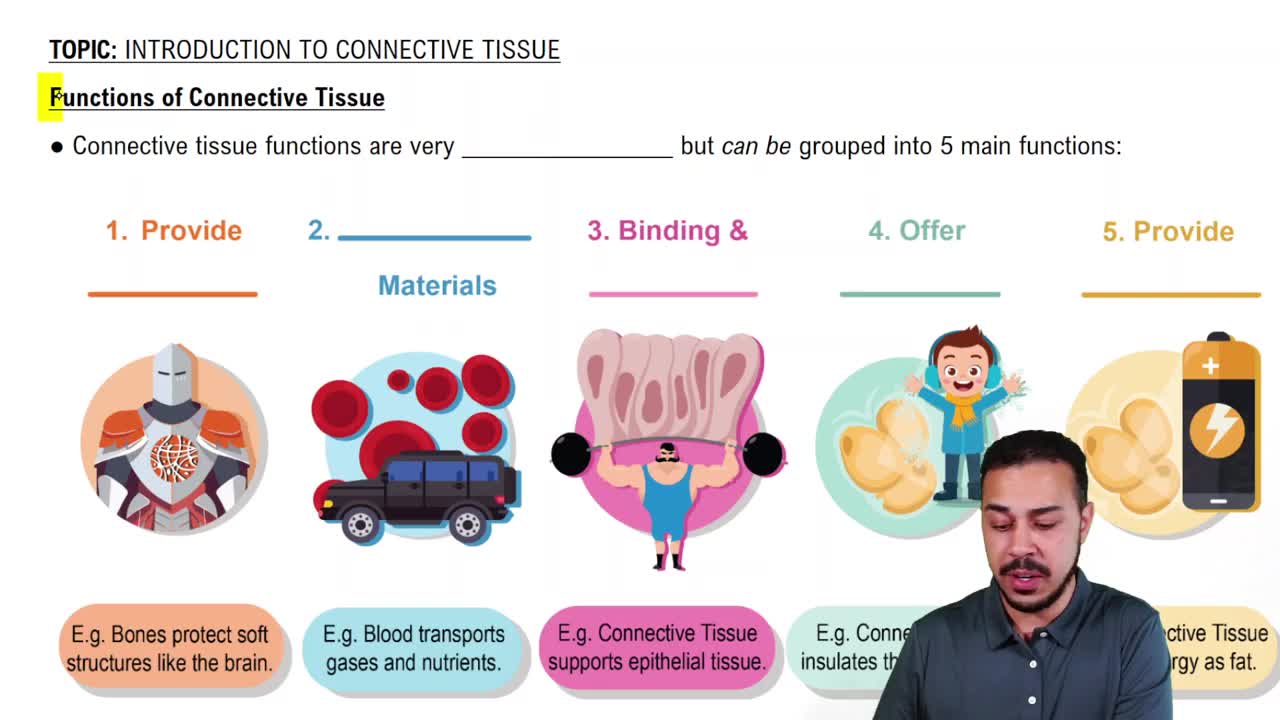
Functions of Connective Tissue