Ch. 5 The Skeletal System
Marieb - Essentials of Human Anatomy & Physiology 13th Edition
Marieb13th EditionEssentials of Human Anatomy & PhysiologyISBN: 9780135624340Not the one you use?Change textbook
Chapter 5, Problem 3

Which of the following would you expect to be prominent in osteoclasts?
a. Golgi apparatus
b. Lysosomes
c. Microfilaments
d. Exocytosis

Verified step by step guidance
1
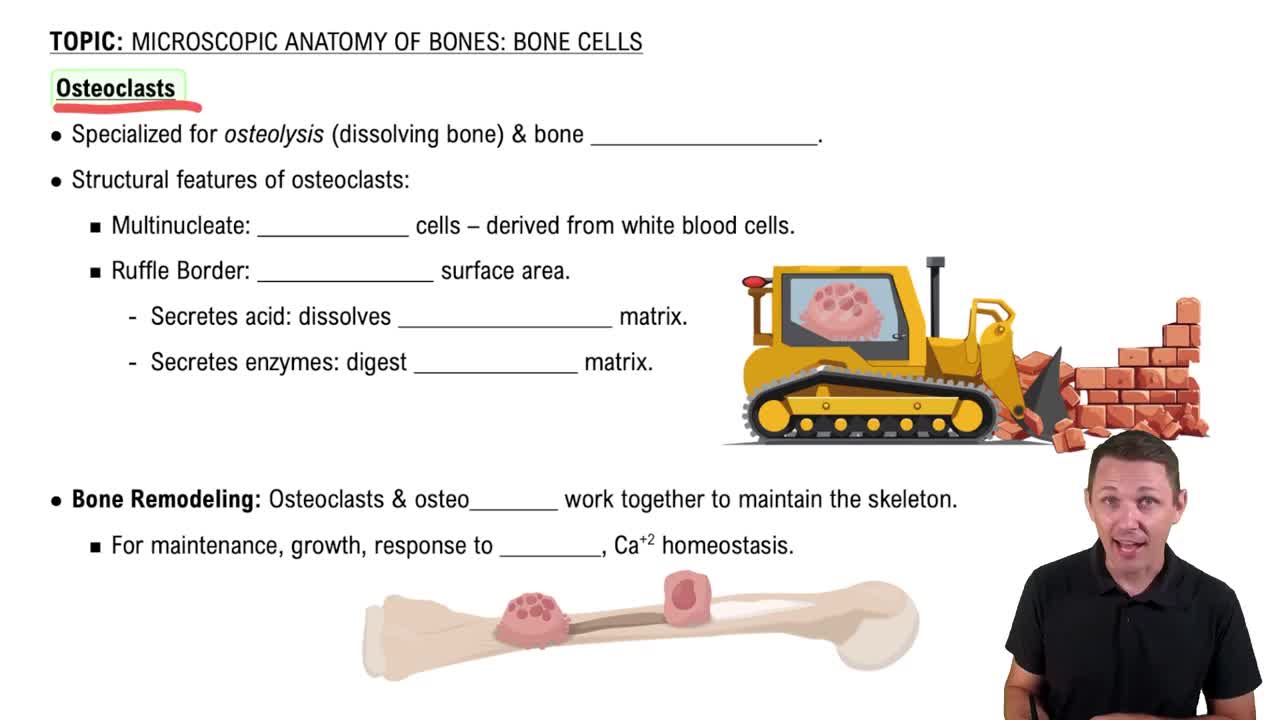
Understand the function of osteoclasts: Osteoclasts are specialized cells responsible for bone resorption, breaking down bone tissue to release minerals like calcium and phosphate into the bloodstream. This process involves enzymatic degradation and cellular activity.
Analyze the role of lysosomes: Lysosomes are organelles containing hydrolytic enzymes that break down cellular components. In osteoclasts, lysosomes play a critical role in degrading the organic matrix of bone during resorption.
Consider the importance of the Golgi apparatus: The Golgi apparatus is involved in packaging and modifying proteins, including enzymes that osteoclasts use for bone resorption. It is likely prominent in osteoclasts to support their enzymatic activity.
Evaluate the role of microfilaments: Microfilaments, composed of actin, are part of the cytoskeleton and are involved in cell movement and maintaining the structure of the ruffled border in osteoclasts, which is essential for bone resorption.
Examine exocytosis: Exocytosis is the process by which cells release substances to the extracellular environment. Osteoclasts use exocytosis to secrete enzymes and acids that degrade the inorganic and organic components of bone tissue during resorption.

Verified video answer for a similar problem:

This video solution was recommended by our tutors as helpful for the problem above.
Video duration:
1m
Was this helpful?

Key Concepts

Here are the essential concepts you must grasp in order to answer the question correctly.

Osteoclast Function

Osteoclasts are specialized cells responsible for bone resorption, a process where they break down bone tissue. This function is crucial for maintaining bone health and calcium homeostasis in the body. Understanding their role helps in identifying the cellular components that support their activity.
Recommended video:

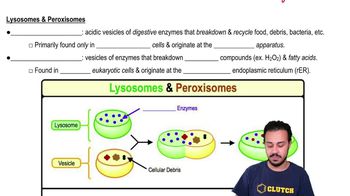
Lysosomes

Lysosomes are membrane-bound organelles that contain digestive enzymes to break down waste materials and cellular debris. In osteoclasts, lysosomes play a vital role in the degradation of bone matrix components, facilitating the resorption process. Their prominence in osteoclasts is indicative of the cell's function in bone remodeling.
Recommended video:
05:38
Lysosomes & Peroxisomes

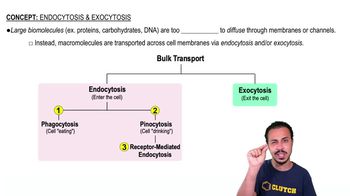
Exocytosis

Exocytosis is a cellular process where substances are expelled from a cell through vesicles that fuse with the plasma membrane. In osteoclasts, exocytosis is important for the secretion of enzymes and acids that aid in bone resorption. Understanding this process is essential for recognizing how osteoclasts interact with their environment during bone remodeling.
Recommended video:
02:02
Endocytosis and Exocytosis