Ch. 4 Skin and Body Membranes
Marieb - Essentials of Human Anatomy & Physiology 13th Edition
Marieb13th EditionEssentials of Human Anatomy & PhysiologyISBN: 9780135624340Not the one you use?Change textbook
Chapter 4, Problem 11

From what types of damage does the skin protect the body?

Verified step by step guidance
1
The skin protects the body from mechanical damage, such as cuts, abrasions, and impacts, by acting as a physical barrier. The outermost layer, the epidermis, is composed of keratinized cells that provide toughness and resilience.
The skin shields the body from chemical damage by preventing harmful substances, such as acids or toxins, from penetrating deeper tissues. The lipid barrier in the epidermis helps repel water-soluble chemicals.
The skin defends against microbial damage by serving as the first line of defense against pathogens. It produces antimicrobial peptides and houses immune cells that help combat infections.
The skin protects the body from ultraviolet (UV) radiation damage by producing melanin, a pigment that absorbs and dissipates harmful UV rays, reducing the risk of DNA damage in skin cells.
The skin helps prevent dehydration and thermal damage by regulating water loss through its barrier function and maintaining body temperature through sweat production and blood vessel dilation or constriction.

Verified video answer for a similar problem:

This video solution was recommended by our tutors as helpful for the problem above.
Video duration:
2m
Was this helpful?

Key Concepts

Here are the essential concepts you must grasp in order to answer the question correctly.

Barrier Function

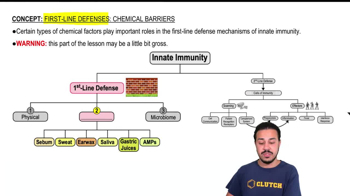
The skin serves as a primary barrier that protects the body from external threats, including pathogens, chemicals, and physical abrasions. This barrier function is crucial for maintaining homeostasis and preventing infections, as it limits the entry of harmful microorganisms and substances.
Recommended video:
1:09
Chemical Barriers

Thermoregulation

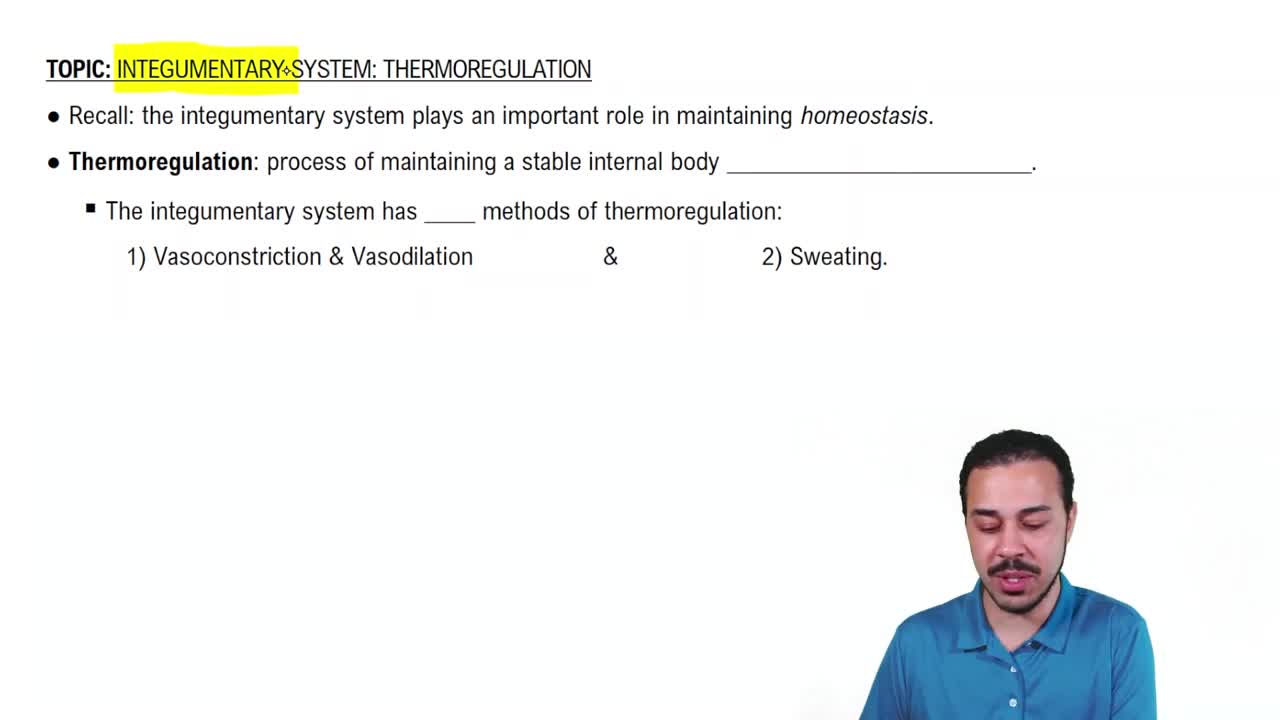
The skin plays a vital role in thermoregulation, helping to maintain the body's internal temperature. It does this through mechanisms such as sweating and blood flow regulation, which protect the body from overheating and cold exposure, thereby preventing heat-related illnesses and hypothermia.
Recommended video:
01:07
Introduction to Thermoregulation

Sensory Reception

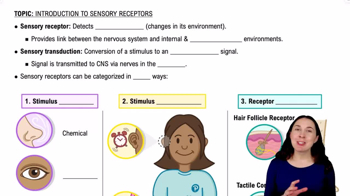
The skin is equipped with a variety of sensory receptors that detect changes in the environment, such as temperature, pressure, and pain. This sensory function is essential for protecting the body by alerting it to potential dangers, allowing for quick reflexive responses to harmful stimuli.
Recommended video:
2:47
Sensory Receptors
Related Practice
Textbook Question

Name three changes that occur in the skin as one ages.

2
views
Textbook Question

Both newborn infants and aged individuals have very little subcutaneous tissue. How does this affect their sensitivity to cold environmental temperature?

1
views
Textbook Question

Match the appropriate structure with the proper description and/or function.

1. Made of dense, irregular connective tissue

 2. Produce sebum

3. Helps regulate body temperature by producing sweat

4. Cause fingerprints

5. Houses the hair root

6. Superficial keratinized stratified squamous epithelium

7. Deep pressure receptors

8. Vascular layer that houses skin appendages

a. Dermal papillae

b. Lamellar corpuscles

c. Dermis

d. Hair follicle

e. Epidermis

f. Eccrine sweat gland

g. Reticular layer

h. Sebaceous glands

1
views
Textbook Question

Match the appropriate structure with the proper description and/or function.

1. Made of dense, irregular connective tissue

 2. Produce sebum

3. Helps regulate body temperature by producing sweat

4. Cause fingerprints

5. Houses the hair root

6. Superficial keratinized stratified squamous epithelium

7. Deep pressure receptors

8. Vascular layer that houses skin appendages

a. Dermal papillae

b. Lamellar corpuscles

c. Dermis

d. Hair follicle

e. Epidermis

f. Eccrine sweat gland

g. Reticular layer

h. Sebaceous glands

1
views
Textbook Question

Match the appropriate structure with the proper description and/or function.

1. Made of dense, irregular connective tissue

 2. Produce sebum

3. Helps regulate body temperature by producing sweat

4. Cause fingerprints

5. Houses the hair root

6. Superficial keratinized stratified squamous epithelium

7. Deep pressure receptors

8. Vascular layer that houses skin appendages

a. Dermal papillae

b. Lamellar corpuscles

c. Dermis

d. Hair follicle

e. Epidermis

f. Eccrine sweat gland

g. Reticular layer

h. Sebaceous glands

1
views
Textbook Question

More than one choice may apply.

Which layer of the heart wall is an endothelium?

a. Endocardium

b. Myocardium

c. Epicardium

d. Pericardium

1
views