Ch. 8 Joints
Marieb - Human Anatomy & Physiology 11th Edition
Marieb, Hoehn11th EditionHuman Anatomy & PhysiologyISBN: 9780136874034Not the one you use?Change textbook
Chapter 8, Problem 21

The knee has been called 'a beauty and a beast.' Provide several reasons that might explain the negative (beast) part of this description.

Verified step by step guidance
1
Step 1: Understand the anatomy of the knee joint, which is a complex hinge joint involving bones (femur, tibia, and patella), multiple ligaments, tendons, cartilage, and menisci that work together to provide stability and movement.
Step 2: Recognize that the knee is subjected to high mechanical stress because it supports the entire body weight during activities like walking, running, and jumping, making it prone to wear and injury.
Step 3: Identify common structural vulnerabilities such as the limited bony stability, reliance on ligaments (e.g., ACL, PCL) for support, and the susceptibility of cartilage and menisci to damage or degeneration.
Step 4: Consider the knee's limited blood supply to certain areas (like the menisci and cartilage), which slows healing and contributes to chronic problems after injury.
Step 5: Summarize that these factors—complex structure, high mechanical load, susceptibility to injury, and slow healing—explain why the knee can be considered the 'beast' part of the description.

Verified video answer for a similar problem:

This video solution was recommended by our tutors as helpful for the problem above.
Video duration:
2m
Was this helpful?

Key Concepts

Here are the essential concepts you must grasp in order to answer the question correctly.

Anatomical Complexity of the Knee

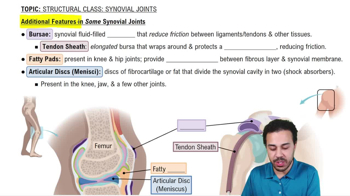
The knee is a complex joint involving bones, ligaments, tendons, cartilage, and muscles working together. Its intricate structure allows for a wide range of motion but also makes it vulnerable to injury and wear.
Recommended video:
2:31
Major Histocompatibility Complexes

Common Knee Injuries and Disorders

The knee is prone to various injuries such as ligament tears (e.g., ACL), meniscus damage, and conditions like arthritis. These issues often cause pain, instability, and reduced mobility, contributing to its 'beast' reputation.
Recommended video:
05:21
Autosomal Disorders

Biomechanical Stress and Load Bearing

As a major weight-bearing joint, the knee endures significant mechanical stress during activities like walking and running. This constant load can lead to degeneration and overuse injuries, explaining its susceptibility to problems.
Recommended video:
4:08
Additional Features