Ch. 7 The Skeleton
Marieb - Human Anatomy & Physiology 11th Edition
Marieb, Hoehn11th EditionHuman Anatomy & PhysiologyISBN: 9780136874034Not the one you use?Change textbook
Chapter 7, Problem 17

Compare a young adult skeleton to that of an extremely aged person relative to bone mass in general and the bony structure of the skull, thorax, and vertebral column in particular.

Verified step by step guidance
1
Step 1: Understand the general changes in bone mass with aging. Recognize that bone mass typically decreases in an extremely aged person compared to a young adult due to factors like reduced osteoblast activity and increased bone resorption, leading to conditions such as osteoporosis.
Step 2: Examine the skull structure differences. In a young adult, the skull bones are dense and well-fused, while in an aged person, there may be thinning of the cranial bones and possible enlargement of cranial sutures due to bone loss.
Step 3: Analyze changes in the thorax. The ribs and sternum in a young adult are robust and maintain their shape, whereas in an aged individual, the bones may become more brittle and less dense, potentially leading to a decreased thoracic cavity size and reduced flexibility.
Step 4: Investigate alterations in the vertebral column. Young adults have vertebrae with strong, dense bone and well-maintained intervertebral discs, while aged individuals often experience vertebral bone loss, compression fractures, and disc degeneration, resulting in decreased height and possible spinal curvature changes.
Step 5: Summarize how these structural changes affect overall skeletal function, including increased fracture risk, reduced mobility, and changes in posture, emphasizing the importance of bone health maintenance throughout life.

Key Concepts

Here are the essential concepts you must grasp in order to answer the question correctly.

Bone Mass Changes with Age

Bone mass typically peaks in young adulthood and declines with age due to decreased bone formation and increased resorption. This leads to conditions like osteoporosis, where bones become more fragile and less dense, affecting overall skeletal strength.
Recommended video:
03:31
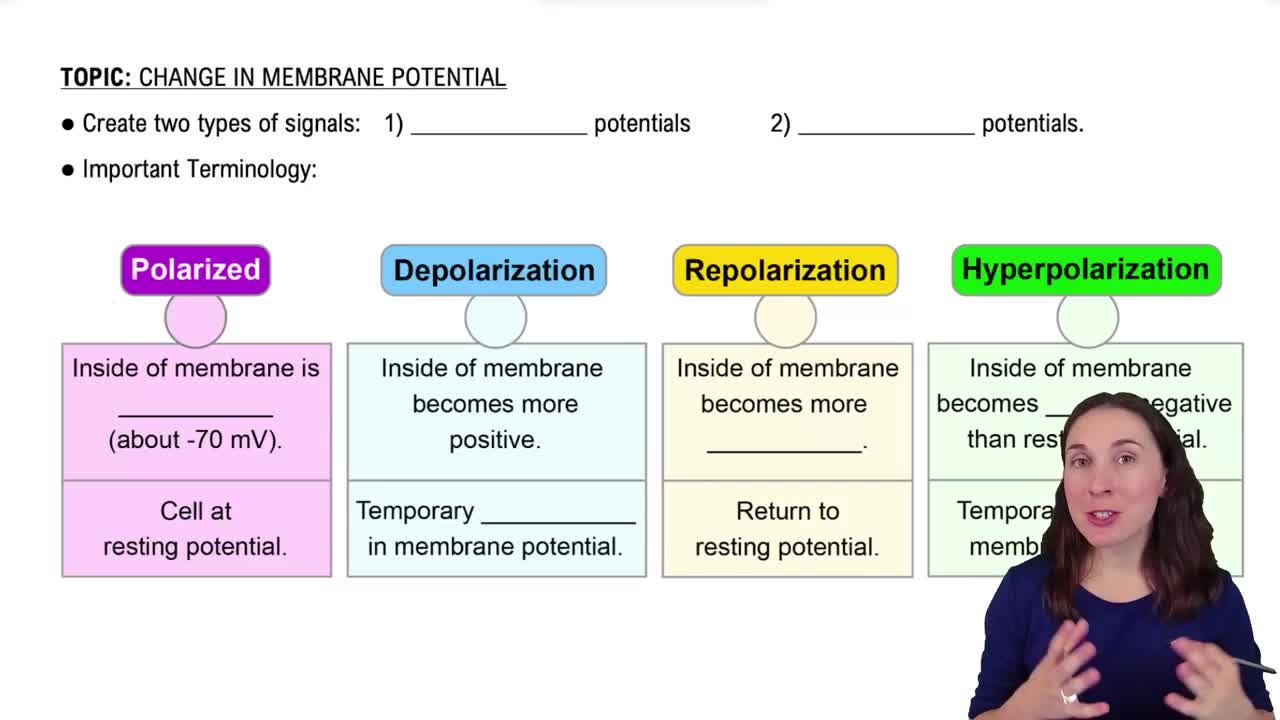
Change in Membrane Potential

Age-Related Structural Changes in the Skull

In aged individuals, the skull may show thinning of the cranial bones and loss of bone density, especially in areas like the frontal and parietal bones. Sutures may become less distinct, and some bones can become more brittle, impacting protection of the brain.
Recommended video:
Guided course
4:42
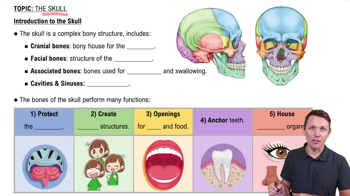
Introduction to the Skull

Degenerative Changes in the Thorax and Vertebral Column

With aging, the thoracic cage often becomes more rigid due to calcification of costal cartilages, while vertebral bodies lose height and density, leading to curvature changes like kyphosis. Intervertebral discs also degenerate, contributing to reduced flexibility and height.
Recommended video:
Guided course
6:29
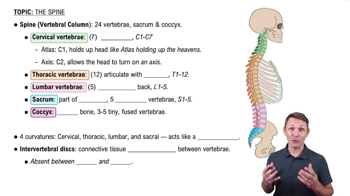
Spine (Vertebral Column)
Related Practice
Textbook Question

Mrs. Shea came up with what she considered to be a clever idea to bypass the long lines at Disney World. She had her husband rent a wheelchair and he wheeled her around from one exhibit to another for the better part of three days. As they sat on the plane, waiting to take off for Chicago, she complained to him that she had two sore spots on her buttocks. Why? What do you suppose would happen (to her buttocks) if she was wheeled around for a few more days?

2
views
Textbook Question

Mr. Wright had polio as a boy and was partially paralyzed in one lower limb for over a year. Although no longer paralyzed, he now has a severe lateral curvature of the lumbar spine. Explain what has happened and identify his condition.

1
views
Textbook Question

List at least two specific anatomical characteristics each for typical cervical, thoracic, and lumbar vertebrae that would allow anyone to identify each type correctly.

2
views
Textbook Question

Justiniano worked in a poultry-packing plant where his job was cutting open chickens and stripping out their visceral organs. After work, he typed for long hours on his computer keyboard, writing a book about his work in the plant. Soon, his wrist and hand began to hurt whenever he flexed it, and he began to awaken at night with pain and tingling on the thumb half of his hand. What condition did he probably have?

2
views
Textbook Question

Name the cranial and facial bones and compare and contrast the functions of the cranial and facial skeletons.

6
views