Ch. 6 Bones and Skeletal Tissues
Marieb - Human Anatomy & Physiology 11th Edition
Marieb, Hoehn11th EditionHuman Anatomy & PhysiologyISBN: 9780136874034Not the one you use?Change textbook
Chapter 6, Problem 10

Describe in proper sequence the events of endochondral ossification in a long bone.

Verified step by step guidance
1
Begin by understanding that endochondral ossification is the process by which long bones develop from a cartilage template, specifically hyaline cartilage.
Step 1: The cartilage model grows in size, and chondrocytes (cartilage cells) in the center of the diaphysis (shaft) enlarge and then die, creating a cavity; this is called the primary ossification center formation.
Step 2: Blood vessels invade the cavity, bringing osteoblasts (bone-forming cells) that start depositing bone matrix over the remnants of calcified cartilage, forming the bone collar around the diaphysis.
Step 3: The primary ossification center expands toward the epiphyses (ends of the bone), replacing cartilage with spongy bone, while the periosteum forms on the outside.
Step 4: Secondary ossification centers develop in the epiphyses after birth, where similar processes occur but spongy bone remains inside, and the epiphyseal plate (growth plate) remains between the diaphysis and epiphysis to allow for continued lengthwise growth.

Verified video answer for a similar problem:

This video solution was recommended by our tutors as helpful for the problem above.
Video duration:
3m
Was this helpful?

Key Concepts

Here are the essential concepts you must grasp in order to answer the question correctly.

Endochondral Ossification

Endochondral ossification is the process by which growing cartilage is systematically replaced by bone to form the long bones of the body. It involves the transformation of a cartilage template into bone tissue, essential for the development and growth of the skeletal system.
Recommended video:
02:23
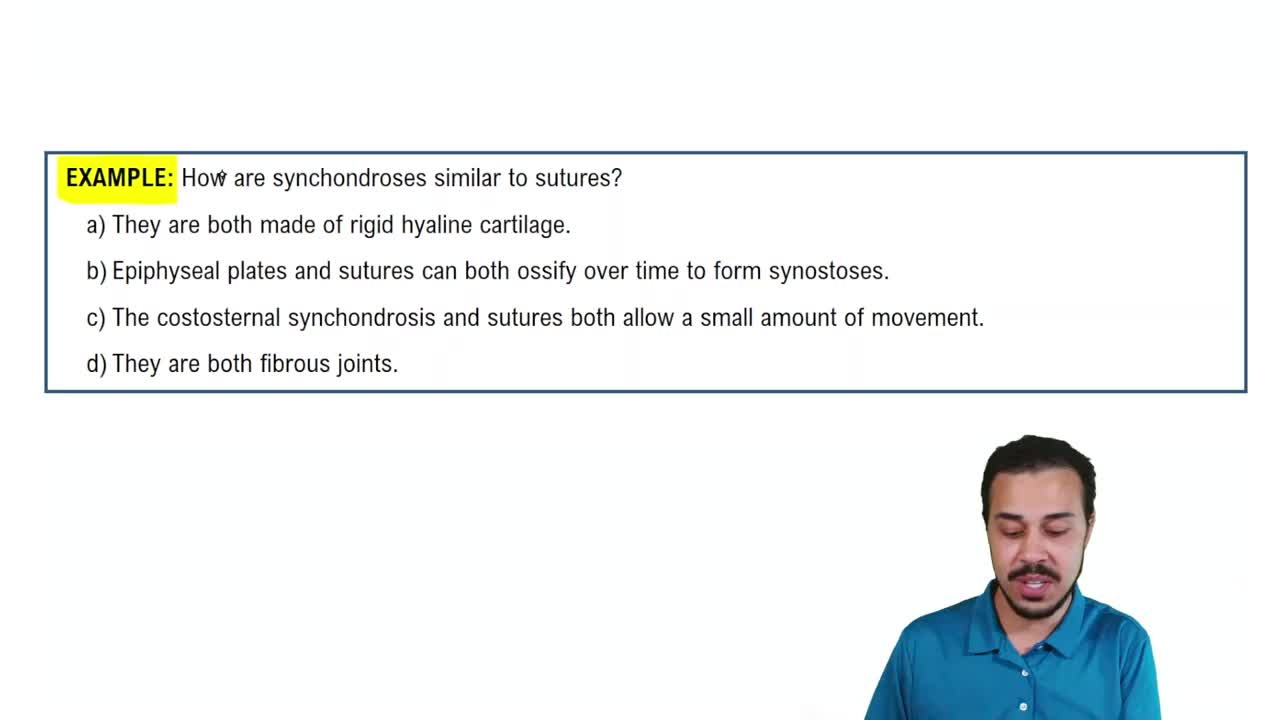
Structural Class: Cartilaginous Joints Example 1

Stages of Endochondral Ossification

The process occurs in a specific sequence: formation of cartilage model, development of the primary ossification center, vascular invasion, formation of the medullary cavity, development of secondary ossification centers, and finally, formation of articular cartilage and epiphyseal plate. Each stage is critical for proper bone formation.
Recommended video:
02:28
Stages of Aerobic Cellular Respiration

Role of Chondrocytes and Osteoblasts

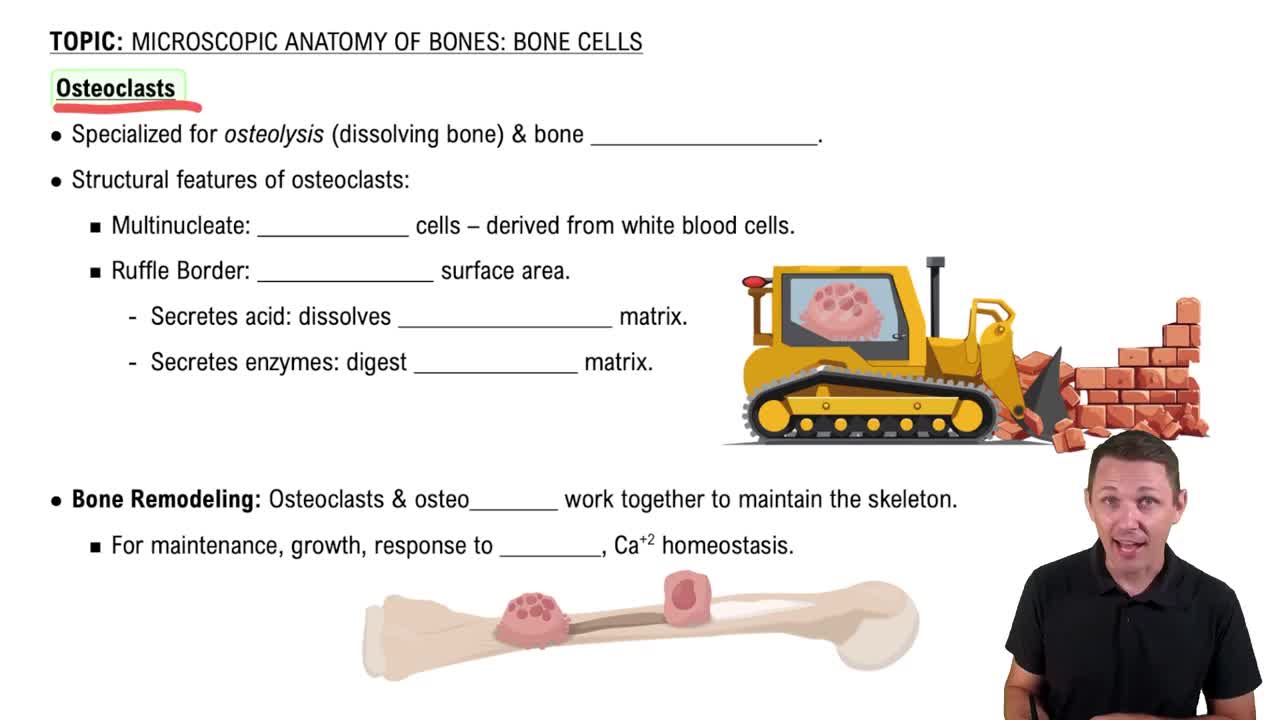
Chondrocytes initially produce the cartilage matrix and later undergo hypertrophy and apoptosis, signaling bone formation. Osteoblasts then invade the area to deposit bone matrix, replacing cartilage with bone. The coordinated activity of these cells drives the ossification process.
Recommended video: