Ch. 24 Nutrition, Metabolism, and Energy Balance
Marieb - Human Anatomy & Physiology 11th Edition
Marieb, Hoehn11th EditionHuman Anatomy & PhysiologyISBN: 9780136874034Not the one you use?Change textbook
Chapter 24, Problem 24

Compare and contrast mechanisms of heat loss with mechanisms of heat promotion, and explain how these mechanisms determine body temperature.

Verified step by step guidance
1
Understand the concept of thermoregulation: Thermoregulation is the body's ability to maintain its internal temperature within a narrow range despite external temperature changes. This involves mechanisms of heat loss and heat promotion working together to stabilize body temperature.
Describe mechanisms of heat loss: Heat loss occurs through processes such as radiation (loss of heat to the environment via infrared waves), conduction (transfer of heat through direct contact with cooler objects), convection (movement of heat away from the body via air or water currents), and evaporation (conversion of sweat into vapor, which removes heat). These mechanisms are activated when the body needs to cool down.
Explain mechanisms of heat promotion: Heat promotion mechanisms are activated when the body needs to conserve or generate heat. These include vasoconstriction (narrowing of blood vessels to reduce heat loss through the skin), shivering (involuntary muscle contractions that generate heat), and increased metabolic activity (which produces heat as a byproduct of energy production). Behavioral responses, such as putting on warm clothing, also contribute to heat promotion.
Compare and contrast the mechanisms: Heat loss mechanisms primarily focus on dissipating excess heat to prevent overheating, while heat promotion mechanisms aim to conserve or generate heat to prevent hypothermia. Both sets of mechanisms are regulated by the hypothalamus, which acts as the body's thermostat, detecting temperature changes and initiating appropriate responses.
Explain how these mechanisms determine body temperature: The balance between heat loss and heat promotion mechanisms determines body temperature. If heat loss exceeds heat production, body temperature decreases, leading to hypothermia. Conversely, if heat production exceeds heat loss, body temperature increases, potentially causing hyperthermia. The hypothalamus ensures this balance is maintained to keep the body temperature within the normal range of approximately 36.5–37.5°C (97.7–99.5°F).

Verified video answer for a similar problem:

This video solution was recommended by our tutors as helpful for the problem above.
Video duration:
2m
Was this helpful?

Key Concepts

Here are the essential concepts you must grasp in order to answer the question correctly.

Mechanisms of Heat Loss

Mechanisms of heat loss refer to the physiological processes through which the body dissipates excess heat to maintain a stable internal temperature. These include radiation, conduction, convection, and evaporation. For instance, sweating is a key mechanism that cools the body through evaporation, while radiation involves the transfer of heat to the surrounding environment without direct contact.
Recommended video:
03:25
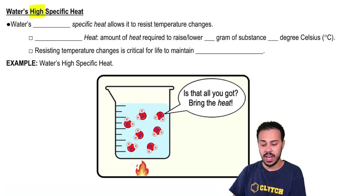
Water’s High Specific Heat

Mechanisms of Heat Promotion

Mechanisms of heat promotion are the processes that the body employs to generate and retain heat, especially in response to cold environments. These include shivering, which generates heat through muscle activity, and vasoconstriction, which reduces blood flow to the skin to minimize heat loss. Hormonal responses, such as the release of thyroid hormones, also play a significant role in increasing metabolic rate and heat production.
Recommended video:
03:25
Water’s High Specific Heat

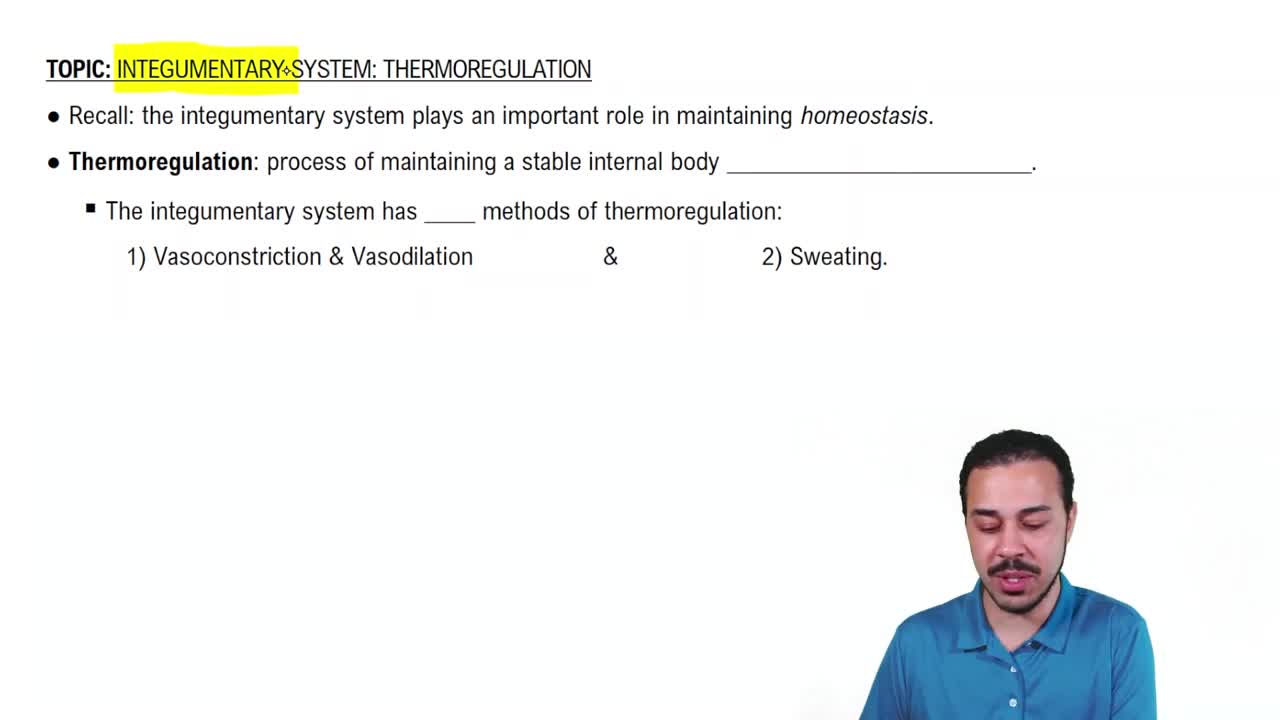
Thermoregulation

Thermoregulation is the process by which the body maintains its core internal temperature within a narrow range, despite external temperature fluctuations. It involves a complex interplay between heat loss and heat promotion mechanisms, regulated by the hypothalamus. Effective thermoregulation is crucial for optimal physiological function, as deviations from the normal temperature range can lead to health issues such as hypothermia or hyperthermia.
Recommended video:
01:07
Introduction to Thermoregulation