Ch. 2 Chemistry Comes Alive
Marieb - Human Anatomy & Physiology 11th Edition
Marieb, Hoehn11th EditionHuman Anatomy & PhysiologyISBN: 9780136874034Not the one you use?Change textbook
Chapter 2, Problem 27

After you eat a protein bar, which chemical reactions introduced in this chapter must occur for the amino acids in the protein bar to be converted into proteins in your body cells?

Verified step by step guidance
1
Step 1: Understand that the amino acids from the protein bar must first be released from the protein molecules through the process of digestion, which involves hydrolysis reactions breaking peptide bonds. This occurs primarily in the stomach and small intestine.
Step 2: Recognize that the hydrolysis of proteins into amino acids is catalyzed by enzymes such as pepsin in the stomach and trypsin and chymotrypsin in the small intestine. These enzymes cleave the peptide bonds between amino acids.
Step 3: After digestion, amino acids are absorbed into the bloodstream through the intestinal lining and transported to body cells where protein synthesis occurs.
Step 4: Inside the body cells, amino acids are linked together by dehydration synthesis (also called condensation reactions) to form new proteins. This process involves the formation of peptide bonds between amino acids, releasing water molecules.
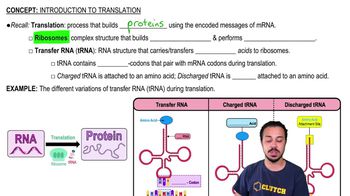
Step 5: Protein synthesis is directed by the genetic code in DNA and carried out by ribosomes through transcription and translation, ensuring the correct sequence of amino acids to form functional proteins.

Verified video answer for a similar problem:

This video solution was recommended by our tutors as helpful for the problem above.
Video duration:
1m
Was this helpful?

Key Concepts

Here are the essential concepts you must grasp in order to answer the question correctly.

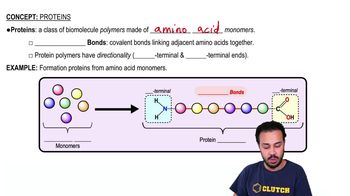
Protein Digestion

Protein digestion involves breaking down dietary proteins into their amino acid components through enzymatic reactions, primarily in the stomach and small intestine. Enzymes like pepsin and proteases cleave peptide bonds, enabling absorption of amino acids into the bloodstream.
Recommended video:
02:50
Proteins

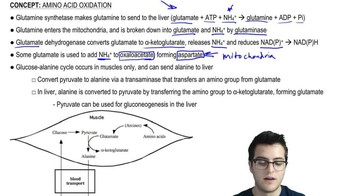
Amino Acid Absorption and Transport

After digestion, free amino acids are absorbed by the intestinal lining and transported via the bloodstream to body cells. This process ensures that amino acids are available as building blocks for protein synthesis within cells.
Recommended video:
11:42
Amino Acid Oxidation 2

Protein Synthesis (Translation)

Protein synthesis is the cellular process where amino acids are assembled into specific proteins based on genetic instructions. During translation, ribosomes link amino acids in the correct sequence to form functional proteins essential for cell structure and function.
Recommended video:
06:12
Introduction to Translation