Ch. 18 The Cardiovascular System: The Heart
Marieb - Human Anatomy & Physiology 11th Edition
Marieb, Hoehn11th EditionHuman Anatomy & PhysiologyISBN: 9780136874034Not the one you use?Change textbook
Chapter 18, Problem 7

In the heart, which of the following apply?
(1) Action potentials are conducted from cell to cell across the myocardium via gap junctions
(2) The SA node sets the pace for the heart as a whole
(3) Spontaneous depolarization of cardiac cells can occur in the absence of nerve stimulation
(4) Cardiac muscle can continue to contract for long periods in the absence of oxygen
a. All of the above
b. 1, 3, 4
c. 1, 2, 3
d. 2, 3

Verified step by step guidance
1
Step 1: Understand the role of gap junctions in the heart. Gap junctions allow direct electrical communication between cardiac muscle cells, enabling action potentials to spread rapidly across the myocardium. This supports statement (1).
Step 2: Consider the function of the sinoatrial (SA) node. The SA node is known as the natural pacemaker of the heart because it initiates the electrical impulses that set the heart rate, supporting statement (2).
Step 3: Evaluate the ability of cardiac cells to depolarize spontaneously. Cardiac muscle cells, especially those in the SA node, can generate action potentials without external nerve stimulation, which supports statement (3).
Step 4: Analyze the effect of oxygen deprivation on cardiac muscle contraction. Unlike some muscle types, cardiac muscle cannot sustain contraction for long periods without oxygen because it relies heavily on aerobic metabolism, which means statement (4) is false.
Step 5: Based on the evaluation of each statement, identify which combination of statements is correct by excluding the false one and selecting the appropriate answer choice.

Verified video answer for a similar problem:

This video solution was recommended by our tutors as helpful for the problem above.
Video duration:
3m
Was this helpful?

Key Concepts

Here are the essential concepts you must grasp in order to answer the question correctly.

Gap Junctions and Action Potential Conduction in the Myocardium

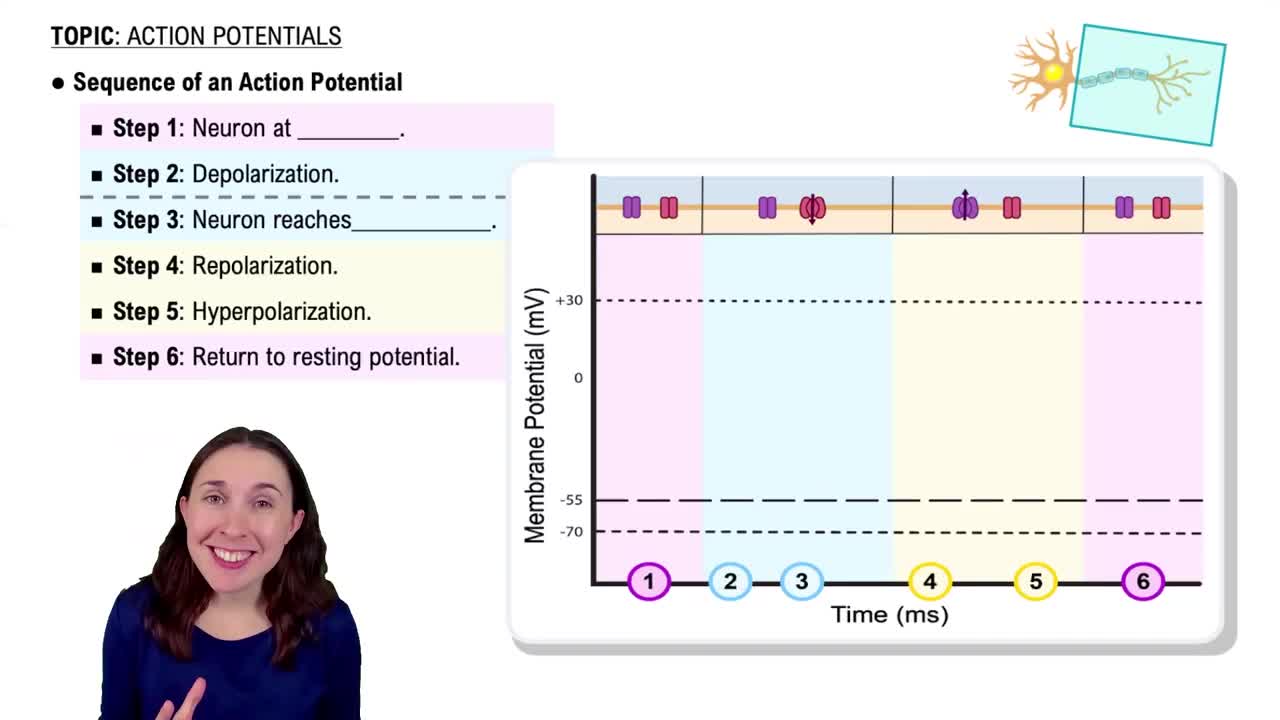
Gap junctions are specialized connections between cardiac muscle cells that allow electrical signals, or action potentials, to pass directly from one cell to another. This enables the heart muscle to contract in a coordinated manner, ensuring efficient pumping of blood.
Recommended video:
03:53
Action Potential

Role of the SA Node as the Heart's Pacemaker

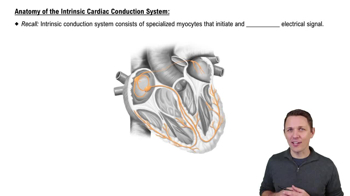
The sinoatrial (SA) node is a group of specialized cells in the right atrium that spontaneously generate electrical impulses. These impulses set the rhythm and pace of the heartbeat, controlling the timing of contractions throughout the heart.
Recommended video:
Guided course
8:41
Anatomy of the Intrinsic Cardiac Conduction System

Spontaneous Depolarization and Oxygen Dependence of Cardiac Muscle

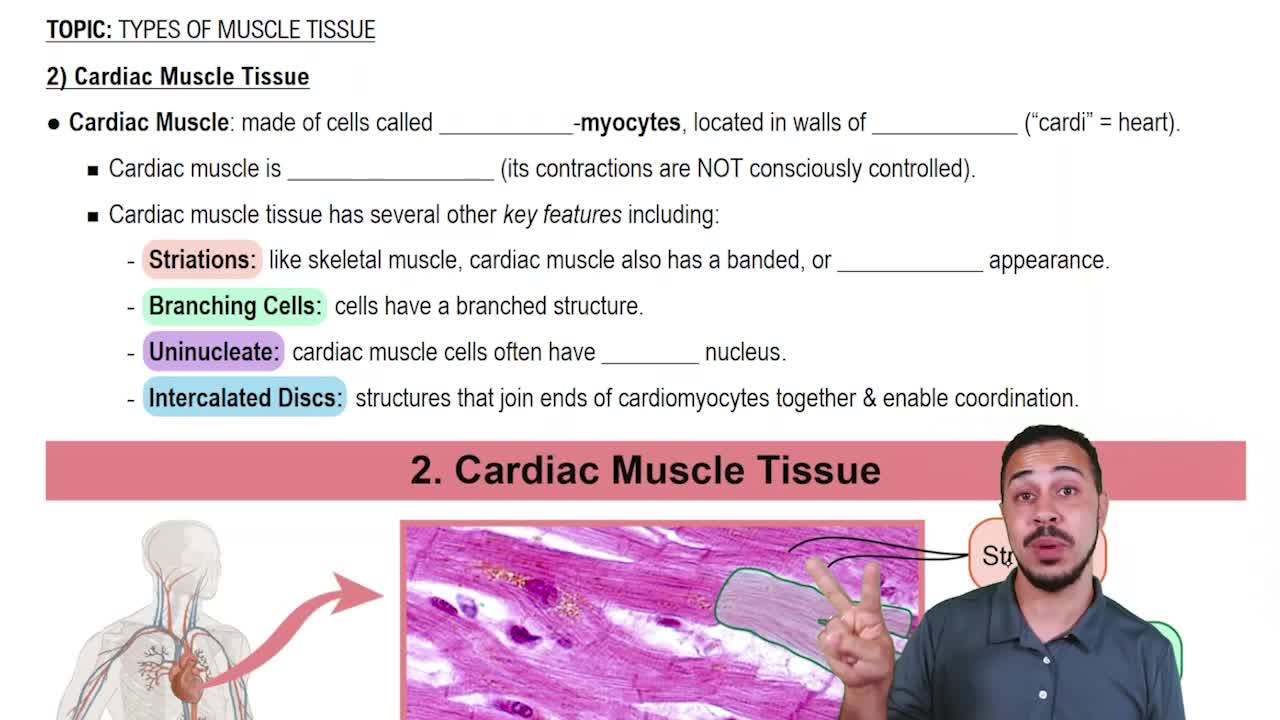
Cardiac muscle cells can spontaneously depolarize without nerve input, allowing the heart to beat autonomously. However, unlike some muscle types, cardiac muscle requires a continuous oxygen supply to sustain contraction and cannot function effectively for long periods without oxygen.
Recommended video:
Guided course
06:00
Cardiac Muscle Tissue