Ch. 16 The Endocrine System
Marieb - Human Anatomy & Physiology 11th Edition
Marieb, Hoehn11th EditionHuman Anatomy & PhysiologyISBN: 9780136874034Not the one you use?Change textbook
Chapter 16, Problem 9

If there is adequate carbohydrate intake, secretion of insulin results in:
a. Lower blood glucose levels
b. Increased cell utilization of glucose
c. Storage of glycogen
d. All of these

Verified step by step guidance
1
Understand the role of insulin in carbohydrate metabolism: Insulin is a hormone secreted by the pancreas in response to elevated blood glucose levels, typically after carbohydrate intake.
Recognize that insulin facilitates the uptake of glucose by cells, which increases cellular utilization of glucose for energy production.
Know that insulin promotes the storage of excess glucose in the form of glycogen, primarily in the liver and muscle tissues.
Realize that by promoting glucose uptake and storage, insulin effectively lowers blood glucose levels in the bloodstream.
Conclude that since insulin lowers blood glucose levels, increases cellular glucose utilization, and promotes glycogen storage, all these effects occur together, making the correct answer 'All of these'.

Verified video answer for a similar problem:

This video solution was recommended by our tutors as helpful for the problem above.
Video duration:
2m
Was this helpful?

Key Concepts

Here are the essential concepts you must grasp in order to answer the question correctly.

Role of Insulin in Blood Glucose Regulation

Insulin is a hormone secreted by the pancreas in response to elevated blood glucose levels, especially after carbohydrate intake. It helps lower blood glucose by promoting its uptake into cells, thus maintaining homeostasis.
Recommended video:
6:11
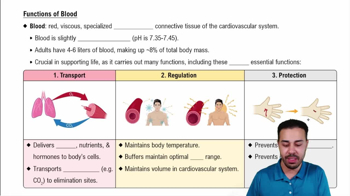
Functions of Blood

Cellular Utilization of Glucose

Insulin facilitates glucose entry into cells, where it is used as an energy source through cellular respiration. This increased glucose uptake enhances cell metabolism and energy production.
Recommended video:
03:38
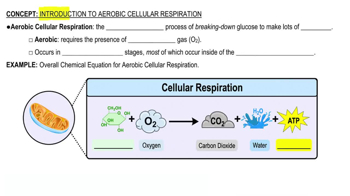
Introduction to Cellular Respiration

Glycogen Storage

Insulin stimulates the conversion of excess glucose into glycogen, a storage form of glucose, primarily in the liver and muscles. This process helps store energy for future use and prevents hyperglycemia.
Recommended video:
05:08
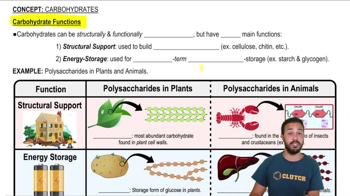
Carbohydrate Functions
Related Practice
Textbook Question

Some hormones act by:

a. Increasing the synthesis of enzymes

b. Converting an inactive enzyme into an active enzyme

c. Affecting only specific target organs

d. All of these

2
views
Textbook Question

If anterior pituitary secretion is deficient in a growing child, the child will

a. Develop acromegaly

b. Become a dwarf but have fairly normal body proportions

c. Mature sexually at an earlier than normal age

d. Be in constant danger of becoming dehydrated

1
views
Textbook Question

Hormones

a. Are produced by exocrine glands

b. Are carried to all parts of the body in blood

c. Remain at constant concentration in the blood

d. Affect only non-hormone-producing organs

Textbook Question

A hypodermic injection of epinephrine would:

a. Increase heart rate, increase blood pressure, dilate the bronchioles of the lungs, and increase digestive activity

b. Decrease heart rate, decrease blood pressure, constrict the bronchioles, and increase digestive activity

c. Decrease heart rate, increase blood pressure, constrict the bronchioles, and decrease digestive activity

d. Increase heart rate, increase blood pressure, dilate the bronchioles, and decrease digestive activity

1
views
Textbook Question

Absence of thyroid hormone would result in:

a. Increased heart rate and increased force of heart contraction

b. Depression of the CNS and lethargy

c. Exophthalmos

d. High metabolic rate

1
views
Textbook Question

Testosterone is to the male as which hormone is to the female?

a. Luteinizing hormone

b. Progesterone

c. Estrogen

d. Prolactin

1
views